
Black-throated Blue Warbler Identification Guide
A strikingly patterned eastern warbler whose deep blue, black, and white male is unmistakable, while the plain olive female is best known by her small white wing spot.
Read the full Black-throated Blue Warbler encyclopedia entry →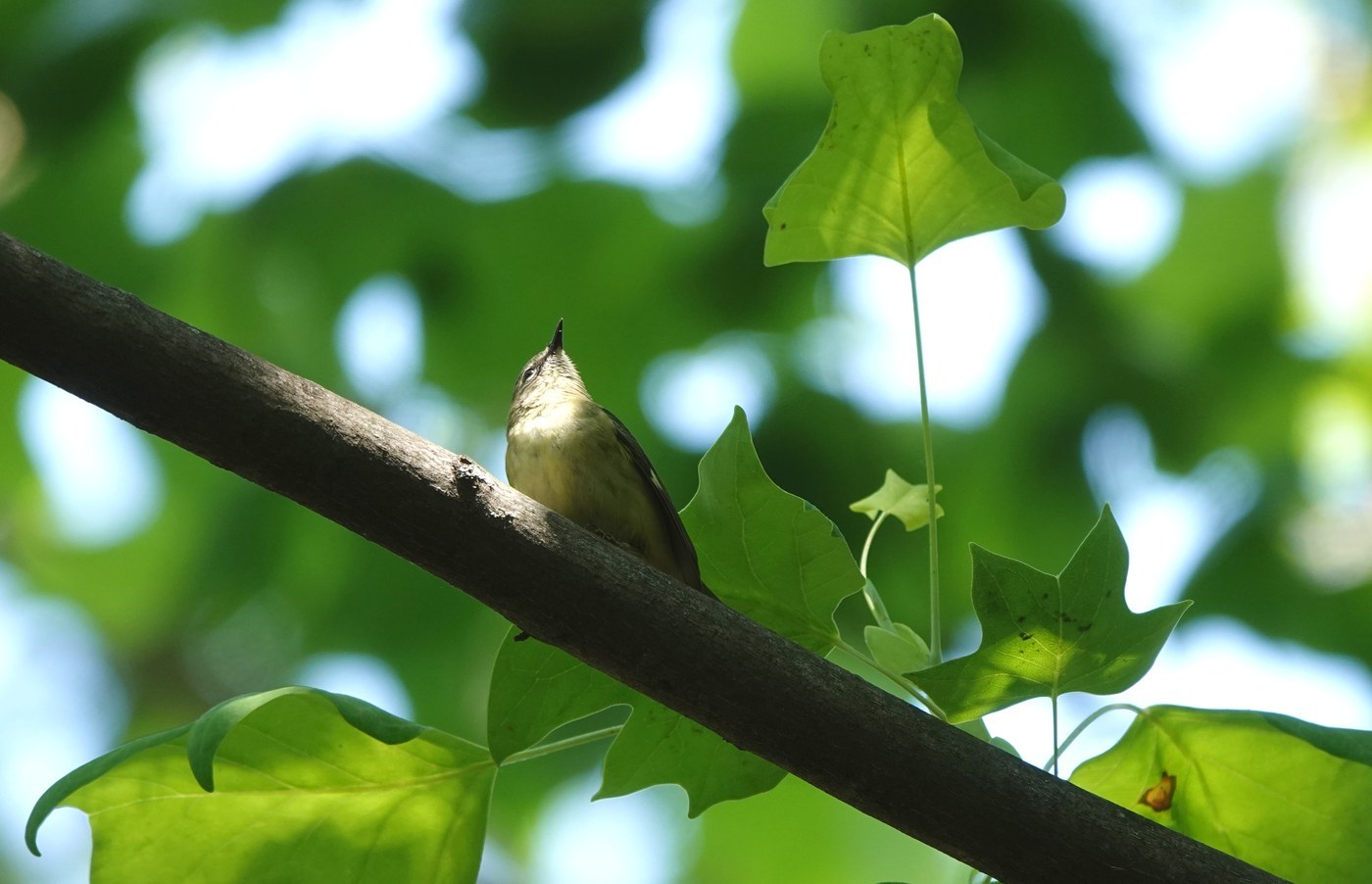
Key Field Marks
- Small warbler, about 13 cm, with a fairly stocky build and a short, thin bill
- Adult male: rich deep blue upperparts, solid black face, throat, and sides contrasting with a clean white belly, and a small white square patch at the base of the primaries ("handkerchief")
- Adult female: plain olive-brown above, buffy below, with a pale eyebrow (supercilium) and a faint dark cheek — the small white wing spot is present in most individuals and is the key confirming mark
- Legs dark, bill thin and pointed like other Setophaga warblers
Similar Species
- Male is essentially unmistakable due to the combination of blue upperparts and black face/throat
- Female is easily confused with other plain olive-brown female warblers (e.g., female Common Yellowthroat, Orange-crowned Warbler), but the small white wing patch, plain unstreaked underparts, and pale eyebrow set her apart
- Female Cerulean Warbler is paler and shows wing bars rather than a single wing patch, plus a different face pattern
Habitat & Range
- Breeds in mature deciduous and mixed forests with a dense shrubby understory, especially where rhododendron, hobblebush, or similar thickets occur
- Breeds across the northeastern United States, southeastern Canada, and south through the Appalachian Mountains
- Winters primarily in the understory of forests and woodlands in the Caribbean, especially Cuba, Jamaica, Hispaniola, and the Bahamas
Seasonality
- Arrives on breeding grounds in late spring; departs by early to mid-autumn
- Migrates mainly through the eastern United States; wintering birds present in the Caribbean from autumn through spring
Voice
- Male song is a slow, buzzy, rising series often rendered as "I-am-so-lazzz-y" or "zur-zur-zur-zreee"
- Call note is a flat, dull "tup" or "chip"
Frequently asked questions
How do you identify a female Black-throated Blue Warbler if she doesn't look blue at all?
Look for her small white wing patch at the base of the primaries, plain unstreaked olive-brown body, and pale eyebrow — the wing spot is the most diagnostic single feature.
Is the male Black-throated Blue Warbler ever confused with other species?
Rarely — the combination of blue back, black face/throat, and white belly is unique among North American warblers.
What kind of forest habitat should I search for this species?
Mature deciduous or mixed forest with a thick shrub layer, particularly stands with rhododendron or similar understory thickets on breeding grounds.
Where does Black-throated Blue Warbler spend the winter?
Almost the entire population winters in the Caribbean, especially the Greater Antilles, in forest understory habitat.