
Black Redstart Identification Guide
A sooty gray-black chat of rocky and urban habitats across the Old World, told at a glance by its constantly quivering rusty-orange tail.
Read the full Black Redstart encyclopedia entry →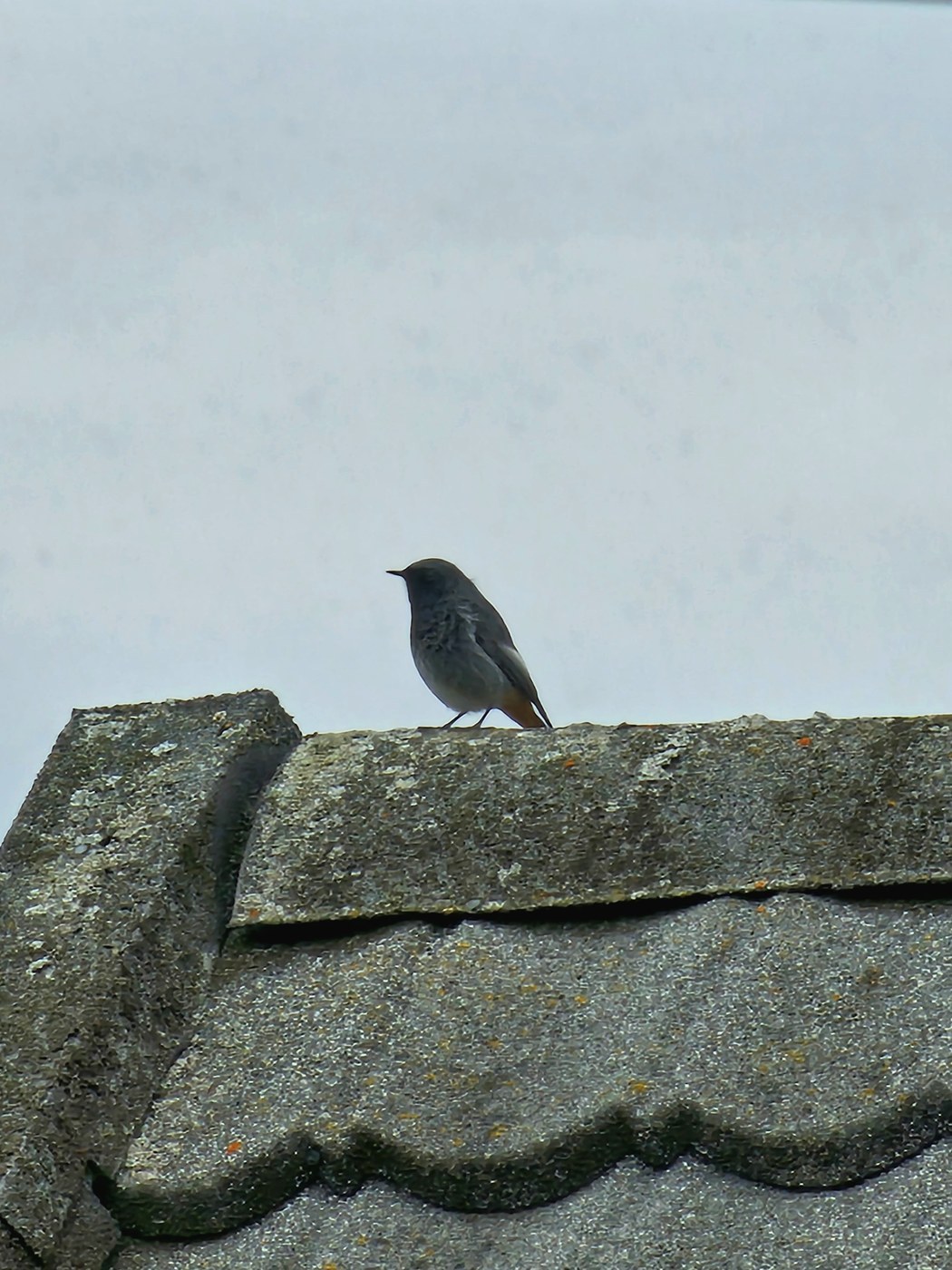
Key Field Marks
- Small chat, about 14 cm (5.5 in) long, with a rusty-orange tail and rump that is constantly quivered and flicked — visible in both sexes and all plumages, and the single best field mark.
- Adult male: dark sooty-gray to blackish body, with a black face and throat in many populations (variable by subspecies/age), sometimes showing a whitish wing panel.
- Female and immature: overall grayish-brown, lacking the male's dark tones, but sharing the same diagnostic rusty-red tail.
- Bill and legs are black and slender, typical of the chat/thrush family.
Behavior
- Frequently perches in the open on rocks, walls, roofs, and other elevated structures, dropping to the ground to catch insects and returning to a perch.
- Highly adaptable, often nesting in crevices of buildings, cliffs, quarries, and industrial sites, treating urban structures as substitute cliffs.
- Constant tail-quivering while perched is a persistent and distinctive behavior useful for a quick identification even at a distance.
Separating from Similar Species
- Common Redstart: male shows an orange-red breast and belly (not just the tail), a black throat, and a white forehead patch — Black Redstart lacks the orange underparts, instead showing dark gray to black body plumage.
- Female Common Redstart is warmer buff-brown below compared to the grayer tones of female Black Redstart, though both share the rusty tail.
- Habitat is a helpful clue: Black Redstart favors open rocky ground, cliffs, and urban/industrial areas, while Common Redstart favors open woodland and parkland.
Habitat & Range
- Breeds widely across Europe, North Africa, and temperate Asia, in habitats ranging from alpine scree and cliffs to city centers, rail yards, and industrial buildings.
- Northern and higher-altitude populations are migratory, wintering around the Mediterranean, North Africa, and South Asia; populations in milder climates are largely resident.
- Increasingly common in urban environments, nesting on buildings much as it would on natural cliff faces.
Voice
- Song includes a distinctive short, scratchy phrase often likened to the sound of crumpling paper, delivered from rooftops or high perches.
- Call is a sharp "tsip" or a hard "tucc-tucc," often given as an alarm.
Frequently asked questions
What is the single best field mark for Black Redstart?
A rusty-orange tail that is constantly quivered while perched, shown by both sexes and all plumages.
How do I tell Black Redstart from Common Redstart?
Male Black Redstart lacks the orange breast and belly of Common Redstart, showing dark gray-to-black body plumage with color confined mainly to the tail, while Common Redstart has a bright orange breast and belly along with a white forehead patch.
Why are Black Redstarts often found in cities?
They readily treat buildings, quarries, and industrial structures as substitute cliffs for nesting and perching, making urban and rocky habitats equally suitable.
What does a Black Redstart sound like?
Its song includes a distinctive scratchy phrase often compared to crumpling paper, and its call is a sharp 'tsip' or hard 'tucc-tucc.'