
Black Drongo Identification Guide
An all-black, glossy Asian songbird with a deeply forked tail, red eyes, and a bold habit of chasing off much larger birds.
Read the full Black Drongo encyclopedia entry →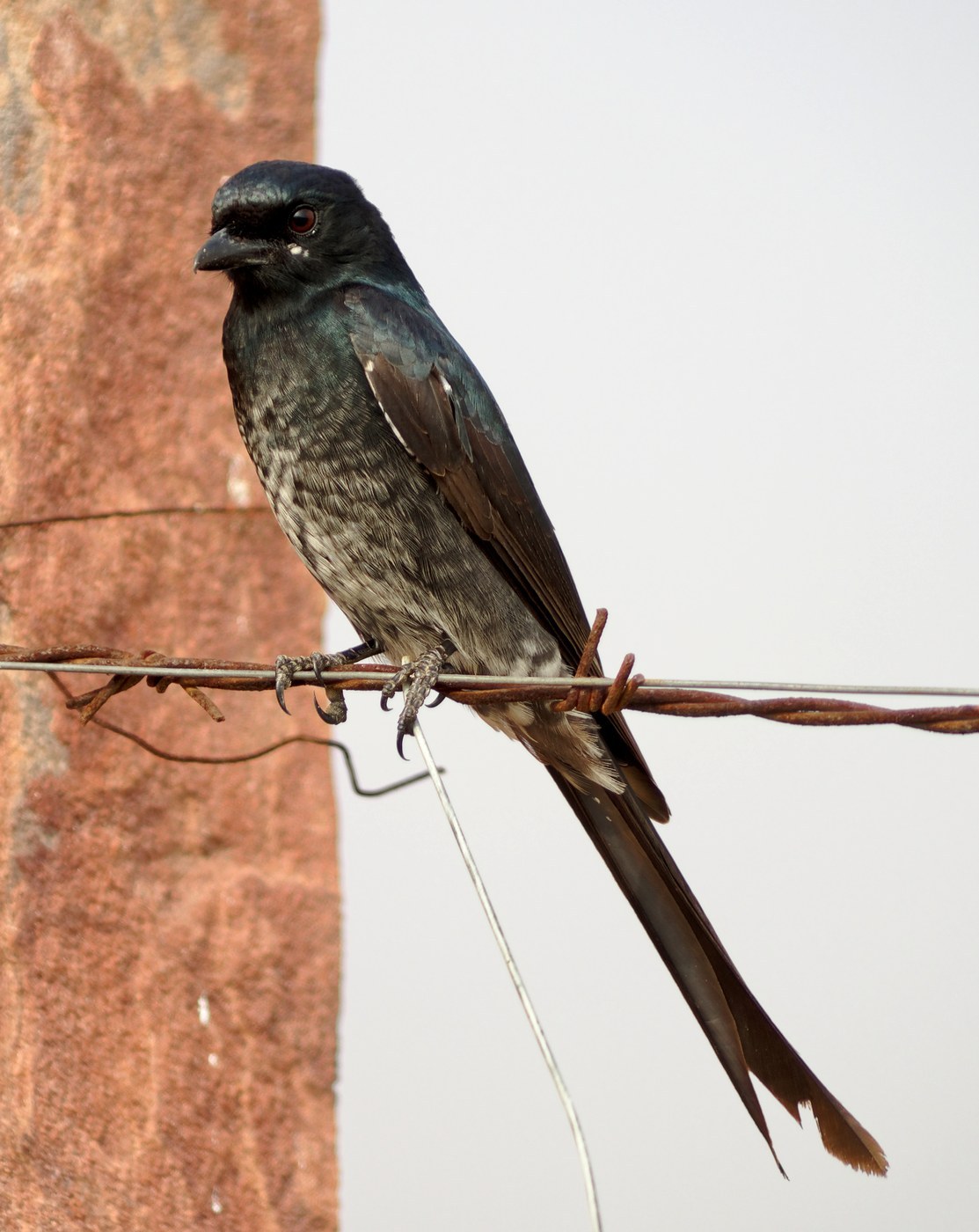
Key Field Marks
- Medium-sized, entirely glossy black passerine with a slight bluish or greenish sheen in good light.
- Tail is long and deeply forked, splaying into a distinctive "fish-tail" shape, often flicked and fanned.
- Eyes are dark red; bill is stout, black, and slightly hooked at the tip.
- Sits upright and alert on wires, fence posts, and bare treetops, frequently sallying out after flying insects.
- Juveniles are duller sooty-black with faint white barring or mottling on the belly.
Separating It From Similar Species
- Ashy Drongo is overall grey rather than jet black, with a less deeply forked tail and typically found more in wooded habitat.
- Spangled Drongo and other Asian drongos show more obvious sheen, ornate tail-tip "rackets," or crests that Black Drongo lacks — Black Drongo's tail fork is simple and evenly forked without racket tips.
- Its aggressive habit of perching conspicuously in open country and mobbing crows, raptors, and even people near its nest is a useful behavioral clue distinguishing it from shyer drongo species.
Where and When to See It
- Common and widespread resident across South and Southeast Asia, from Iran and the Indian subcontinent east to China and Indonesia.
- Favors open country: farmland, grassland, scrub, and villages, often perching on wires and fence lines overlooking short vegetation.
- Frequently seen near grazing cattle or water buffalo, catching insects flushed by the animals' movement.
- Largely resident, though some northern populations shift south in winter.
Voice and Behavior
- Vocal and varied, producing harsh metallic notes, chattering, and whistles, and is a skilled mimic of other birds' calls.
- Renowned for fearless mobbing of crows, kites, and other large birds that stray near its nest or territory, often riding on the backs of larger birds it is chasing.
- Feeds mainly on flying insects caught in aerial sallies from an exposed perch.
Frequently asked questions
What is the most distinctive feature of a Black Drongo?
Its all-black glossy plumage combined with a long, deeply forked tail and bold, aggressive perching behavior on wires and open perches.
How do you tell Black Drongo from Ashy Drongo?
Black Drongo is uniformly glossy black, while Ashy Drongo is various shades of grey; Black Drongo's tail fork is also generally deeper.
Why does Black Drongo chase crows and raptors?
It aggressively defends its territory and nest against much larger birds, a behavior that is one of its most recognizable field traits.
What habitat is best for finding Black Drongo?
Open farmland, grassland, and village edges with wires or bare perches, especially areas with grazing livestock that stir up insects.