
Black-crested Titmouse Identification Guide
A small, active crested songbird of Texas oak woodlands, distinguished from its close relative the Tufted Titmouse by its black (rather than gray) crest.
Read the full Black-crested Titmouse encyclopedia entry →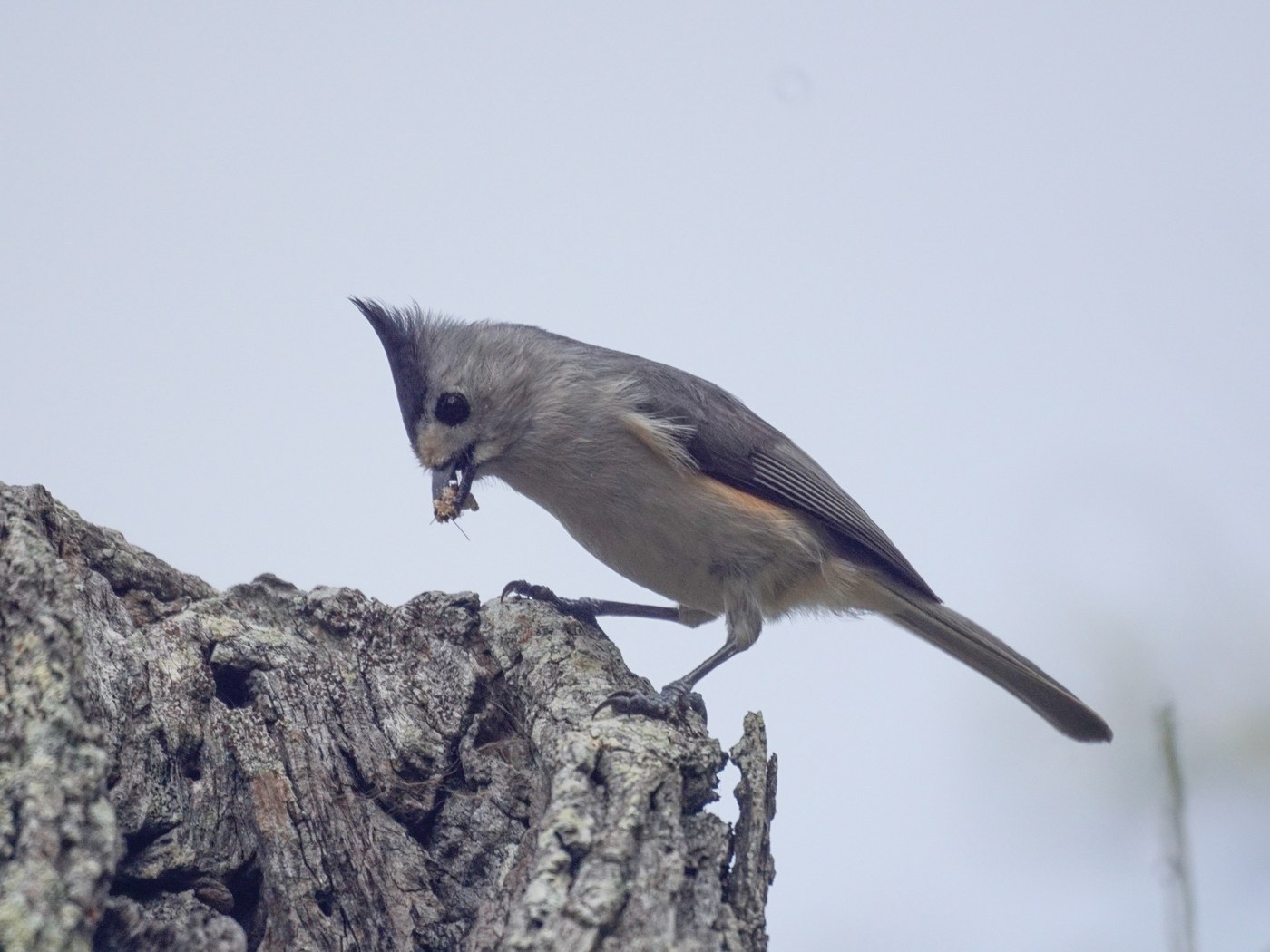
Key Field Marks
- Small, crested songbird, about 5.75 inches long, with a proportionally large head and black eyes.
- Black, pointed crest — the key mark separating it from Tufted Titmouse.
- Small black patch on the forehead just above the bill.
- Pale gray back, whitish underparts, and soft peach-buff wash along the flanks.
Similar Species
- Tufted Titmouse: has a gray (not black) crest and typically shows a more orange-toned flank wash; formerly lumped with Black-crested Titmouse as a single species before being split in 2002 based on plumage, voice, and genetic differences.
- The two species meet and hybridize in a narrow contact zone through central Texas, where some individuals show intermediate crest color and can be difficult to assign with confidence.
Habitat & Behavior
- Found in oak woodland, mesquite brush, riparian corridors, and well-wooded suburban and urban yards with mature trees.
- Active and acrobatic while foraging, often hanging from twigs and probing bark and foliage for insects.
- Caches seeds for later use and readily visits bird feeders, especially for sunflower seed.
- Joins mixed-species foraging flocks with chickadees, wrens, and warblers, particularly outside the breeding season.
Range & Season
- Resident year-round across south-central Texas and adjacent areas, extending south into northeastern Mexico.
- Non-migratory, present in the same areas throughout the year.
Voice
- Song is a clear, whistled "peter-peter-peter," similar to Tufted Titmouse's song but often delivered slightly faster or higher-pitched.
- Also gives scolding, chattering calls and a thin "seee" note typical of titmice.
Frequently asked questions
How do I tell Black-crested Titmouse from Tufted Titmouse?
Crest color is the key difference: Black-crested Titmouse has a black crest, while Tufted Titmouse has a gray crest; their ranges meet and hybridize in a narrow band through central Texas.
Why were these once considered the same species?
Black-crested and Tufted Titmice were treated as a single species until 2002, when differences in plumage, voice, and genetics led to them being split into two species.
What habitat does Black-crested Titmouse prefer?
Oak woodland, mesquite brush, riparian corridors, and wooded suburban yards across its south-central Texas range.
Is Black-crested Titmouse migratory?
No, it is a non-migratory, year-round resident throughout its range.