
Black-billed Cuckoo Identification Guide
A slim, secretive, all-black-billed cuckoo with a red eye-ring, best separated from Yellow-billed Cuckoo by bill color, eye-ring, and subtler tail spotting.
Read the full Black-billed Cuckoo encyclopedia entry →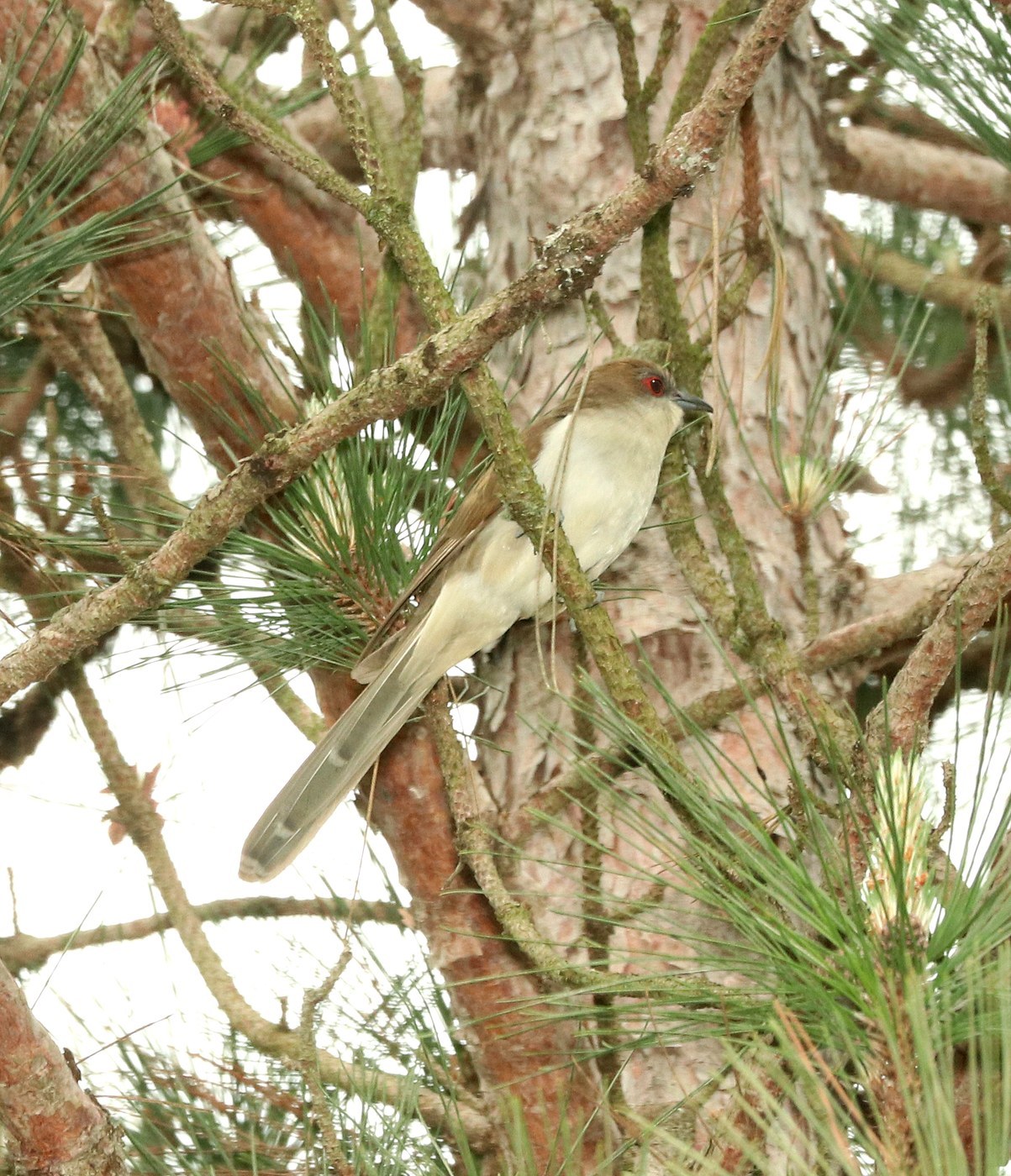
Key Field Marks
- Slender, long-tailed songbird about 12 inches long, brown above and clean white below.
- Bill entirely black (or very dark), lacking any yellow on the lower mandible.
- Adult shows a thin red eye-ring, visible at close range.
- Tail is brown above with small, narrow white spots on the tip of the underside — much less bold than the large white spots of Yellow-billed Cuckoo.
- No rufous or cinnamon color in the wings (an important contrast with Yellow-billed Cuckoo).
Separating It From Yellow-billed Cuckoo
- Yellow-billed Cuckoo shows a yellow lower mandible, a white (not red) eye-ring, large bold white spots on the tail underside, and a rufous patch in the primaries visible in flight.
- Voice is the most reliable way to separate silent or briefly glimpsed birds (see Voice section below).
Habitat & Behavior
- Prefers dense deciduous woodland, shrubby forest edges, overgrown thickets, and streamside tangles.
- A caterpillar specialist, especially fond of tent caterpillars and other hairy caterpillars, and numbers can spike locally during caterpillar or periodical cicada outbreaks.
- Notoriously secretive — sits motionless in dense foliage for long periods, making it far easier to hear than see.
Range & Season
- Breeds across the northeastern and north-central United States and southern Canada.
- A long-distance migrant that winters in South America, arriving on breeding grounds relatively late in spring (May) and departing by early fall.
Voice
- Song is a repetitive, evenly paced series of triplet notes, often rendered "cu-cu-cu, cu-cu-cu," softer and more monotone than the accelerating, decelerating rattle of Yellow-billed Cuckoo.
- Sometimes called a "rain crow" for a folk belief that its calling predicts rain, a nickname shared with Yellow-billed Cuckoo.
Frequently asked questions
What's the quickest way to tell Black-billed from Yellow-billed Cuckoo?
Check the bill: Black-billed Cuckoo has an all-black bill, while Yellow-billed Cuckoo shows yellow on the lower mandible. Black-billed also has a red eye-ring versus Yellow-billed's white one.
Why is Black-billed Cuckoo so hard to see?
It is extremely secretive, sitting motionless in dense foliage for long stretches, so it is usually detected by its distinctive call rather than by sight.
Does Black-billed Cuckoo have rufous in the wings like Yellow-billed?
No, Black-billed Cuckoo lacks the cinnamon-rufous primary patch that Yellow-billed Cuckoo shows in flight.
When and where should I look for Black-billed Cuckoo?
Look in dense deciduous woodland and thickets in the northeastern and north-central U.S. and southern Canada from late May through summer, ideally by listening for its even, triplet-noted song.