
Black-bellied Whistling-Duck Identification Guide
A long-legged, long-necked 'tree duck' with a bright coral-pink bill and legs, a black belly, and a bold white wing patch, increasingly common around ponds in the southern U.S.
Read the full Black-bellied Whistling-Duck encyclopedia entry →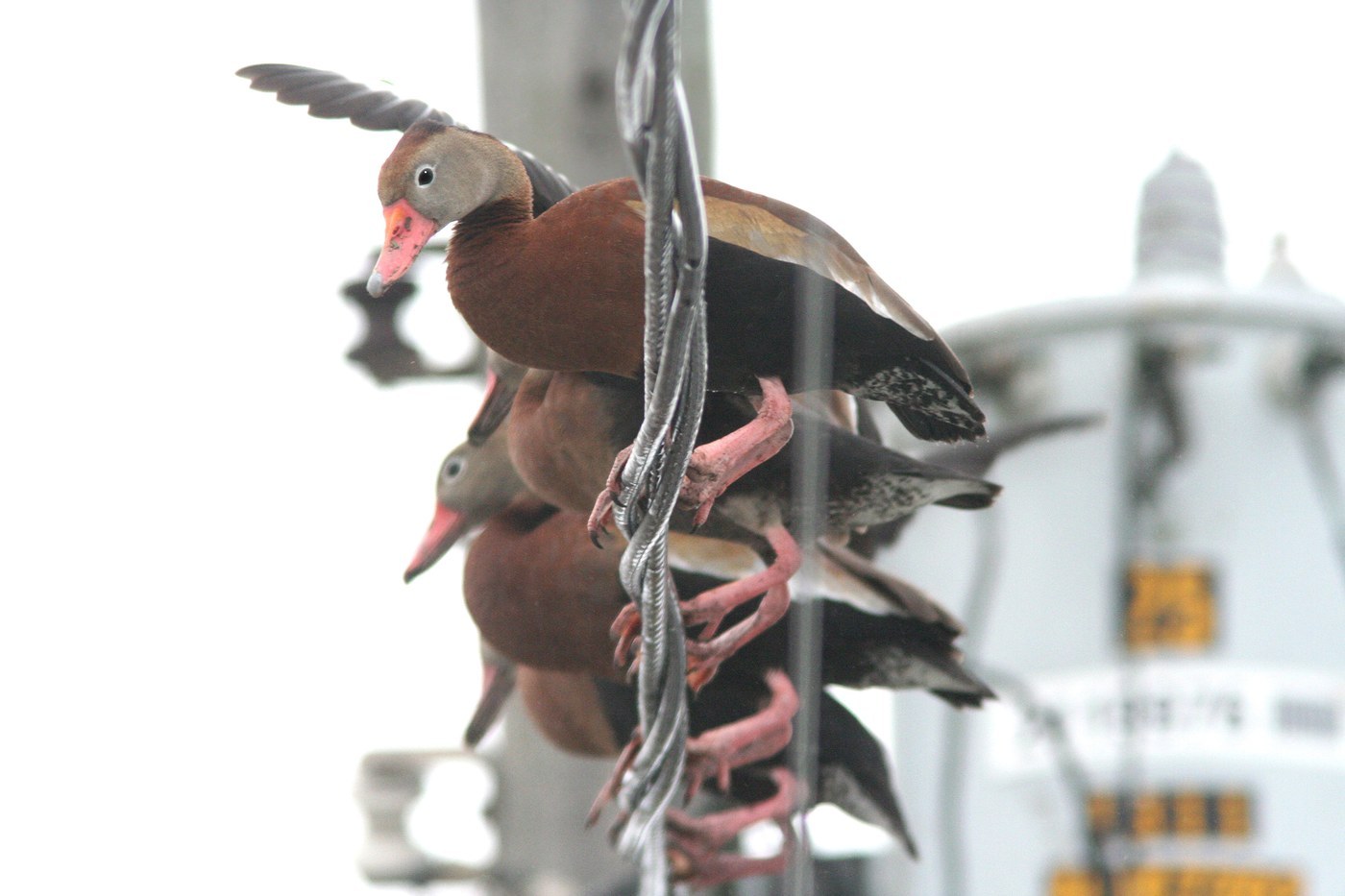
Key Field Marks
- Long-necked, long-legged duck with an upright, almost goose-like posture, about 19–22 inches long.
- Bright coral-pink to red bill and legs — bright and obvious at any distance.
- Gray face, chestnut-brown breast and back, and a solid black belly and undertail.
- Broad white wing patch bordered in black, very conspicuous in flight and often visible even at rest as a white stripe along the folded wing.
- Sexes look alike, unlike most ducks; juveniles are duller overall with a grayish bill and legs.
Similar Species
- Fulvous Whistling-Duck is the main confusion species but lacks the white wing patch and black belly, has a gray (not pink) bill and legs, and is tawny-buff overall with a pale stripe on the flank.
- No other North American duck combines a bright pink bill, black belly, and bold white wing patch.
Habitat & Behavior
- Found around freshwater ponds, resacas, flooded fields, golf course lakes, and urban retention ponds.
- Unusual among ducks in regularly perching in trees and nesting in tree cavities or artificial nest boxes — hence the old name "tree duck."
- Highly social, often seen in noisy flocks, and pairs form strong long-term bonds.
- Frequently perches on fence posts, rooftops, or bare branches, not just on water.
Range & Season
- A year-round resident across south Texas and increasingly the Gulf Coast, southern Louisiana, Florida, and parts of Arizona.
- Range has been expanding northward in recent decades, with breeding and summering birds now regular well north of the traditional core range.
- Also resident from Mexico through Central and much of South America.
Voice
- Highly vocal, giving a distinctive high, squealing whistle often rendered "pe-che-che-ne" or "wee-chee," frequently given in flight and helpful for locating flocks after dark.
Frequently asked questions
What makes the Black-bellied Whistling-Duck easy to identify?
Its bright coral-pink bill and legs combined with a black belly and a bold white wing patch are unlike any other North American duck.
Why is it sometimes called a 'tree duck'?
It regularly perches in trees and nests in tree cavities or nest boxes, unlike most dabbling ducks that nest on the ground.
How can I tell it apart from a Fulvous Whistling-Duck?
Fulvous Whistling-Duck has a gray bill and legs, a tawny-buff body, and no white wing patch or black belly.
Is this species expanding its range?
Yes, it has expanded well beyond its traditional south Texas stronghold and is now regular across much of the Gulf Coast and increasingly seen farther north in summer.