
Bendire's Thrasher Identification Guide
A plain, short-billed desert thrasher of the American Southwest, best separated from the similar Curve-billed Thrasher by its shorter, straighter bill and more subtly marked breast.
Read the full Bendire's Thrasher encyclopedia entry →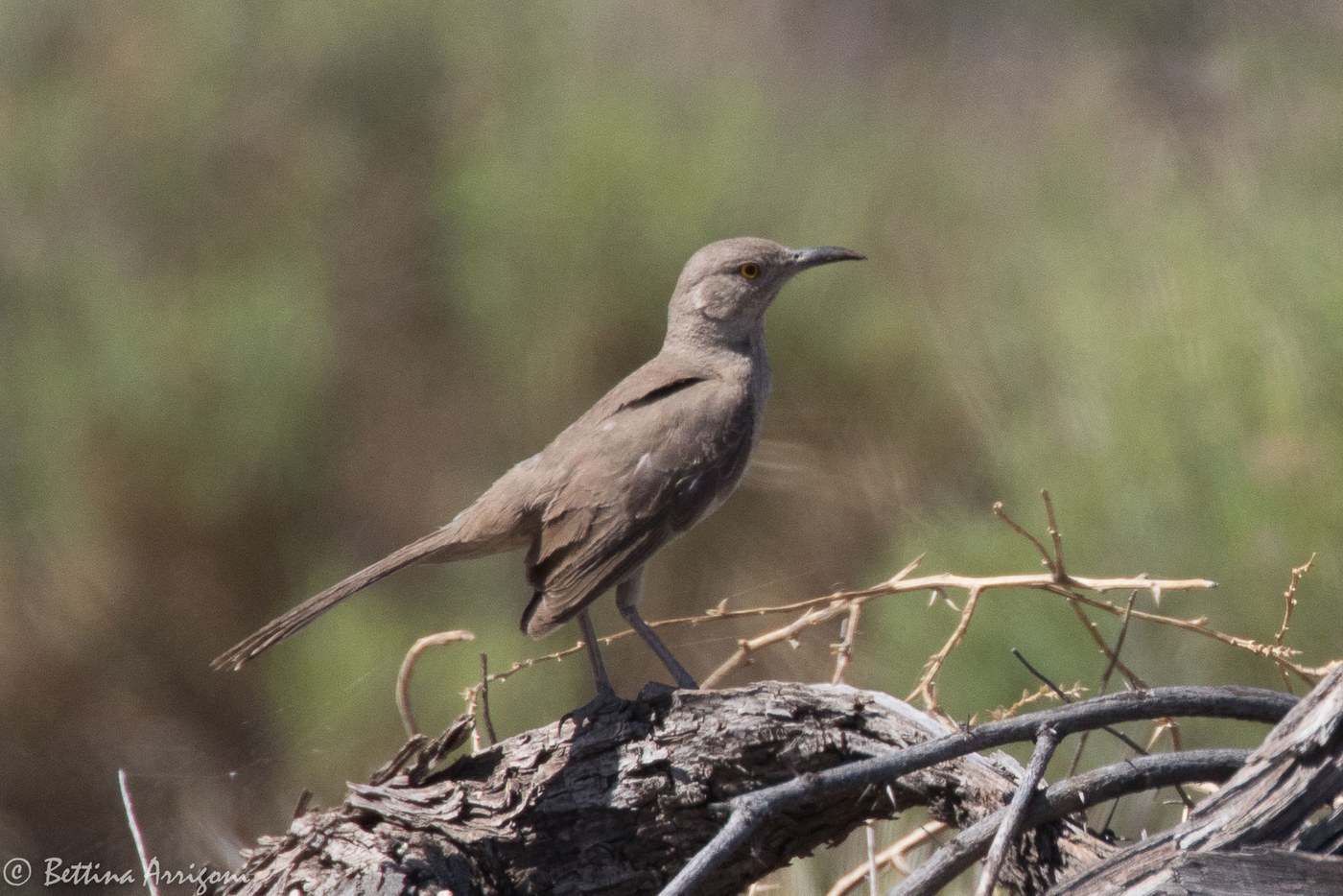
Key Field Marks
- Size & shape: Medium-sized thrasher (about 23-26 cm), somewhat slimmer and shorter-tailed than some other desert thrashers, with an upright posture typical of the genus.
- Plumage: Grayish-brown above, paler grayish-buff below, with the breast and flanks showing small, fairly indistinct triangular or arrow-shaped spots rather than bold streaking - much subtler markings than many other thrashers.
- Bill: The key mark: relatively short, only slightly downcurved, and dark, notably shorter and straighter than the strongly decurved bill of Curve-billed Thrasher.
- Eye: Pale yellowish to whitish eye in adults, contrasting with the plain face.
- Behavior: Forages mostly on the ground, running and hopping while probing soil and litter with its bill; often perches on low shrubs, fence posts, or utility wires to sing, especially in early morning during the breeding season.
Similar Species
- Curve-billed Thrasher: Has a notably longer, more strongly downcurved bill, typically an orange eye, and bolder, more diffuse breast spotting; overlaps broadly in range and habitat, making bill shape the most reliable distinguishing feature.
- Sage Thrasher: Smaller with a shorter tail, bolder and more distinct dark streaking (not spotting) on the underparts, and a straighter, thinner bill; prefers sagebrush habitat more than pure desert scrub.
- California Thrasher / Crissal Thrasher: Both have much longer, more strongly decurved bills than Bendire's and are essentially unspotted below, unlike Bendire's subtly spotted breast.
Where & When to See
- Habitat: Open desert grassland, desert scrub with scattered cactus and yucca, and semi-arid brushland; often favors slightly more open, grassy desert than the denser scrub preferred by Curve-billed Thrasher.
- Range: Breeds in the southwestern United States (Arizona, New Mexico, parts of California, Nevada, Utah, and Texas) and northern Mexico.
- Season: Largely resident in the core of its range, though some northern and higher-elevation populations may shift southward in winter; breeding activity and song peak in spring.
- Best viewing tips: Scan low perches such as yucca stalks, cholla, and fence lines in open desert grassland at dawn when males are singing; careful attention to bill length and shape is essential to confirm identification against Curve-billed Thrasher.
Voice
- Song is a musical, varied series of warbled phrases, generally softer, less harsh, and more melodious than the song of Curve-billed Thrasher, often delivered from an exposed perch.
- Call is a low, soft 'chuck' or similar contact note, less sharp than the whistled calls of some other thrashers.
- Singing is most frequent and prolonged in the early breeding season (late winter through spring), providing the best opportunity to locate territorial males.
Frequently asked questions
What is the single best field mark to separate Bendire's Thrasher from Curve-billed Thrasher?
Bill shape and length - Bendire's has a shorter, only slightly curved bill, while Curve-billed Thrasher has a longer, strongly downcurved bill; eye color (pale in Bendire's, orange in Curve-billed) is a helpful secondary clue.
Does Bendire's Thrasher have streaks or spots on its breast?
It shows small, fairly indistinct triangular or arrow-shaped spots on the breast and flanks, subtler than the bolder markings seen in some other thrasher species.
Where is the best habitat to find Bendire's Thrasher?
Open desert grassland and desert scrub with scattered cactus, yucca, and low shrubs in the southwestern United States and northern Mexico, often in slightly more open terrain than other desert thrashers prefer.
Is Bendire's Thrasher migratory?
Most populations are resident, though some birds at the northern or higher-elevation edge of the range may move to lower or milder areas in winter.
When is Bendire's Thrasher easiest to detect?
In early spring when males sing frequently from exposed perches such as yucca stalks or fence lines during the breeding season, making them easier to locate by voice.