
Bay-breasted Warbler Identification Guide
A boreal-forest warbler whose breeding males show a rich chestnut crown, throat, and flanks against a black face and buffy neck patch, while fall birds are plain greenish and require careful separation from Blackpoll and Pine Warblers.
Read the full Bay-breasted Warbler encyclopedia entry →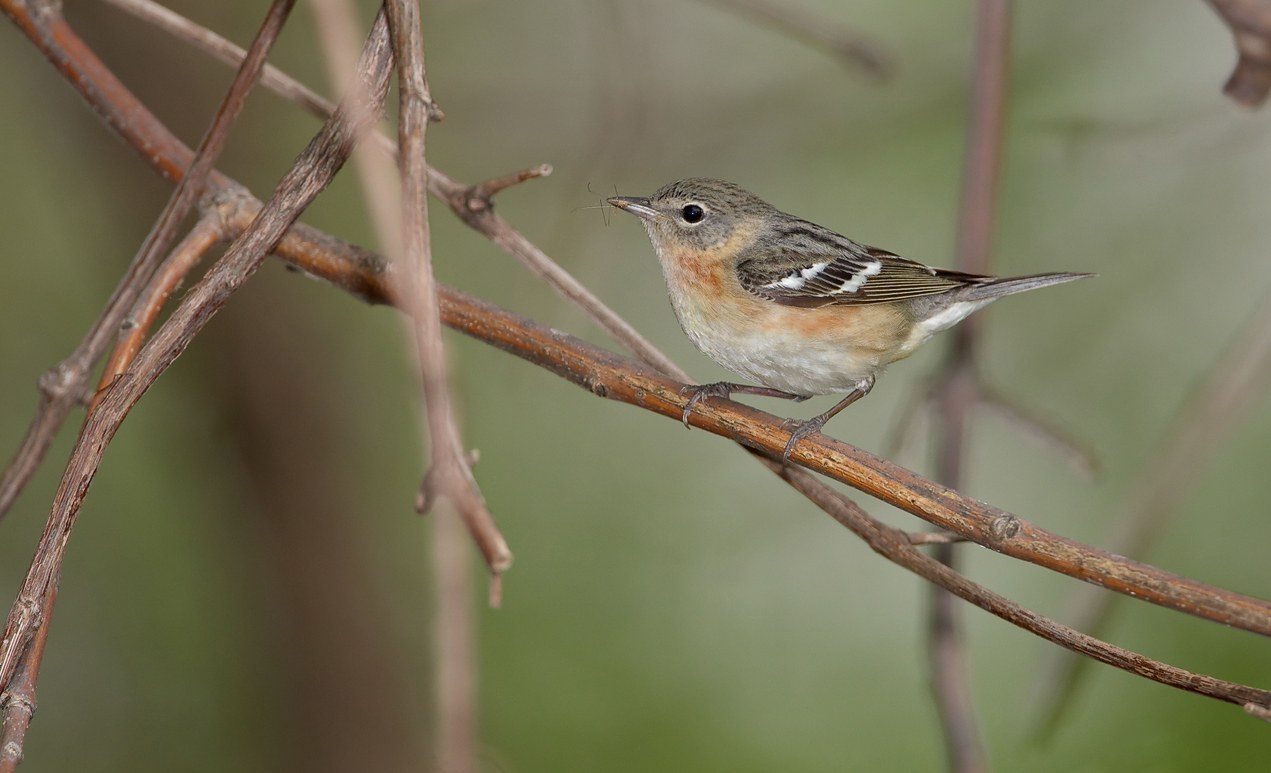
Key Field Marks
- Size & shape: Medium-sized warbler (14 cm) with a fairly stout bill and a somewhat deliberate, methodical foraging style compared to more active warblers.
- Breeding male: Chestnut ("bay") crown, throat, and flanks contrast with a black face mask and a pale buffy-cream patch on the side of the neck; back is streaked olive/black; two white wing bars.
- Breeding female: Duller version of the male, with more limited and paler chestnut on the crown and flanks, but pattern still recognizable.
- Nonbreeding/fall adults and immatures: Much plainer — greenish-olive above, dingy whitish below with a faint wash of buff on the flanks (sometimes a hint of chestnut on the flanks in some individuals), unstreaked or lightly streaked back, two white wing bars, and pale (not dark) legs and feet, with dark feet/toes — an important mark versus Blackpoll.
- Legs/feet: Pale/dull, unlike Blackpoll's pale legs but darker feet — subtle; best combined with other marks.
Similar Species
- Blackpoll Warbler (fall/immature): Very similar in fall plumage; Blackpoll shows more distinct pale wing bars, a more streaked back, whiter undertail coverts, and pale (yellowish) legs with pale feet/soles, whereas Bay-breasted often shows a duskier, plainer look with buffier flanks and dark legs/feet; undertail coverts are white in both, so leg/foot color and overall crispness of the back streaking are the more reliable clues.
- Pine Warbler: Bulkier, plainer olive overall with a stouter bill, white wing bars, and typically found in pines rather than deciduous/mixed forest; lacks any chestnut tones.
- Breeding male vs. Chestnut-sided Warbler: Chestnut-sided Warbler has chestnut restricted to the flanks (not throat/crown) with a yellow-green crown and white underparts — quite different overall pattern.
Habitat & Range
Breeds in boreal spruce-fir forest across Canada and the extreme northern US, often associated with spruce budworm outbreaks (population fluctuates with budworm abundance). Migrates through the eastern and central US; winters mainly in Panama and northern South America, foraging in mid- to upper-canopy of humid forest and forest edge.
Best Time to See
Look during spring migration (April–May) for the striking breeding-plumaged males, and during fall migration (August–October) when plainer immatures pass through — fall birds require careful, patient study, often in mixed foraging flocks with other warblers.
Voice
A very high-pitched, thin, and simple song, often rendered as a series of high, seet-seet-seet notes on one pitch, similar in quality to several other high-pitched warbler songs (e.g., Blackpoll, Black-and-white) and easily overlooked or misidentified by ear alone.
Frequently asked questions
How do I tell a fall Bay-breasted Warbler from a fall Blackpoll Warbler?
Fall Bay-breasted tends to look plainer and duskier with buffier flanks and dark legs/feet, while Blackpoll typically shows crisper back streaking, whiter undertail coverts, and pale legs with pale feet; these marks overlap, so multiple features should be checked together.
What is the most distinctive mark of a breeding male Bay-breasted Warbler?
A rich chestnut crown, throat, and flanks combined with a black face mask and a pale buffy patch on the side of the neck.
Where does the Bay-breasted Warbler breed?
In boreal spruce-fir forest across Canada and the far northern United States, with populations often tracking spruce budworm outbreaks.
When is the best time to see Bay-breasted Warblers?
During spring migration (April-May) for colorful breeding males, and fall migration (August-October) for the more subdued immature and nonbreeding plumages.