
Barrow's Goldeneye Identification Guide
A striking western diving duck, the drake with a glossy purple-black head, white crescent face patch, and bold black-and-white body pattern distinct from the more common Common Goldeneye.
Read the full Barrow's Goldeneye encyclopedia entry →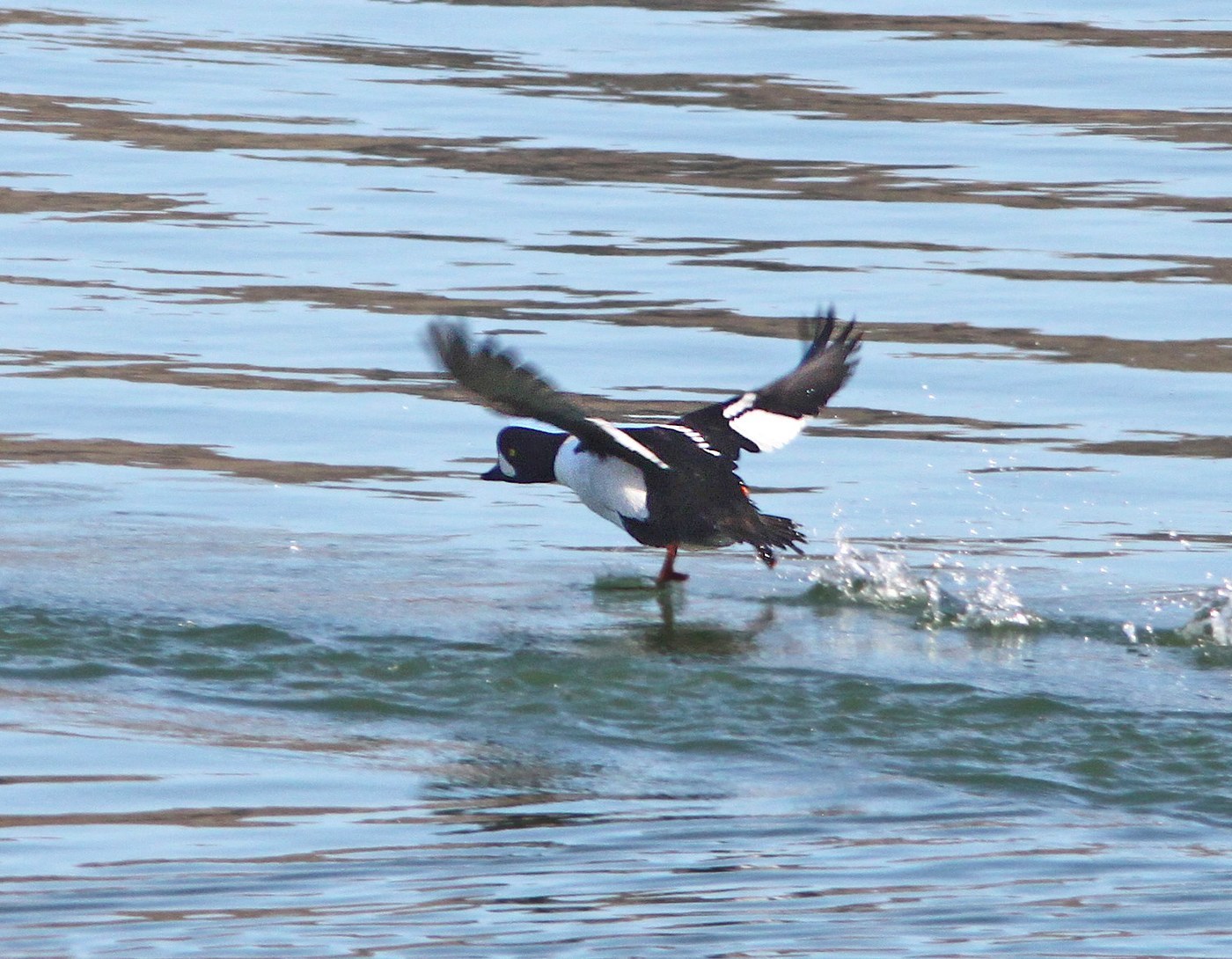
Key Field Marks
- Size & shape: Medium diving duck (42–53 cm) with a fairly large, steep-fronted head with a peaked crown giving a squarish head profile, and a short, stubby bill.
- Male (drake): Glossy purplish-black (not green) head with a bold white crescent-shaped patch in front of the eye (versus a round spot in Common Goldeneye); black back with bold white spotting/scapular patches forming a row of white crescents/ovals along the flanks; white breast and sides.
- Female: Chocolate-brown head, gray body, and a bill that is mostly yellow-orange in breeding females (variable, often more orange/yellow-tipped than Common Goldeneye's typically dark-based bill, though bill color overlaps and is not fully reliable).
- Eye: Golden-yellow in both sexes.
- Flight: Fast, direct flight low over water with rapid wingbeats producing a distinctive whistling sound from the wings; shows a white wing patch broken by black bars (versus Common Goldeneye's more solid white wing patch).
Similar Species
- Common Goldeneye: Male has a green-glossed (not purple) head and a round white spot (not crescent) in front of the eye; head shape is more rounded/oval rather than the steep, squared profile of Barrow's. Females are very similar and best separated by head shape and bill color, with caution.
- Bufflehead: Much smaller with a large white patch covering the back of the head (not a small facial crescent), and a stubbier bill.
Habitat & Range
Breeds primarily in mountainous areas of western North America (interior British Columbia, Alberta, and the Rocky Mountain states) on subalpine lakes and ponds, nesting in tree cavities near water; also breeds in Iceland and small numbers in eastern North America (Quebec/Labrador). Winters along the Pacific coast and in some ice-free interior and Atlantic coastal areas.
Best Time to See
Best looked for in winter along the Pacific Northwest coast (harbors, bays, rocky shorelines) where it is far more numerous than inland; on breeding grounds, look on mountain lakes in late spring and summer.
Voice
Generally quiet; males give a soft, low, grunting or growling "ka-KAA" during courtship displays, and both sexes produce guttural grunts and croaks; the whistling wing sound in flight is often more noticeable than vocalizations.
Frequently asked questions
How do I tell a Barrow's Goldeneye from a Common Goldeneye?
Male Barrow's has a purple-glossed head with a white crescent-shaped facial patch and a steep, squared head profile, while Common Goldeneye has a green-glossed head, a round white facial spot, and a more rounded head shape.
Where is the best place to see Barrow's Goldeneye?
Along the Pacific Northwest coast in winter (bays, harbors, rocky shorelines) or on subalpine lakes in the Rocky Mountains and interior British Columbia during the breeding season.
Are female Barrow's and Common Goldeneyes hard to tell apart?
Yes, females are quite similar; head shape (steeper forehead, squarer crown in Barrow's) and bill color (often more orange in Barrow's) offer clues, but identification should be made cautiously and ideally with multiple field marks.
What does Barrow's Goldeneye sound like in flight?
Like other goldeneyes, its fast wingbeats produce a distinctive whistling sound, which is often the first clue to its presence overhead.