
Barred Antshrike Identification Guide
A boldly black-and-white barred understory bird of Neotropical thickets, the male fully barred and crested, the female rich rufous with a plain face.
Read the full Barred Antshrike encyclopedia entry →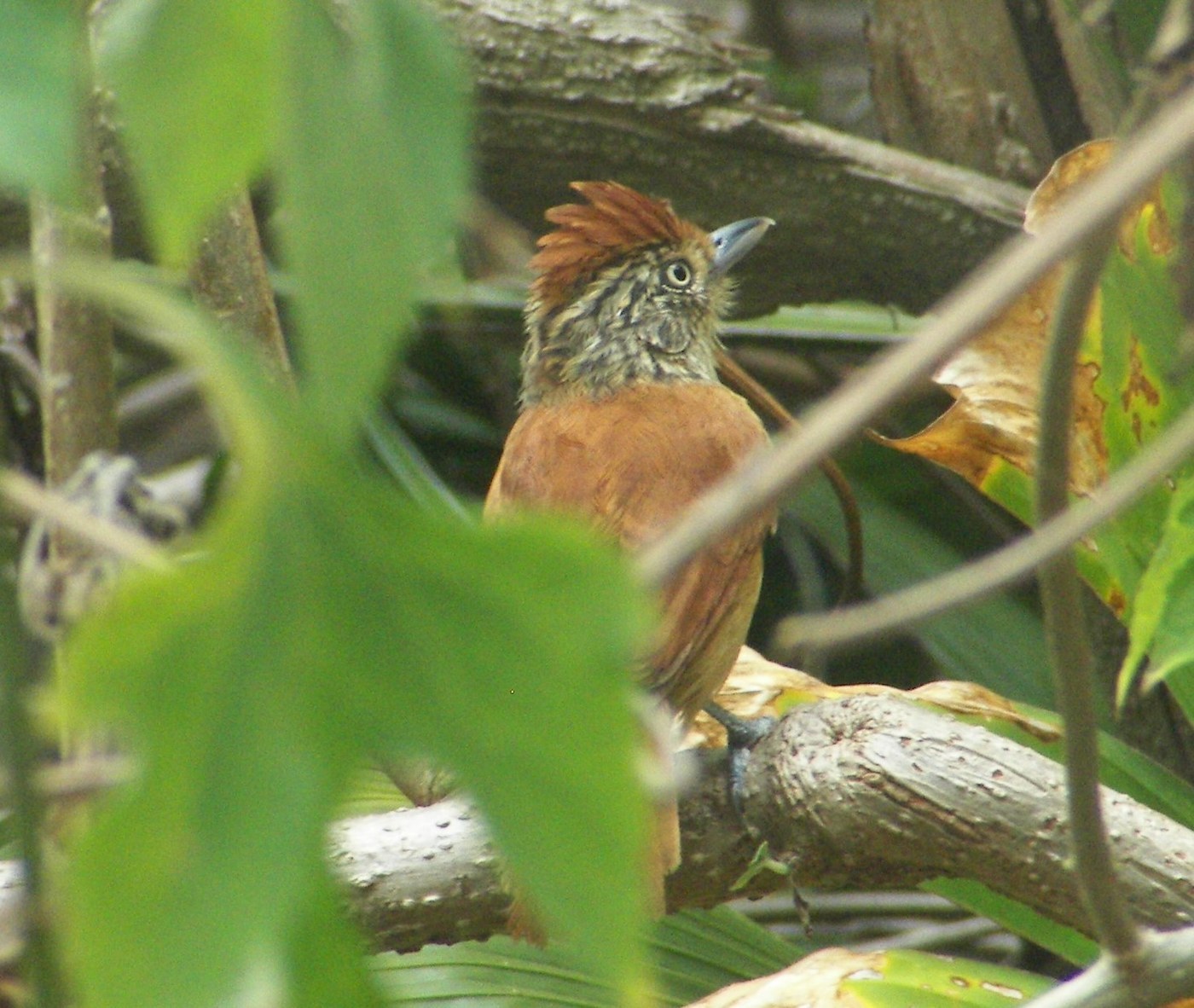
Key Field Marks
- Size & shape: Medium-sized antbird (15–17 cm) with a heavy, hook-tipped bill, a bushy, often raised crest, and a longish tail — stocky and shrike-like.
- Male plumage: Entirely and finely barred black-and-white over the whole body, wings, and tail, with a shaggy black-and-white crest that is often raised into a spiky crown.
- Female plumage: Strikingly different — rich rufous-chestnut upperparts and crest, with a plain buffy-orange face and underparts (no barring); the sexual dimorphism is extreme and can confuse observers into thinking they are different species.
- Bill: Stout, strongly hooked at the tip, blackish.
- Behavior: Skulks low in dense tangles and second growth, often heard before seen; frequently raises and lowers its crest and flicks its tail while calling; joins mixed understory flocks occasionally but is not an obligate ant-follower.
Similar Species
- Other barred antshrikes/antbirds (regional): Barred Antshrike is the most widespread and heavily barred species in most of its range; smaller antwrens lack the heavy hooked bill and shaggy crest.
- Female vs. other rufous understory birds: The female's plain rufous crest, unmarked face, and heavy bill separate her from thrushes or foliage-gleaners, which lack the crest and hooked bill.
- Fasciated Antshrike (range overlap in places): Larger, with finer barring and different voice; best separated by voice and range in areas of overlap.
Habitat & Range
Common and widespread from Mexico south through Central America and much of South America to Argentina, in dense scrub, second growth, forest edge, and overgrown clearings from lowlands to lower foothills. Not a deep-forest interior species — favors tangled, brushy edge habitat and gardens with thick cover.
Best Time to See
Resident year-round; most easily detected by voice at dawn and throughout the day, then tracked down by pishing or waiting quietly near dense tangles, where it often responds and comes into view.
Voice
A distinctive, accelerating series of nasal notes that speeds up and rises then drops on the last note: "cah-cah-cah-cah-cah-cah-CAAH," often paired with a low growling or nasal grunt from the mate; both sexes duet regularly, making voice one of the best ways to locate the species.
Frequently asked questions
Why do male and female Barred Antshrikes look so different?
This species shows extreme sexual dimorphism: males are finely barred black-and-white all over, while females are rich rufous with a plain, unbarred face and underparts — an adaptation seen in many antbirds.
How do I locate a Barred Antshrike in dense brush?
Listen for its distinctive accelerating, nasal call series that speeds up and drops at the end; it often responds to pishing and will emerge briefly into view from tangles.
What habitat does the Barred Antshrike prefer?
Dense scrub, second growth, forest edges, and brushy clearings rather than deep forest interior, from Mexico to Argentina.
Is the Barred Antshrike an ant-follower like some antbirds?
No, it is not an obligate ant-following species; it forages independently in tangles and thickets, though it may occasionally join mixed understory flocks.