Barn Owl Identification Guide
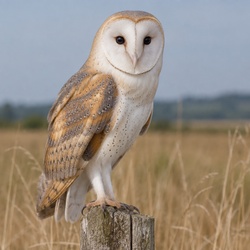
A ghostly, heart-faced owl of open country, told from all other owls by its pure white underparts and silent, low, wavering flight.
Read the full Barn Owl encyclopedia entry →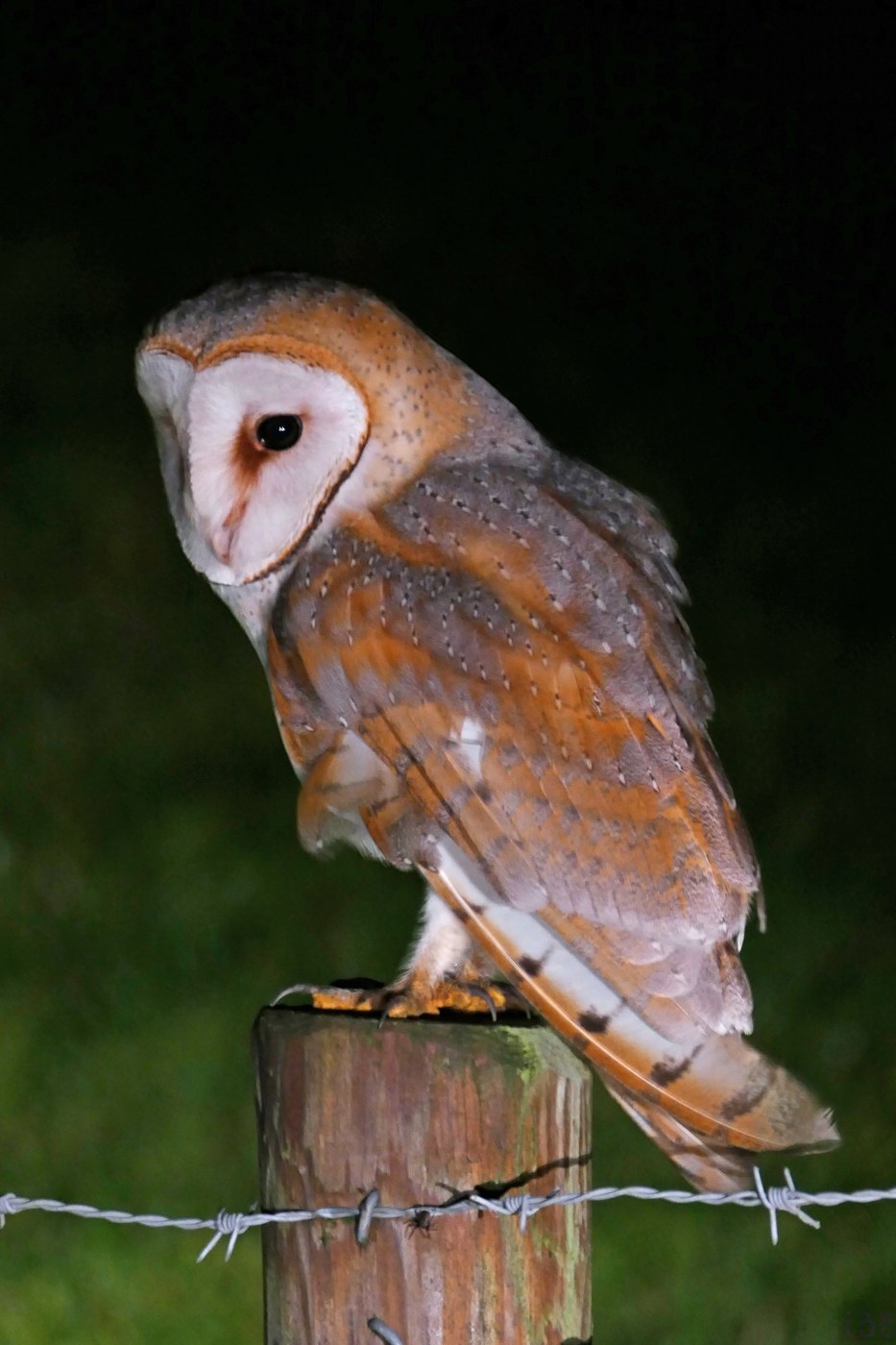
Key Field Marks
- Size & shape: Medium-sized owl (32–40 cm, wingspan ~100–125 cm) with a distinctive heart-shaped (not round) facial disc, long legs, and a fairly small head without ear tufts.
- Face: White to pale buff, heart-shaped facial disc rimmed with a thin dark line — unmistakable at close range or in a spotlight.
- Upperparts: Golden-buff to gray-orange, finely marbled with gray, black, and white speckling ("pearled" appearance).
- Underparts: Pure white to pale buff/cinnamon, usually with small dark spots, giving a pale, almost ghostly look in flight or headlights.
- Legs: Long and mostly feathered, with bare toes; often visibly dangling in flight.
- Flight: Buoyant, silent, low over fields with the head tipped down scanning for prey; wings look long and rounded, body pale and moth-like.
Similar Species
- Short-eared Owl: Streakier brown overall, rounder head, small ear tufts sometimes visible, flies with more erratic, mothlike wingbeats over open marshes/fields; Barn Owl is paler and whiter beneath with the diagnostic heart-shaped face.
- Snowy Owl: Much larger, bulkier, heavily white overall (especially males) but with a round yellow-eyed face, no heart shape, and found in open tundra/fields in winter, not barns and structures.
- Great Horned Owl: Larger, chunkier, with prominent ear tufts and mottled brown plumage — easily eliminated by the ear tufts and round face.
Habitat & Range
Found nearly worldwide except at high latitudes. Favors open country — farmland, grassland, marsh edges, and desert scrub — and nests/roosts in barns, silos, church steeples, tree cavities, and nest boxes. Largely nonmigratory across most of its range, though northern populations may shift south in harsh winters.
Best Time to See
Primarily crepuscular and nocturnal; most active at dusk and through the night hunting low over fields. Occasionally seen at daybreak or dusk perched at roost entrances, or flushed from barns and hollow trees during the day.
Voice
Does not hoot. Gives an eerie, drawn-out rasping screech (a hissing "shreeeee" or "skreeeh"), often heard in flight at night; also produces hisses, clicks, and snoring sounds from the nest cavity, especially from begging young.
Frequently asked questions
How do I tell a Barn Owl from a Snowy Owl?
Barn Owl has a distinctive heart-shaped facial disc and dark eyes, while Snowy Owl has a round face, yellow eyes, and is much bulkier and whiter overall; habitat also differs (barns/farmland vs. open tundra/fields).
Does the Barn Owl hoot like other owls?
No — instead of hooting, it gives a harsh, drawn-out screech or hiss, quite different from the hoots of Great Horned or Barred Owls.
What makes the Barn Owl's flight so distinctive?
It flies low, slow, and completely silently over open ground due to specialized soft-edged feathers, with the pale underside and heart-shaped face visible even at dusk.
Where is the best place to look for a Barn Owl?
Check old barns, silos, church towers, tree cavities, and nest boxes near open farmland, grassland, or marsh edges, especially around dusk.
Barn Owl identified by the community
Recent Barn Owl sightings identified with Bird Identifier.