Bald Eagle Identification Guide
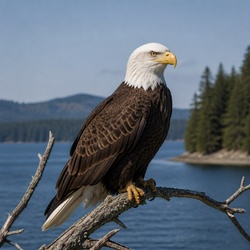
North America's iconic raptor, identified as an adult by its white head and tail against a dark brown body, but often confused with Golden Eagle in its mottled juvenile plumage.
Read the full Bald Eagle encyclopedia entry →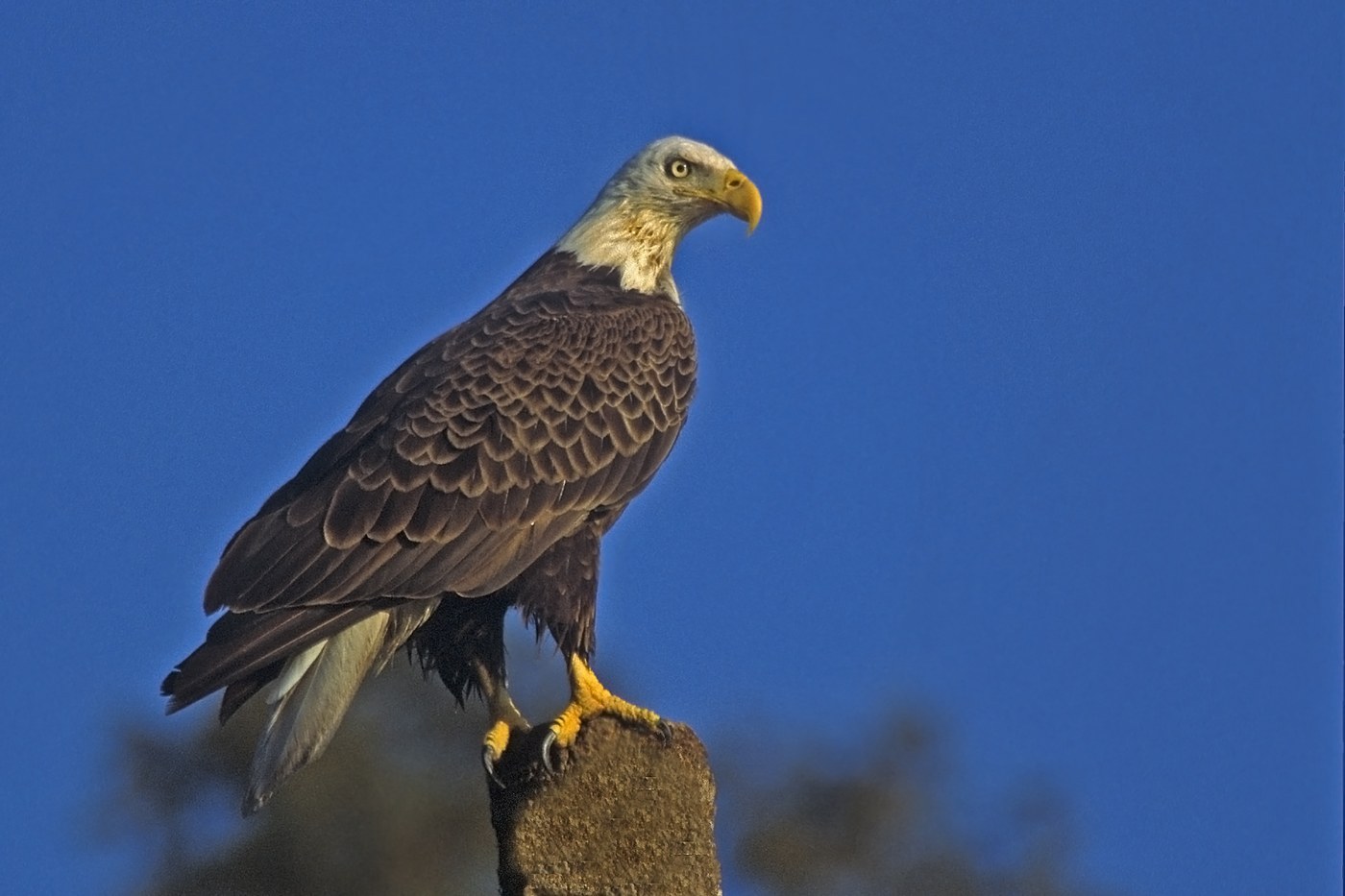
Key Field Marks
- Size & shape: A very large raptor with a wingspan of 1.8–2.3 m; broad, plank-like wings held flat in flight, a short wedge-shaped tail, and a noticeably large head and bill that project well forward of the wings.
- Adult plumage: Solid dark brown body and wings with a crisp white head and white tail — the field mark that gives the species its name ("bald" here means "white," not featherless).
- Bill, eyes, legs: Large, hooked bright yellow bill; pale yellow eyes; yellow legs and feet, unfeathered to the toes.
- Juvenile & immature: Takes 4–5 years to reach full adult plumage. Young birds are mostly dark brown with variable white mottling on the belly, wing linings, and tail base, gradually acquiring more white on the head and tail with each molt.
Similar Species
- Golden Eagle: The main source of confusion in immature Bald Eagle plumage. Golden Eagle has a golden-brown nape, feathered legs down to the toes, and in immatures shows crisp, well-defined white patches at the base of the primaries and a sharply demarcated white tail base with a dark terminal band — immature Bald Eagle's white patterning is more diffuse and variably placed, and the head/bill are proportionately larger.
- Osprey: Smaller, with a white belly and dark eye-stripe at all ages, and bent ("gull-winged") wings in flight — never shows the Bald Eagle's flat wing profile or massive bill.
Where & When to See It
- Found throughout North America near rivers, lakes, reservoirs, and coastlines where fish are abundant; also scavenges and takes waterfowl and carrion.
- Northern populations migrate south in winter, often congregating in large numbers below dams and at open water where fish and waterfowl remain accessible; southern populations are largely resident.
- Nests in large stick nests built in tall trees or, in treeless areas, on cliffs or artificial structures near water.
Voice
- Surprisingly weak and high-pitched for such a large bird — a series of thin, chirping or chattering whistles, quite unlike the dramatic scream often dubbed over eagle footage in film and television (which is usually a Red-tailed Hawk call).
Frequently asked questions
At what age does a Bald Eagle get its white head?
Full adult plumage with a solid white head and tail typically develops around 4 to 5 years of age, with progressively more white appearing at each molt before that.
How do you tell an immature Bald Eagle from a Golden Eagle?
Immature Bald Eagle has irregular, diffuse white mottling and unfeathered (yellow) legs and a larger bill, while Golden Eagle shows crisp, well-defined white patches on the wings and tail base and has legs feathered all the way to the toes.
Is the famous eagle scream actually a Bald Eagle call?
No — the dramatic screaming cry often used in media for Bald Eagles is usually the call of a Red-tailed Hawk; the real Bald Eagle call is a much weaker, high-pitched chirping or chattering.
Where do Bald Eagles typically nest?
They build large stick nests high in mature trees close to rivers, lakes, or coastlines, returning to and enlarging the same nest over multiple years.
Bald Eagle identified by the community
Recent Bald Eagle sightings identified with Bird Identifier.