
Australian Wood Duck Identification Guide
A goose-like, grass-grazing duck of Australia identified by the male's dark, maned head and the female's twin white eye stripes.
Read the full Australian Wood Duck encyclopedia entry →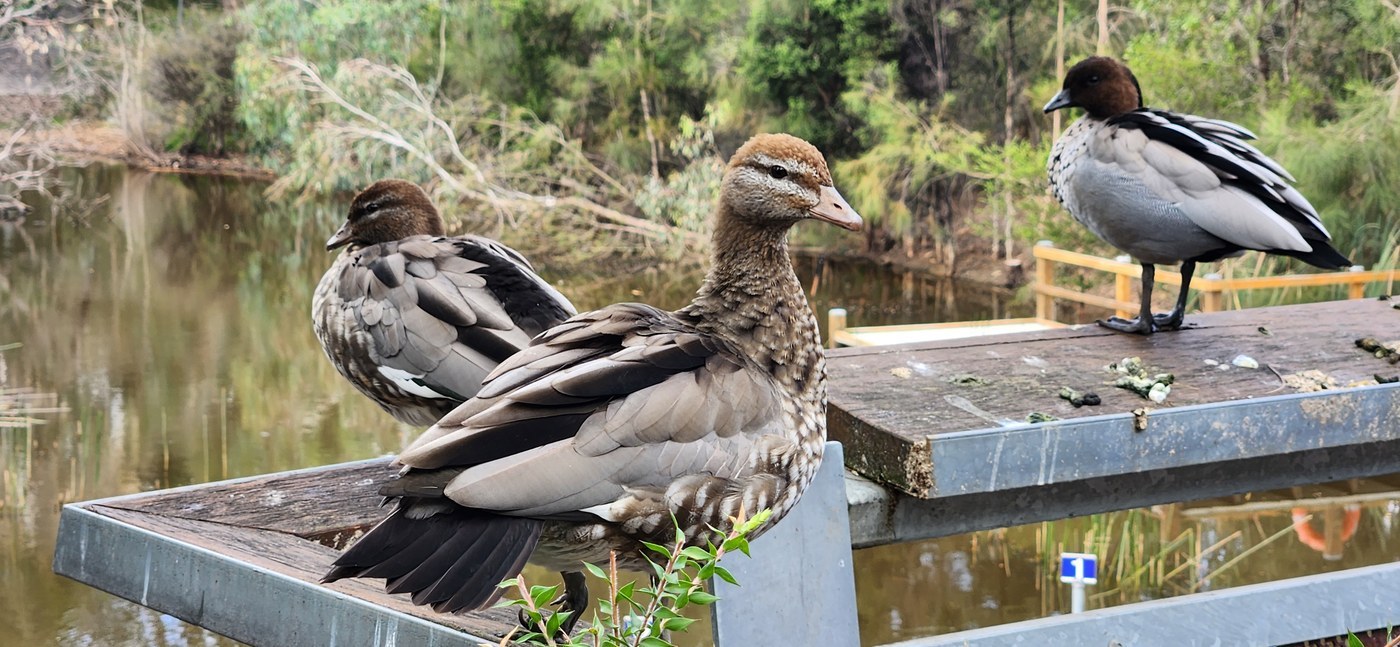
Key Field Marks
- Size & shape: A medium-sized duck (44–50 cm) with a small head, short bill, and an upright, goose-like stance — it looks more at home walking on grass than swimming.
- Male: Dark chocolate-brown head with a short, shaggy black "mane" on the crown and nape (the source of its alternate name, Maned Duck); grey-brown body finely mottled with black; black rear end and undertail.
- Female: Paler grey-brown overall with two distinctive white/cream stripes — one above and one below the eye — on an otherwise plain grey-brown face.
- Bill & legs: Short, dark grey bill (much shorter than a typical dabbling duck's); grey legs built for walking rather than diving.
- In flight: Shows a mostly grey wing with a dark green speculum bordered in white, visible only at close range.
Behavior
- Spends most of its time grazing on land — lawns, playing fields, golf courses, and pastures — often far from any water, more like a small goose than a typical duck.
- Perches readily in trees; nests in tree hollows, sometimes well away from wetlands.
- Usually seen in pairs or small family groups; large flocks gather outside the breeding season.
Similar Species
- Pacific Black Duck: Larger, with a bold dark eye-stripe and cream face, and a longer bill; far more aquatic and rarely grazes on open lawns like Wood Duck.
- Domestic/feral Mallard hybrids: Show green or otherwise brightly patterned heads and a longer, flatter bill — Wood Duck's head shape and mane are distinctive once learned.
Where & When to See It
- Endemic to Australia, found in every state, from wetlands and farm dams to suburban parks and golf courses.
- A generalist that has adapted well to human landscapes; common and increasing in many urban areas.
- Present year-round in most of its range, with local movements tracking rainfall and water availability rather than a strict migration.
Voice
- A soft, drawn-out, mooing or growling "mrrow" or "currawong"-like call, quite unlike the quack of most ducks; often given in flight or when disturbed while grazing.
Frequently asked questions
How do you tell a male from a female Australian Wood Duck?
Males have a dark, unmarked brown head with a short shaggy mane; females have a plainer grey-brown head marked with two clear white stripes above and below the eye.
Why is the Australian Wood Duck often seen far from water?
It is primarily a grazing duck that feeds on grasses and clover on land, so it is regularly found on lawns, sports fields, and pastures well away from wetlands.
What does an Australian Wood Duck sound like?
It gives a soft, mooing or growling call rather than a typical quack, often heard as birds fly overhead or when a family group is disturbed.
Where does the Australian Wood Duck nest?
It nests in tree hollows, sometimes at considerable height and distance from water, with ducklings later making a leap to the ground to follow their parents to a wetland.