
Australian Brushturkey Identification Guide
A large, black, turkey-like mound-builder of eastern Australian rainforests, unmistakable for its bare red head and laterally flattened, fan-like tail.
Read the full Australian Brushturkey encyclopedia entry →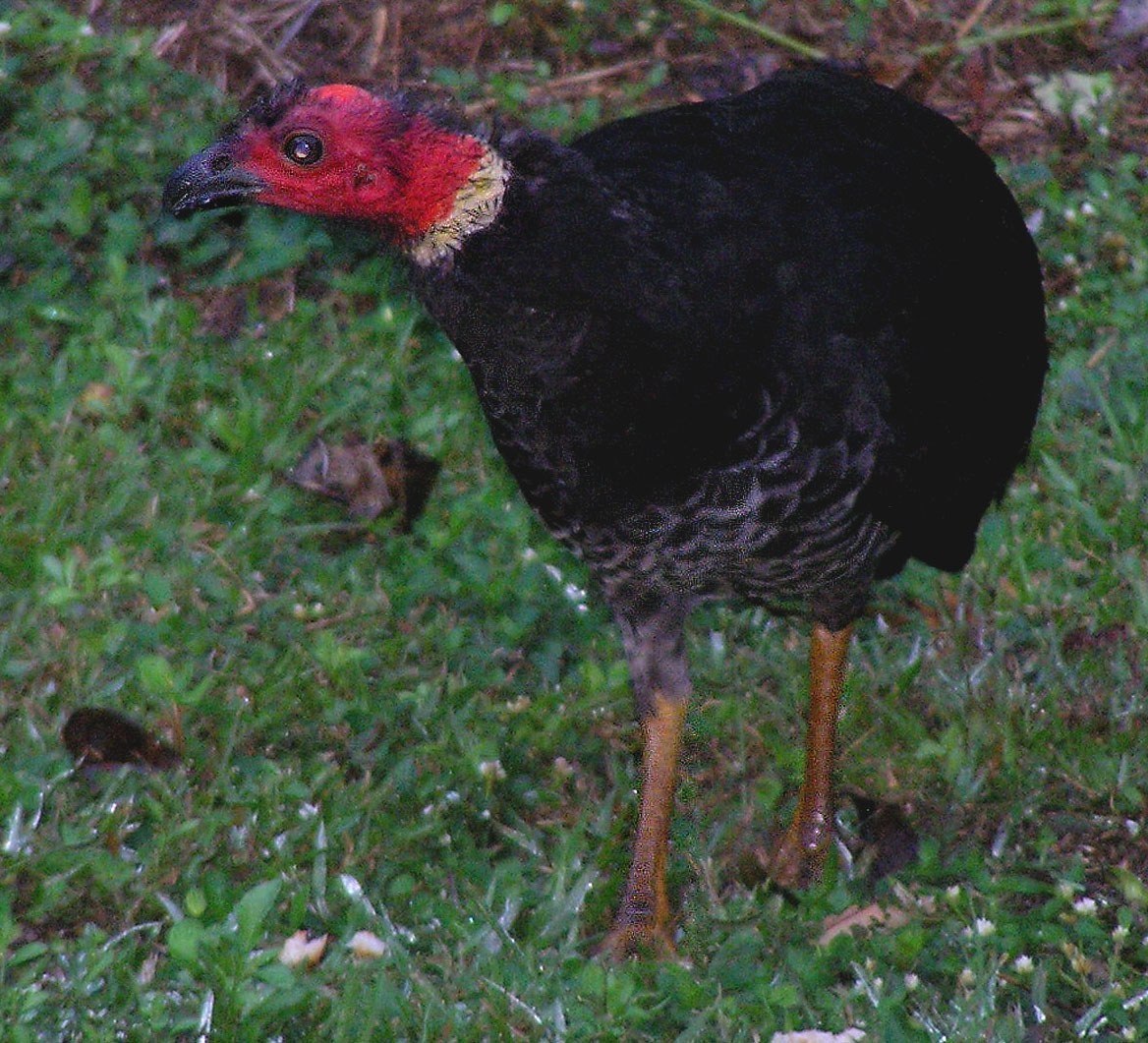
Key Field Marks
- Size & shape: A large ground-dwelling bird (about 60–75 cm) with a plump black body, long legs, and a distinctive tail that is flattened side-to-side and often held raised and fanned, giving an unusual silhouette compared to typical fowl.
- Plumage: Body plumage is glossy black to sooty-brown overall; the head and neck are bare and bright red (unfeathered skin), with a large yellow (sometimes purple-tinged, varying regionally and individually) wattle hanging from the throat, larger in males.
- Bill & legs: Short, stout, blackish bill suited to scratching through leaf litter; strong grey legs and large feet built for raking together enormous mound nests.
- Behavior: A megapode that does not incubate eggs by sitting on them — instead, males build and tend massive mounds of leaf litter and soil, using decomposition heat to incubate eggs, constantly raking material to regulate temperature; forages by scratching noisily through leaf litter for invertebrates and fallen fruit.
Separating It From Similar Species
- Orange-footed Scrubfowl: Another megapode but with grey-brown (not black) plumage, a small dark crest, and orange-yellow legs and feet rather than the brushturkey's grey legs and all-black body.
- Domestic turkey or feral fowl: Brushturkeys are wild, slimmer-bodied, and always show the bare red head/neck with laterally flattened tail — a shape and head pattern not matched by farmyard poultry.
- Female vs. male: Sexes look broadly similar, but males typically show a larger, more colorful wattle during the breeding season while tending their mounds; juveniles are duller brown with a smaller, less developed wattle and browner plumage overall.
Where & When to See It
- Habitat: Rainforest, wet eucalypt forest, and increasingly parks, gardens, and suburban areas along the east coast where remnant vegetation persists; large mounds of raked leaf litter are a telltale sign of local presence.
- Range: Eastern Australia from around Cape York in far north Queensland south to around the Illawarra region of New South Wales, with range expansion into suburban Sydney and beyond in recent decades.
- Season: Resident year-round; mound-building and breeding activity peaks in the warmer months (roughly spring through autumn), when males are most conspicuously tending nest mounds.
Voice & Song Cues
- Usually a quiet bird away from disputes, but can give loud, harsh grunting, clucking, or booming calls, especially between rival males or during mound-related confrontations.
- The sound of vigorous scratching and rustling in leaf litter is often the first clue to a foraging bird before any call is heard.
Frequently asked questions
How can I recognize an Australian Brushturkey at a glance?
Look for a large black bird with a bare red head, yellow throat wattle, and a tail that is flattened sideways and often held fanned upward.
Do Australian Brushturkeys sit on their eggs like other birds?
No — they are megapodes that incubate eggs using heat generated by decomposing leaf litter in large mounds built and tended mainly by the male.
What is a sure sign a Brushturkey is nearby even if I don't see the bird?
A large, conspicuous mound of raked-up leaf litter and soil, sometimes over a meter high, in forest or garden settings is a strong sign of an active nest mound.
How do I tell a Brushturkey from an Orange-footed Scrubfowl?
Brushturkey has all-black plumage, grey legs, and a bare red head, while Orange-footed Scrubfowl is grey-brown with a small crest and bright orange legs.