
Australasian Figbird Identification Guide
A noisy, fig-loving oriole relative of northern and eastern Australia, best known for the male's bare red eye-patch and the female's heavily streaked underparts.
Read the full Australasian Figbird encyclopedia entry →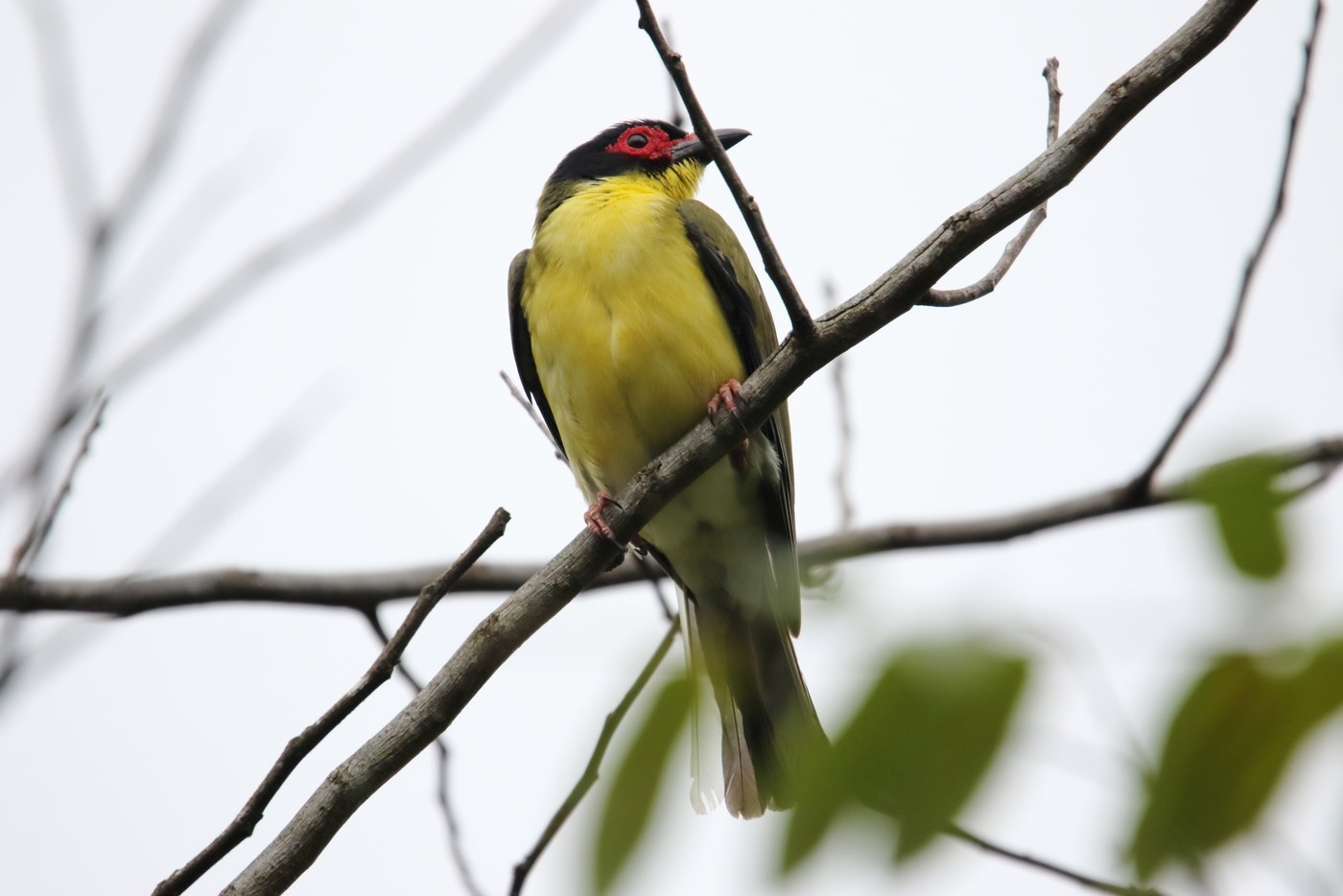
Key Field Marks
- Size & shape: A medium-sized, oriole-like bird (about 27–29 cm) with a fairly long tail, stout slightly downcurved bill, and an upright perching posture, often seen in noisy flocks.
- Male plumage: Olive-green body with a contrasting black or dark grey cap/hindneck (extent varies by subspecies), grey-white to olive underparts, and a distinctive patch of bare, reddish-pink skin around the eye.
- Female plumage: Much duller — dull olive-brown above with heavily streaked, off-white to grey underparts, and a much reduced or duller eye-patch; can look like an entirely different species from the male.
- Behavior: Highly social and vocal, moving in small flocks through fruiting trees, especially figs, calling frequently as they feed; flight is direct with strong wingbeats.
Separating It From Similar Species
- Olive-backed Oriole: Similar green-and-streaked look in some plumages but has a longer, more slender bill, red (not bare pink) eye without a bare skin patch, and lacks the figbird's dark cap in males; oriole calls are fluty rather than the figbird's harsher chattering.
- Female/immature figbirds vs. female orioles: Figbirds show coarser, blotchier streaking and a stockier build; orioles are slimmer with finer streaking and a proportionally longer tail.
- Regional male variation: Northern Australian males can show more grey on the head versus more black-capped birds elsewhere; always confirm with the bare red eye-patch, which is diagnostic across all forms.
Where & When to See It
- Habitat: Rainforest edges, mangroves, parks, gardens, and fruiting trees in urban and semi-urban areas — it adapts well to human-modified landscapes with fig and other fruiting trees.
- Range: Coastal and near-coastal northern and eastern Australia from the Kimberley across the Top End and down the east coast to around central New South Wales; also New Guinea and nearby islands.
- Season: Largely resident, though some populations show local movements tracking fruit availability; can form larger post-breeding flocks.
Voice & Song Cues
- Calls are a mix of harsh chattering, squeaky whistles, and a distinctive rising "figbird" chatter given by flocking birds, often the first clue to a feeding flock in a fruiting tree.
- Less musical than true orioles, with a scratchier, more conversational quality to the flock chatter.
Frequently asked questions
What is the single best mark for a male Australasian Figbird?
A patch of bare, reddish-pink skin around the eye combined with an olive-green body and dark cap is diagnostic and not shared by similar species.
Why do male and female Australasian Figbirds look so different?
The species shows strong sexual dimorphism: males are boldly patterned with the bare red eye-patch, while females are dull, streaky, and far less conspicuous, likely aiding nest camouflage.
How can I tell a figbird from an Olive-backed Oriole?
Check the eye: figbirds have bare pink-red skin around the eye, while orioles have a red iris but feathered, unmarked skin around it, plus orioles have thinner bills and fluty calls.
What habitat is most reliable for finding Australasian Figbirds?
Fruiting fig trees in parks, gardens, and rainforest edges across northern and eastern Australia are the most dependable places to find flocks.