
Asian Brown Flycatcher Identification Guide
A small, plain gray-brown flycatcher of Asian woodlands, best recognized by its white eyering, pale lores, and understated, unstreaked underparts.
Read the full Asian Brown Flycatcher encyclopedia entry →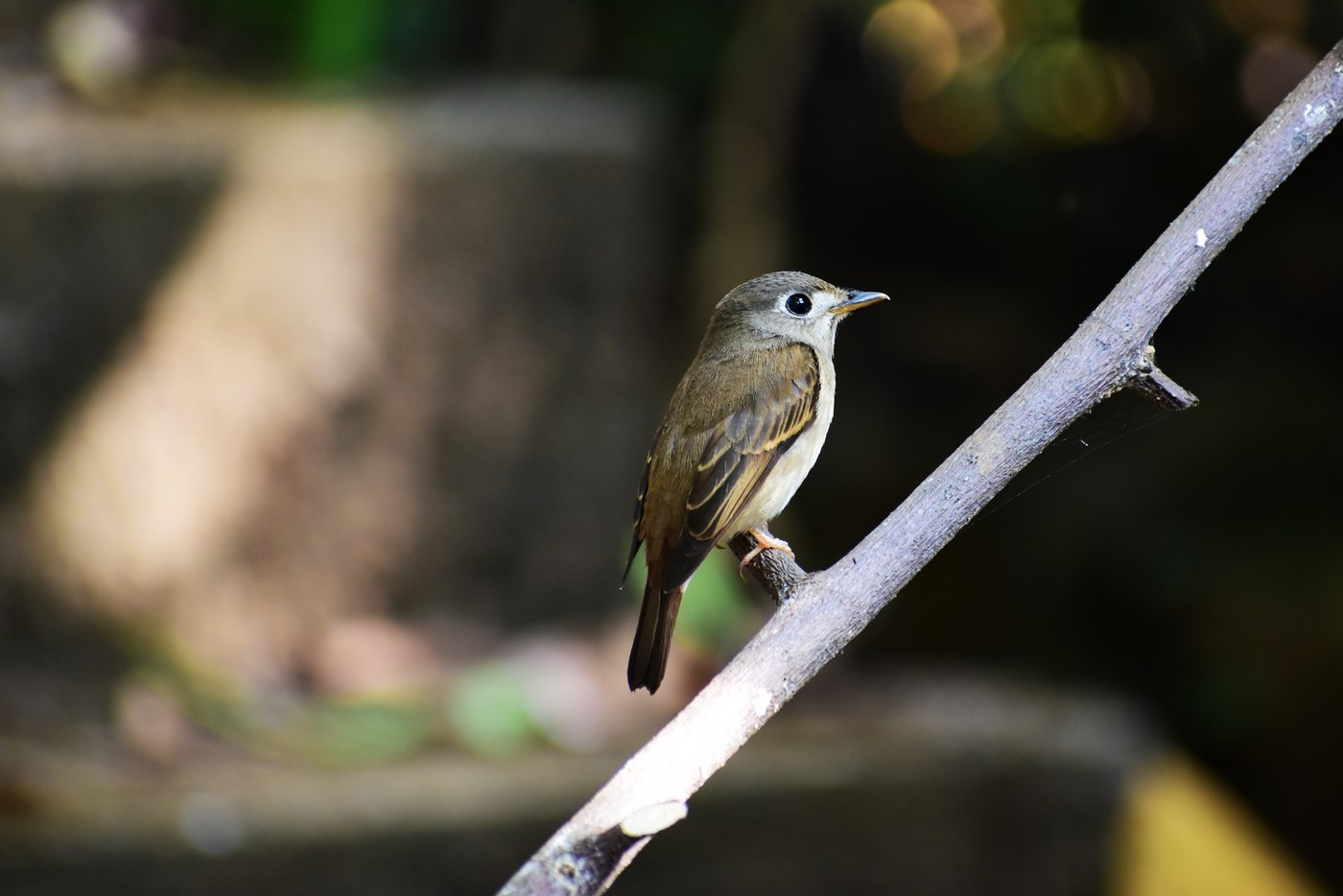
Key Field Marks
- Small, compact flycatcher with plain grayish-brown upperparts and whitish underparts, showing only a faint gray-brown wash across the sides of the breast.
- White eyering is a key mark, giving the face an open, big-eyed look; lores are pale, not solidly dark.
- Bill is fairly broad-based and dark above, often with a paler (pinkish or yellowish) base to the lower mandible.
- Wings are plain with faint pale fringes to the flight feathers; overall plumage lacks bold streaking or spotting, appearing subtle and understated compared to some related flycatchers.
Behavior
- Classic "sit-and-wait" flycatcher behavior: perches upright on an exposed twig, sallies out to snatch flying insects, and returns to the same or a nearby perch.
- Often flicks its wings and tail while perched.
- Frequently joins mixed-species foraging flocks in forest and woodland edge habitat, particularly during migration and winter.
Separating from Similar Species
- Dark-sided Flycatcher: shows more obvious diffuse streaking on the underparts and a more contrasting face pattern.
- Brown-breasted Flycatcher: browner and warmer-toned overall with a more defined breast band.
- Spotted Flycatcher (mainly Europe/Africa): shows fine streaking on the crown and breast, unlike the plain-breasted Asian Brown Flycatcher.
- The clean white eyering combined with essentially unstreaked, unmarked underparts helps separate Asian Brown Flycatcher from its close relatives, though care and good views are often needed within this notoriously similar group.
Habitat & Range
- Breeds across temperate and subtropical Asia, from Siberia and the Himalayas through China and Japan.
- A long-distance migrant, wintering widely across South and Southeast Asia in forest edge, secondary growth, gardens, and plantations.
- Typically found in the understory to mid-story of open woodland and forest edge rather than dense forest interior.
Voice
- Gives thin, high-pitched, often barely audible "tzii" or "seee" calls; not a notably vocal species outside the breeding season.
Frequently asked questions
What is the best field mark for Asian Brown Flycatcher?
A prominent white eyering combined with plain, essentially unstreaked grayish-brown upperparts and whitish underparts.
How do I separate Asian Brown Flycatcher from Dark-sided Flycatcher?
Dark-sided Flycatcher shows more obvious diffuse streaking on the underparts, while Asian Brown Flycatcher's underparts are largely plain and unstreaked.
Where does the Asian Brown Flycatcher winter?
It winters widely across South and Southeast Asia in forest edge, secondary growth, gardens, and plantations after breeding in temperate Asia.
What kind of habitat does Asian Brown Flycatcher prefer?
Open woodland and forest edge, typically in the understory to mid-story rather than dense forest interior.