
Andean Condor Identification Guide
A massive Andean vulture with one of the widest wingspans of any flying bird, black overall with a white neck ruff and a bald head that flushes color with mood.
Read the full Andean Condor encyclopedia entry →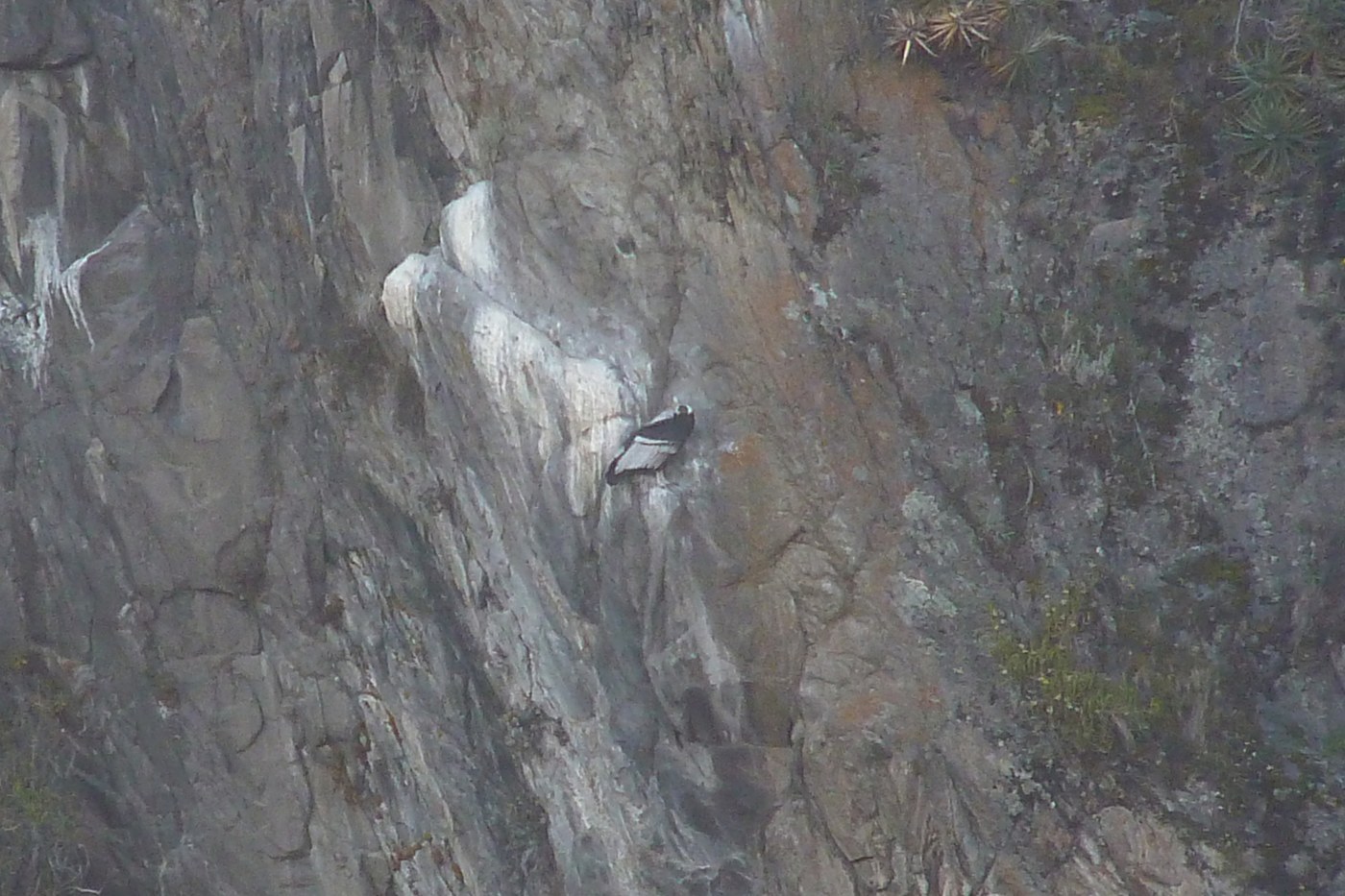
Key Field Marks
- Enormous size, with a wingspan up to about 3.2 m (10.5 ft) among the largest of any living bird
- Overall black plumage with a distinctive white ruff of feathers encircling the base of the neck
- Large white patches on the upper wing coverts, more extensive in males than females
- Bald head and neck with bare skin that ranges from pink to red to grayish and can visibly flush with the bird's temperature or mood
- Adult males have a large fleshy comb (caruncle) on top of the head and a wattle on the neck; females lack the comb and have red (not brown) eyes
How to Tell It Apart from Similar Species
- Turkey Vulture and Black Vulture are both far smaller, lack the white neck ruff and large white wing patches, and soar with different wing postures.
- King Vulture, found mainly in lowland tropical forest rather than high mountains, has a mostly white body with a black flight-feather trim (the reverse pattern) and a brightly colored, ornately fleshy head.
- Sheer size, the pale wing patches, and the white neck ruff make an adult Andean Condor unmistakable among Andean raptors; sub-adults are more uniformly dark and take several years to acquire full adult plumage and head ornamentation.
Habitat & Range
Andean Condors range along the length of the Andes mountains from Venezuela and Colombia south to Tierra del Fuego, favoring high-elevation open grassland and alpine terrain, as well as some coastal areas of Peru and Chile where they scavenge marine carrion. They nest on inaccessible cliff ledges at high elevation and are highly social, often roosting communally.
Behavior
Condors are almost entirely scavengers, feeding on carrion such as dead livestock, wild camelids (like guanaco), and, along the coast, marine mammals. They are masters of soaring flight, riding thermals and mountain updrafts for hours with very little flapping, typically holding the wings flat with the primary "finger" feathers upswept at the tips. Reproduction is slow: pairs generally raise a single chick and often breed only every other year, contributing to the species' vulnerability to population declines.
Voice
Andean Condors lack a syrinx and are essentially voiceless, capable only of low hisses, grunts, and clicking sounds, mainly at close range around carcasses or nests.
Frequently asked questions
How do you identify an Andean Condor?
Look for an enormous black vulture with a white ruff around the base of the neck, large white patches on the upper wings, and a bald, bare head and neck; males also have a fleshy comb on the head.
How can you tell a male Andean Condor from a female?
Males are larger, have a fleshy comb on top of the head and a neck wattle that females lack, more extensive white wing patches, and brown eyes, while females have red eyes and no comb.
What is the difference between an Andean Condor and a Turkey Vulture?
The Andean Condor is vastly larger, with a white neck ruff and large white wing patches, while the Turkey Vulture is much smaller, uniformly dark, with a red (not bare gray-pink) head and no white markings.
What do Andean Condors eat?
They are scavengers, feeding on carrion including dead livestock, wild camelids such as guanaco, and, in coastal areas, marine mammal carcasses.
Where do Andean Condors live?
Along the length of the Andes mountains from Venezuela and Colombia south to Tierra del Fuego, in high-elevation grassland and alpine terrain and some coastal areas.