American Robin Identification Guide
A large, familiar thrush with a gray-brown back and a warm brick-orange breast, commonly seen hopping across lawns in search of earthworms.
Read the full American Robin encyclopedia entry →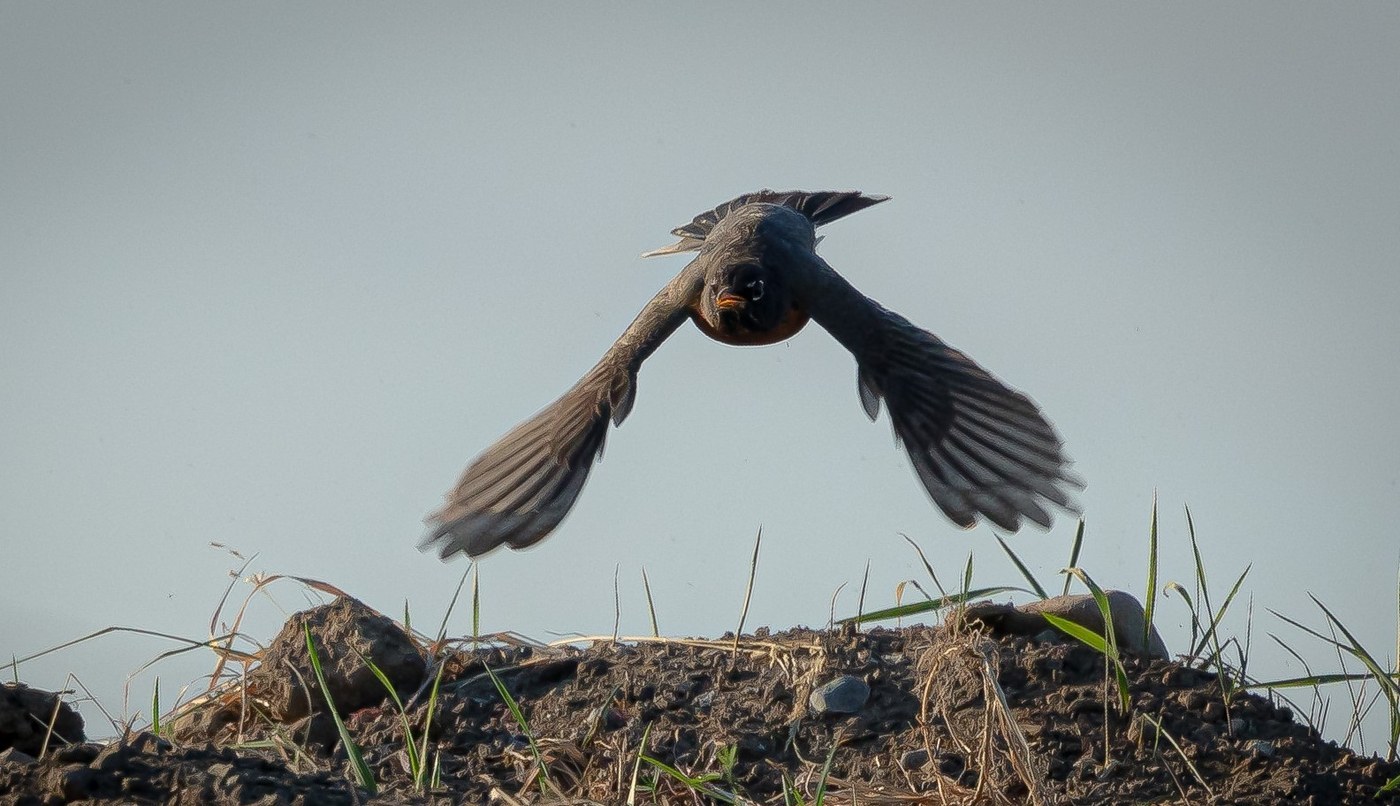
Key Field Marks
- Medium-large thrush with gray-brown upperparts and a warm brick-red to orange breast
- Blackish head (darker and more solid in males, grayer in females) with broken white eye crescents
- Yellow bill, often with a dark tip
- White lower belly and undertail coverts; white corners visible at the tip of the tail in flight
- Juveniles show a spotted, speckled breast rather than solid orange
How to Tell It Apart from Similar Species
- Within most of its range, the American Robin's combination of gray-brown back and solid orange-red breast makes it essentially unmistakable.
- Varied Thrush (western forests, especially in winter) has a bold orange eyebrow and a dark breast band on an orange breast, quite different from the robin's plain orange chest.
- Rufous-backed Robin (a rare visitor to the southwestern U.S. from Mexico) shows a contrasting gray face and rufous back rather than the American Robin's uniformly gray-brown upperparts, and lacks bold white eye crescents.
Habitat & Range
American Robins are one of the most widespread and familiar birds in North America, breeding from Alaska and Canada south through the entire United States into central Mexico. They thrive in an enormous range of habitats — lawns, gardens, parks, agricultural land, and forests of all types — and are equally at home in cities, suburbs, and wilderness. Many northern populations migrate south for the winter, but robins are present somewhere across most of the continent year-round; winter birds often form large nomadic flocks that roam in search of fruiting trees and shrubs rather than remaining on territory.
Behavior
Robins are best known for their habit of hopping across open lawns, pausing with head cocked to watch and listen for movement before pulling earthworms from the ground. Earthworms and other invertebrates make up much of the diet during the breeding season, while fruit becomes increasingly important in fall and winter, when flocks may strip berries from trees such as crabapple, holly, and juniper. Robins are also one of the earliest and most persistent dawn singers.
Voice
The song is a rich, cheerful, caroling series of clear phrases, often rendered as "cheerily, cheer-up, cheerio," delivered from a high perch especially at dawn and dusk. Common calls include a sharp "tut-tut-tut" or "peek" alarm note and a high, thin "seep" given in flight.
Frequently asked questions
How do you identify an American Robin?
Look for a large thrush with a gray-brown back, a blackish head, broken white eye crescents, a yellow bill, and a solid brick-orange breast.
Are American Robins present year-round?
In much of their range, yes — while many northern breeders migrate south, robins are found somewhere across most of North America throughout the year, often in large nomadic winter flocks.
What is the difference between a male and female American Robin?
Males typically have a darker, more solid blackish head and slightly brighter orange breast, while females show a paler, grayer head; the difference can be subtle and overlaps between individuals.
What does an American Robin eat?
Mainly earthworms and other invertebrates during the breeding season, shifting to fruit and berries in fall and winter.
What does an American Robin sound like?
A rich, cheerful caroling song often described as 'cheerily, cheer-up, cheerio,' along with a sharp tut-tut-tut alarm call.
American Robin identified by the community
Recent American Robin sightings identified with Bird Identifier.