
American Redstart Identification Guide
An active, fan-tailed warbler in which males are black with bold orange patches and females and immatures are gray-olive with yellow patches, both constantly flashing their wings and tail.
Read the full American Redstart encyclopedia entry →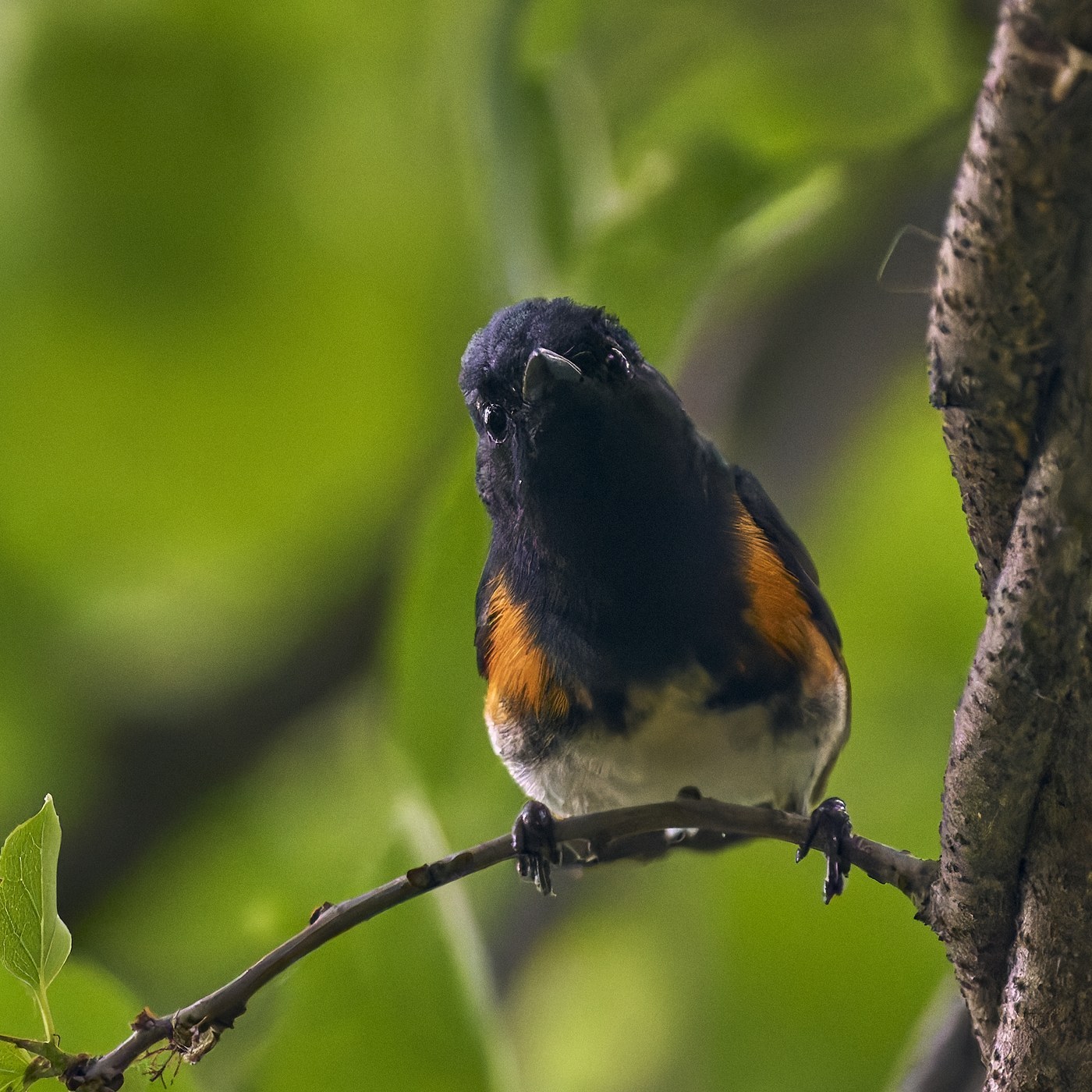
Key Field Marks
- Small, slim warbler that constantly fans its tail and droops/flicks its wings, flashing bright color patches
- Adult male: glossy black overall with vivid orange patches on the sides of the breast, wings, and base of the tail; white belly
- Female and immature male: gray head, olive-green back, and pale yellow (not orange) patches in the same wing/tail/flank positions; whitish underparts
- Thin, straight, insect-catching bill typical of warblers
How to Tell It Apart from Similar Species
- The adult male's black-and-orange pattern is essentially unmistakable among North American warblers.
- Female/immature birds can suggest other yellow-marked warblers, but the redstart's constant tail-fanning and wing-drooping habit, combined with yellow patches at the base of the tail (rather than the tip or overall body), are diagnostic.
- First-year males can show a mix of black feathering coming in among the gray-and-yellow immature plumage.
Habitat & Range
American Redstarts breed across most of the eastern half of North America and in a broad band across Canada to the Pacific Northwest, favoring second-growth deciduous and mixed woodlands, forest edges, and shrubby riparian thickets. They winter in the Caribbean, Mexico, Central America, and northern South America, often in mangroves, shade coffee plantations, and forest edge habitats.
Behavior
Redstarts are highly active foragers that sally out from perches to catch flying insects and glean prey from foliage, flashing their brightly patterned wings and tail to startle insects into flight — a foraging technique sometimes called "flush-pursuit." This constant flicking motion makes them relatively easy to pick out even when the bird itself is partly hidden in foliage.
Voice
The song is a series of thin, high, sweet whistled notes, quite variable between individuals and often ending in an emphatic downslurred or upslurred final note (rendered as "see-see-see-suWEE" or similar). The call is a sharp, downslurred "chip."
Frequently asked questions
How do you identify an American Redstart?
Adult males are glossy black with bold orange patches on the wings, tail, and sides; females and young males are gray-olive with the same pattern in pale yellow. Both constantly fan the tail and droop the wings.
Why do American Redstarts flash their tails and wings?
They use this flash-and-flick behavior, showing off their bright color patches, to startle hidden insects into flying so they can be caught — a technique called flush-pursuit foraging.
What is the difference between a male and female American Redstart?
Males are black with orange patches; females and immature males are gray-headed and olive-backed with pale yellow patches in the same places on the wings, tail, and flanks.
Where do American Redstarts live?
They breed in deciduous and mixed second-growth woodlands across most of eastern North America and winter in the Caribbean, Mexico, Central America, and northern South America.
What does an American Redstart sound like?
A thin, high, sweet series of whistled notes, often ending in an emphatic final note, plus a sharp downslurred chip call.