
American Pipit Identification Guide
A slender, ground-walking songbird with buffy, lightly streaked underparts, dark legs, and a habitual tail-bobbing walk, found in open fields and shorelines outside the breeding season.
Read the full American Pipit encyclopedia entry →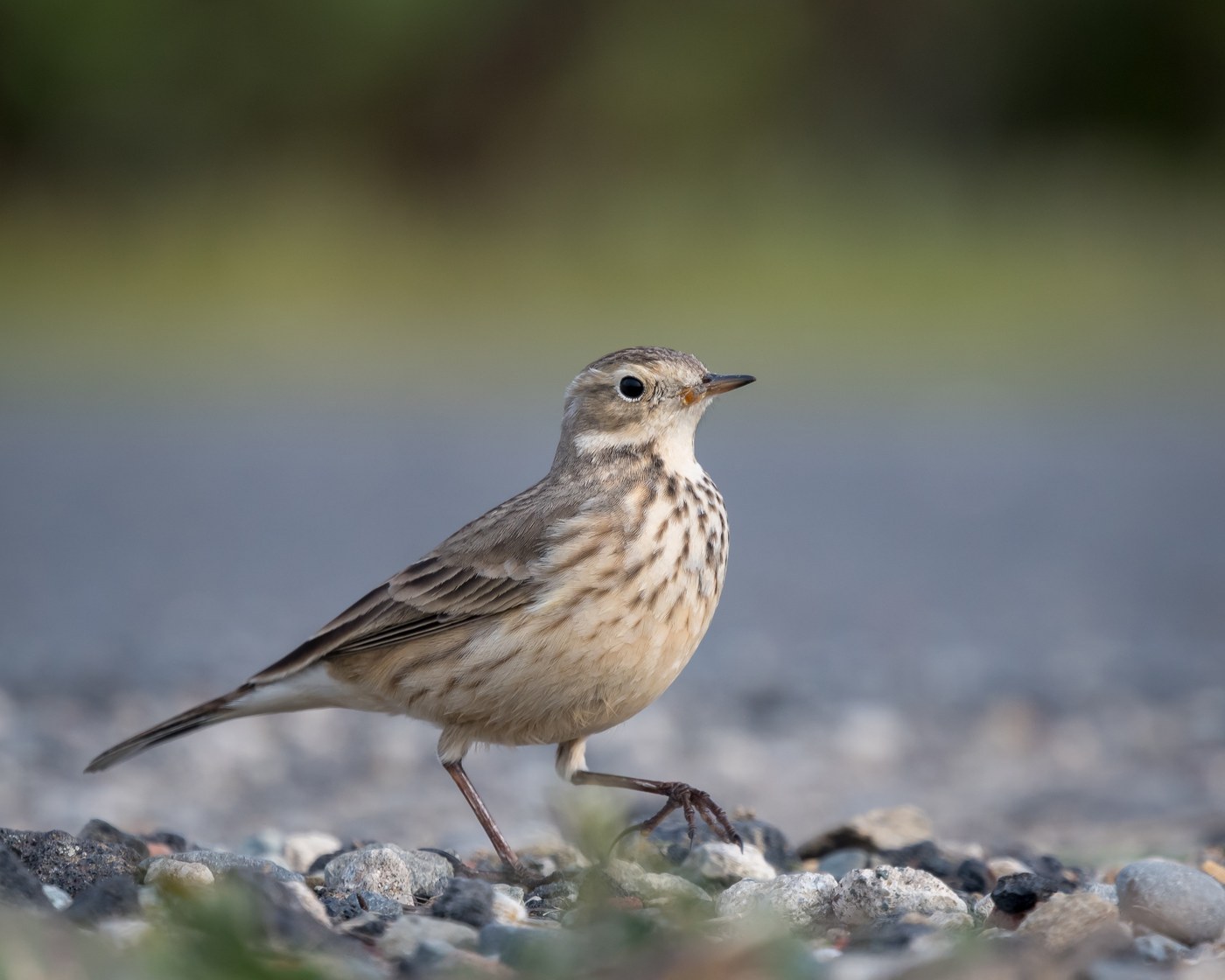
Key Field Marks
- Size: Small, slim songbird, about 14–17 cm (5.5–6.7 in), with a thin, pointed bill and a slender, upright posture.
- Upperparts: Grayish-brown to olive-brown, unstreaked or only faintly streaked on the back.
- Underparts: Buffy to whitish, with fine dark streaking on the breast and flanks (streaking can be reduced in breeding-plumage birds, especially in western populations).
- Tail: Dark with white outer tail feathers, flashing in flight.
- Legs: Dark blackish — an important field mark distinguishing it from the pale-legged Sprague's Pipit.
- Behavior mark: Walks (rather than hops) on the ground and constantly bobs/pumps its tail up and down — a highly diagnostic habit visible at a distance.
Separating Similar Species
- Sprague's Pipit: Paler and more crisply streaked on the back, with pale pinkish (not dark) legs, a more secretive, skulking habit, and a very different, high circling display flight during the breeding season on the northern Great Plains.
- Vesper Sparrow / longspurs: Have short, conical seed-eating bills rather than the pipit's thin, pointed insectivore bill, and differ in overall shape and flight behavior.
- Horned Lark: Shows a distinctive black facial pattern and small "horns," a different bill shape, and prefers similarly open habitats but looks quite different up close.
Habitat, Range & Season
Breeds in Arctic and alpine tundra across northern Canada, Alaska, and high mountain areas farther south (e.g., in the Rockies and Sierra Nevada) in summer. In migration and winter, American Pipits move to open habitats at lower elevations across most of the United States, Mexico, and into Central America, including plowed fields, pastures, mudflats, beaches, and other short-vegetation or bare-ground areas, often in loose flocks.
Behavior & Voice
Walks steadily across open ground foraging for insects and other small invertebrates, constantly pumping its tail. Forms flocks, sometimes large ones, on wintering grounds in agricultural fields and along shorelines; flight is undulating, often accompanied by its call note.
- Call: A high, thin "pip-it" or "sip-sip," frequently repeated, especially in flight — the source of the species' common name.
Frequently asked questions
What is the most reliable way to identify an American Pipit?
Look for a slender, buffy-streaked ground bird that constantly bobs its tail while walking (not hopping), combined with dark legs and white outer tail feathers flashing in flight.
How do I tell American Pipit from Sprague's Pipit?
Leg color is the key mark: American Pipit has dark blackish legs, while Sprague's Pipit has pale pinkish legs. Sprague's Pipit is also paler with more crisply streaked upperparts and is far more secretive.
Where can I find American Pipits outside the breeding season?
Look in open, short-vegetation habitats such as plowed agricultural fields, pastures, mudflats, and beaches across most of the lower 48 states, Mexico, and Central America during migration and winter.
Why does the American Pipit bob its tail?
Tail-bobbing (or pumping) is a habitual behavior seen constantly as the bird walks on the ground; its exact function isn't fully settled, but it is one of the most useful behavioral clues for identifying pipits in the field.