American Goldfinch Identification Guide
A small, bouncy-flying finch whose breeding male is bright lemon-yellow with a black cap, while females and winter birds are dull olive-tan — always with black wings and white wingbars.
Read the full American Goldfinch encyclopedia entry →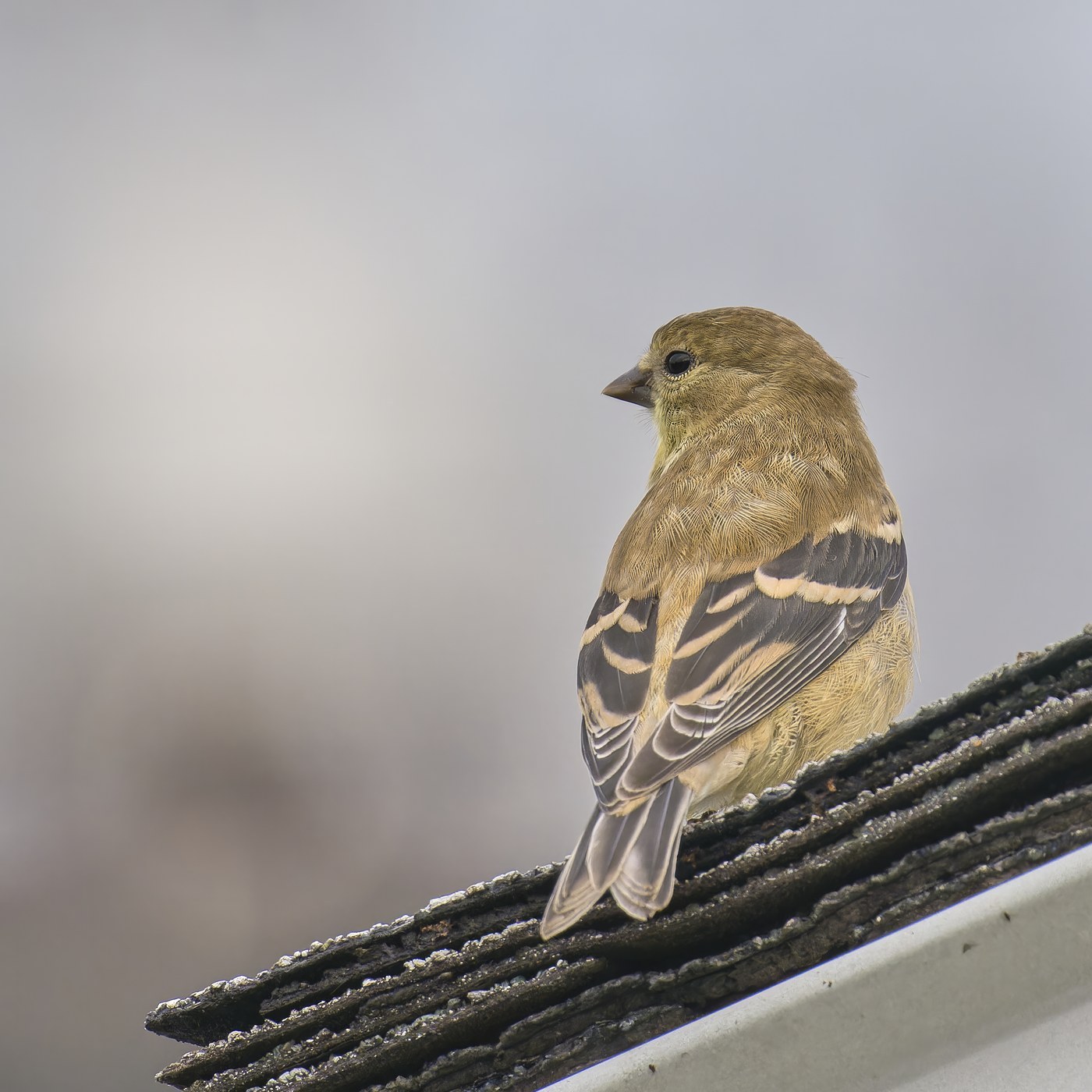
Key Field Marks
- Size: Small finch, about 11–13 cm (4.3–5 in), with a short, conical, pinkish-orange (breeding) or dusky (winter) bill.
- Breeding male: Brilliant lemon-yellow body, a crisp black cap on the forehead/crown, black wings with bold white wingbars and white edging, and white undertail coverts.
- Breeding female: Duller olive-yellow overall, lacking the black cap, but still shows blackish wings with white wingbars.
- Non-breeding (both sexes, fall/winter): Dull grayish-olive to tan-buff overall, no black cap, wings remain blackish-brown with clear white wingbars — the white wingbars are a good year-round mark even when the bright yellow is absent.
- Flight: Strongly undulating, bouncing flight, often accompanied by its flight call.
Separating Similar Species
- Lesser Goldfinch: Smaller, with a darker, more blackish or greenish back (especially in eastern populations) and a mostly western/southwestern U.S. range; male shows a black cap similar to American Goldfinch but with different back color.
- Pine Siskin: Streaky brown overall with a slimmer, sharply pointed bill and yellow flashes in the wings and tail (rather than white wingbars), lacking any solid yellow body plumage.
- Wilson's Warbler: Male has a black cap and yellow body reminiscent of a breeding male goldfinch, but is smaller, thinner-billed, lacks white wingbars, and behaves like an active insectivorous warbler rather than a seed-eating finch.
- Evening Grosbeak: Much larger and bulkier with a massive pale bill, sharing yellow-and-black coloration but entirely different in size and structure.
Habitat, Range & Season
Common and widespread across weedy fields, meadows, roadsides, gardens, and backyard feeders throughout most of North America. Northern populations move south in winter, but the species is a year-round resident across much of the continental U.S., where its plumage shifts seasonally from bright breeding colors to duller winter tones via a molt in fall.
Behavior & Voice
A late breeder, often not nesting until mid-to-late summer when thistle and other seed sources peak, reflecting its highly seed-based diet (thistle, sunflower, and other composite seeds). Frequently visits nyjer/thistle feeders and forages acrobatically on seed heads, often hanging upside down.
- Song: A bright, cheerful series of twitters, trills, and warbles, often given from an exposed perch.
- Flight call: A distinctive "po-ta-to-chip" or "per-chik-o-ree," given in a bouncing rhythm that matches its undulating flight pattern.
Frequently asked questions
Why do American Goldfinches look different in winter?
They molt out of their bright breeding plumage in fall into a duller grayish-olive to tan winter plumage, losing the male's black cap; the black wings with white wingbars remain a reliable mark year-round.
How can I tell American Goldfinch from Lesser Goldfinch?
American Goldfinch is slightly larger with a paler yellow-green back in females/winter males, while Lesser Goldfinch is smaller with a darker, often blackish or dark greenish back; range also helps, as Lesser Goldfinch is concentrated in the western and southwestern U.S.
What is that 'po-ta-to-chip' sound I hear from a bouncing bird overhead?
That is the American Goldfinch's flight call, given in rhythm with its bouncy, undulating flight pattern — a very reliable way to identify the species even without seeing it well.
Why do American Goldfinches nest so late in the summer?
Their diet is heavily seed-based, especially thistle and other composite plant seeds, which peak in availability in mid-to-late summer, so goldfinches time their breeding to match this food source.
American Goldfinch identified by the community
Recent American Goldfinch sightings identified with Bird Identifier.