
American Golden-Plover Identification Guide
A slim, long-winged plover with gold-and-black spangled upperparts in breeding season, an epic Arctic-to-South-America migrant best separated from Black-bellied Plover by its smaller size and all-dark underwing.
Read the full American Golden-Plover encyclopedia entry →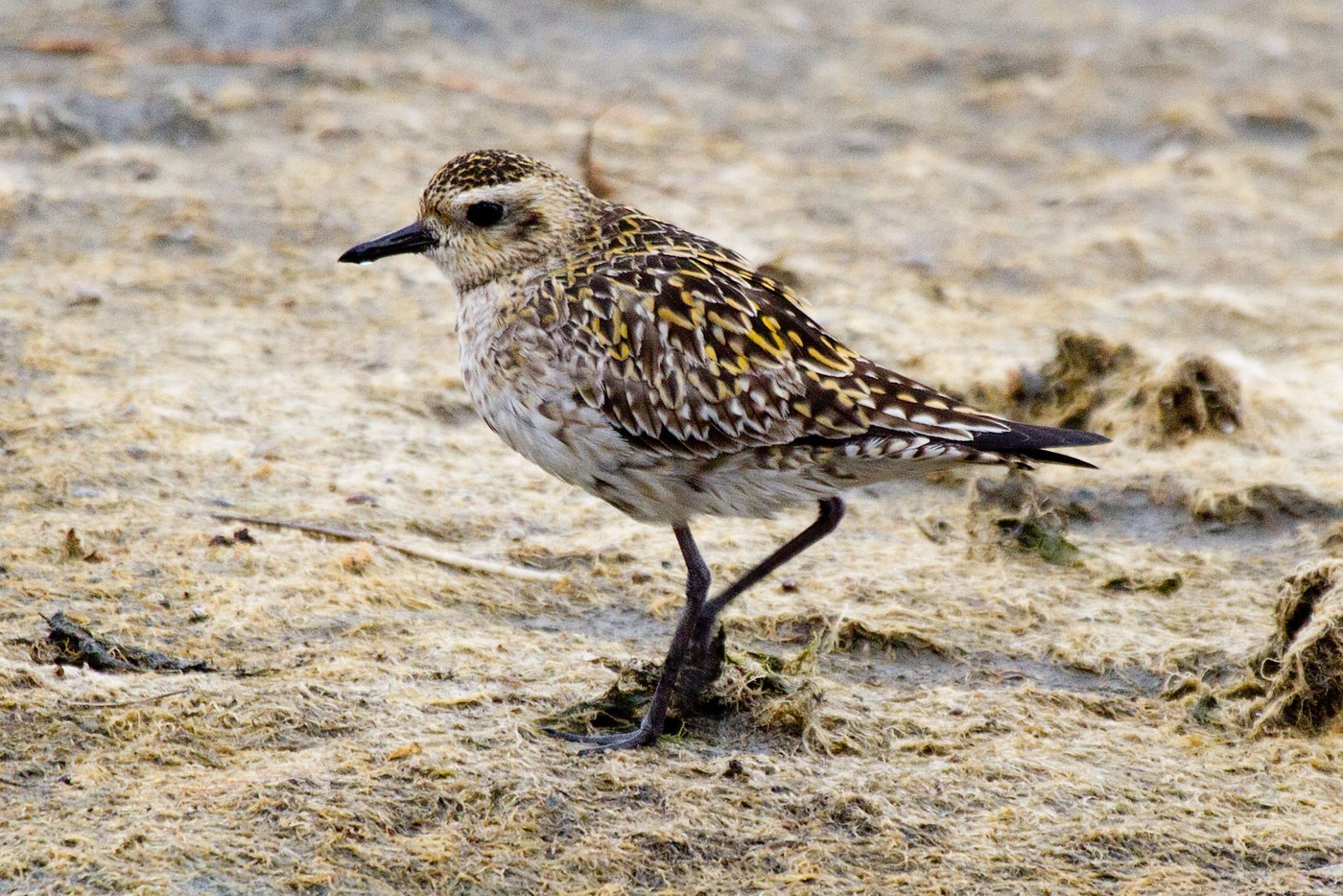
Key Field Marks
- Size: Medium plover, about 24–28 cm (9.5–11 in), slimmer and more compact than Black-bellied Plover.
- Breeding plumage: Face, throat, breast, and belly solid black, bordered by a broad white stripe running from the forehead down the side of the neck to the flanks; upperparts densely spangled black, gold, and white.
- Non-breeding/juvenile plumage: Mottled grayish-brown above with buffy-gold spangling, pale eyebrow, and grayish, lightly streaked breast fading to a whitish belly — much plainer than breeding plumage.
- Structure: Small head, short bill, and notably long primary (wingtip) projection beyond the tail when standing — the wingtips extend well past the tail tip, giving a slim, long-winged look.
- In flight: Lacks any bold white wing stripe (only a faint, narrow one) and shows a grayish (not white) rump and underwing.
Separating Similar Species
- Pacific Golden-Plover: Very similar but shows a shorter primary projection (wingtips barely reach or just reach the tail tip), warmer golden-buff spangling, a more contrasty face pattern, and slightly longer legs; ranges differ, with Pacific Golden-Plover concentrated in western Alaska and along the Pacific and, on migration, Pacific coast, while American Golden-Plover migrates mainly through the interior Great Plains and Atlantic coast.
- Black-bellied Plover: Larger and stockier with a heavier bill; in flight shows black axillaries ("wingpit" patches) and a bold white rump and wing stripe, all of which American Golden-Plover lacks.
Habitat, Range & Season
Breeds on Arctic tundra across northern Canada and Alaska in the boreal summer. One of the longest-distance migrants among shorebirds, it makes an enormous journey to winter on the grasslands (pampas) of southern South America, particularly Argentina and Paraguay. Migration routes differ by season: spring migration runs heavily through the central Great Plains, while fall migration includes a significant offshore/Atlantic coast component as birds head toward South America.
Behavior & Voice
Forages in short grass, plowed fields, and open pastures/tundra using a characteristic run-stop-peck plover feeding technique, picking insects and other invertebrates from the ground surface. Often forms loose flocks on migration, sometimes associating with other shorebirds in agricultural fields.
- Call: A mellow, whistled "queedle" or rising "tu-wee-tu," given in flight, softer and more musical than the sharper calls of Black-bellied Plover.
Frequently asked questions
What is the best way to tell American Golden-Plover from Black-bellied Plover?
Look for black axillaries ('wingpits') and a white rump in flight on Black-bellied Plover — American Golden-Plover lacks both, showing a grayish underwing and rump, and it is smaller and slimmer overall with longer wingtip projection at rest.
How do I separate American and Pacific Golden-Plover?
Primary (wingtip) projection is key: American Golden-Plover's wingtips extend noticeably beyond the tail at rest, while Pacific Golden-Plover's wingtips barely reach the tail tip. Pacific Golden-Plover also tends to look warmer golden and slightly longer-legged.
Where does the American Golden-Plover migrate?
It breeds on Arctic tundra and winters on grasslands in southern South America (mainly Argentina), making one of the longest migratory journeys of any shorebird, with spring migration concentrated through the interior Great Plains.
What does breeding-plumage American Golden-Plover look like?
It shows a solid black face, throat, and underparts bordered by a bold white stripe from the forehead down the neck to the flanks, with gold-and-black spangled upperparts.