
Alexandrine Parakeet Identification Guide
A large, long-tailed green parakeet distinguished from its smaller relatives by its bulkier build, oversized red bill, and maroon shoulder patch.
Read the full Alexandrine Parakeet encyclopedia entry →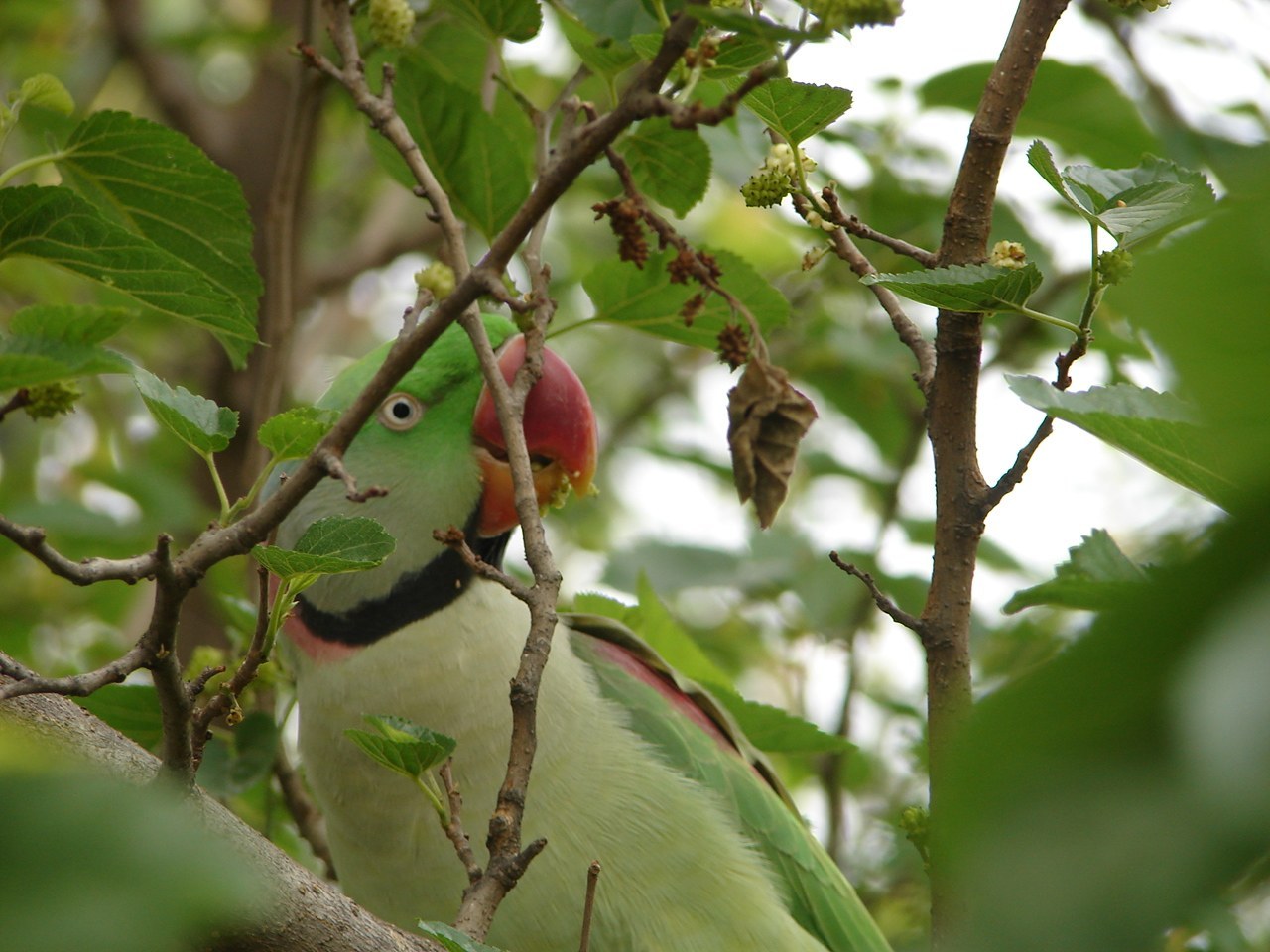
Key Field Marks
- Size: About 50–62 cm including the long tail, noticeably larger and bulkier than the closely related Rose-ringed Parakeet.
- Plumage: Overall bright green with a long, tapering tail.
- Bill: Large, thick, all-red bill — bigger and more massive-looking than that of other similarly colored parakeets.
- Shoulder patch: A distinctive maroon/red patch on the upper wing (shoulder), present in both sexes and a key diagnostic mark.
- Adult male: Shows a black chin stripe and a pink-and-black band around the back and sides of the neck.
- Female and juveniles: Lack the neck ring and chin stripe, appearing plainer green, but still show the maroon shoulder patch and large red bill.
Behavior
- Travels and roosts in noisy flocks, with fast, direct flight on rapid wingbeats.
- Feeds in trees on fruit, seeds, nuts, and blossoms, often hanging upside down to reach food.
- Roosts communally at dusk, sometimes in large, vocal aggregations.
Separating It From Similar Species
- Rose-ringed Parakeet is smaller and slimmer, with a thinner neck ring and a more slender red bill, and it lacks the maroon shoulder patch that Alexandrine Parakeet shows in all plumages — this shoulder patch is the most reliable mark between the two.
- Overall larger size and heavier, more massive bill also help separate Alexandrine from Rose-ringed Parakeet at a distance, even before the shoulder patch is visible.
Where and When to See It
- Range: Native across South and Southeast Asia, from parts of the Indian subcontinent through Indochina; feral populations are established in some cities elsewhere in the world.
- Habitat: Open forest, forest edge, agricultural land with scattered trees, and urban parks with mature trees for nesting and roosting.
- Season: Resident year-round throughout its range, with local movements tied to food availability.
Voice
- A loud, raucous “kreak-kreak” screech, generally deeper and harsher than the call of Rose-ringed Parakeet.
- Noisy in flight and at communal roosts, often the first indication of a flock's presence.
Frequently asked questions
What is the easiest way to tell an Alexandrine Parakeet from a Rose-ringed Parakeet?
Look for the maroon/red shoulder patch on the wing, present in both sexes of Alexandrine Parakeet but absent in Rose-ringed Parakeet, along with the Alexandrine's larger overall size and thicker bill.
Do female Alexandrine Parakeets have the neck ring?
No, only adult males show the pink-and-black neck ring and black chin stripe; females and juveniles are plainer green but still show the diagnostic maroon shoulder patch.
How big is an Alexandrine Parakeet compared to other parakeets?
At roughly 50–62 cm including the tail, it is one of the largest parakeets in its genus, clearly bulkier than the similarly colored Rose-ringed Parakeet.
What habitat is best for finding Alexandrine Parakeets?
Open forest, forest edges, farmland with scattered trees, and urban parks with mature trees across its South and Southeast Asian range.