
Alder Flycatcher Identification Guide
A notoriously look-alike Empidonax flycatcher best separated from its twin, the Willow Flycatcher, by voice rather than plumage.
Read the full Alder Flycatcher encyclopedia entry →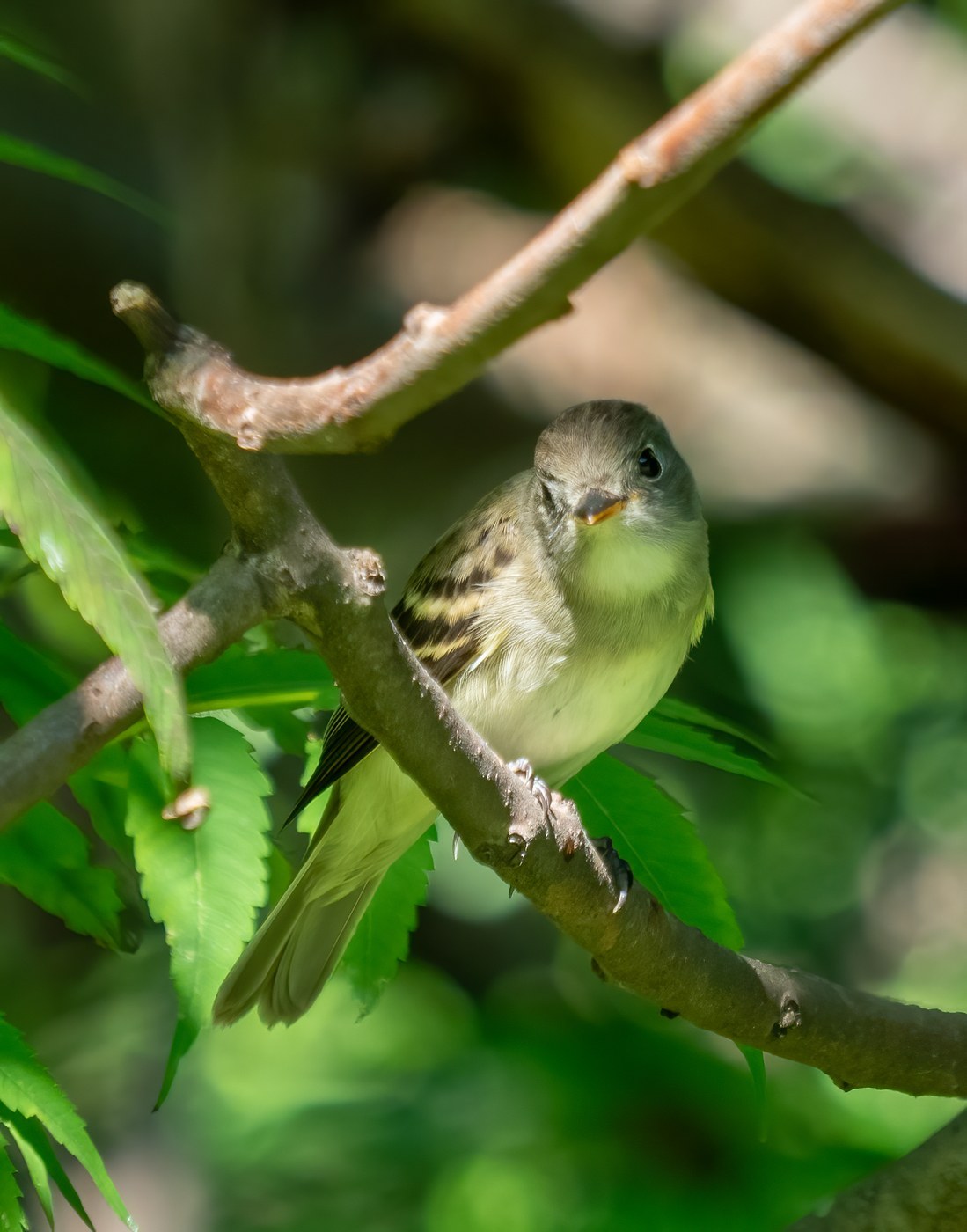
Key Field Marks
- Size: Small, about 14–17 cm, typical of the Empidonax flycatcher genus.
- Plumage: Olive-brown upperparts, whitish throat, pale olive wash across the breast, and a whitish belly.
- Wings: Two whitish or pale buffy wing bars.
- Eye-ring: Thin and often indistinct — noticeably fainter than on many other Empidonax species, though not always a reliable field mark on its own.
- Overall shape: Fairly large-headed and short-tailed for an Empidonax, with an upright perching posture typical of the genus.
Behavior
- Perches conspicuously on exposed twigs and wires, sallying out to catch flying insects and returning to the same or a nearby perch.
- Frequently flicks its tail and wings while perched.
- Territorial males sing persistently from cover during the breeding season, which is often the only practical way to confirm identification.
Separating It From Similar Species
- Willow Flycatcher is essentially identical in plumage and structure; the two species were once considered one (“Traill's Flycatcher”). Voice is the most reliable distinguishing feature: Alder Flycatcher's song is a burry, rising “free-BEER-oh” or “rreeBEEya,” while Willow Flycatcher's is a flatter, sneezy “FITZ-bew.”
- Least Flycatcher is smaller with a bolder, more obvious white eye-ring and gives a sharp “che-BEK” song, both useful contrasts with Alder Flycatcher.
- Habitat can offer a secondary clue: Alder Flycatcher favors wetter alder/willow thickets and boreal bog edges, though this overlaps considerably with Willow Flycatcher in many areas.
Where and When to See It
- Range: Breeds across the boreal forest zone of Canada and the northern United States; winters in South America.
- Habitat: Alder and willow thickets, shrubby wetland edges, and boggy areas near streams or ponds.
- Season: A migrant through much of North America; most confidently identified on the breeding grounds in late spring and summer when males are singing.
Voice
- Song: a burry, rising “free-BEER-oh” (sometimes rendered “rreeBEEya”).
- Call: a sharp “pip” note, similar to but often distinguishable from Willow Flycatcher's call with practice and direct comparison.
Frequently asked questions
How can I reliably tell Alder Flycatcher from Willow Flycatcher?
Voice is the most dependable clue. Alder Flycatcher sings a burry, rising “free-BEER-oh,” while Willow Flycatcher gives a flatter, sneezy “FITZ-bew.” Plumage alone is not reliably diagnostic between the two.
Is the eye-ring useful for identifying Alder Flycatcher?
It's a minor clue at best — Alder Flycatcher tends to show a thinner, less distinct eye-ring than many other Empidonax species, but this is not reliable enough on its own to separate it from Willow Flycatcher.
What habitat should I search for Alder Flycatcher?
Look in alder and willow thickets and shrubby wetland edges, especially near boreal bogs, streams, or ponds during the breeding season.
Can silent Alder Flycatchers be identified in the field?
It is very difficult; without a singing bird, silent Empidonax flycatchers like Alder and Willow are often left unidentified to species or recorded only as “Traill's-type” flycatchers unless in hand for measurements.