
Albert's Lyrebird Identification Guide
A shy, rufous-brown rainforest lyrebird from the Australia–Queensland border ranges, celebrated for its extraordinary vocal mimicry.
Read the full Albert's Lyrebird encyclopedia entry →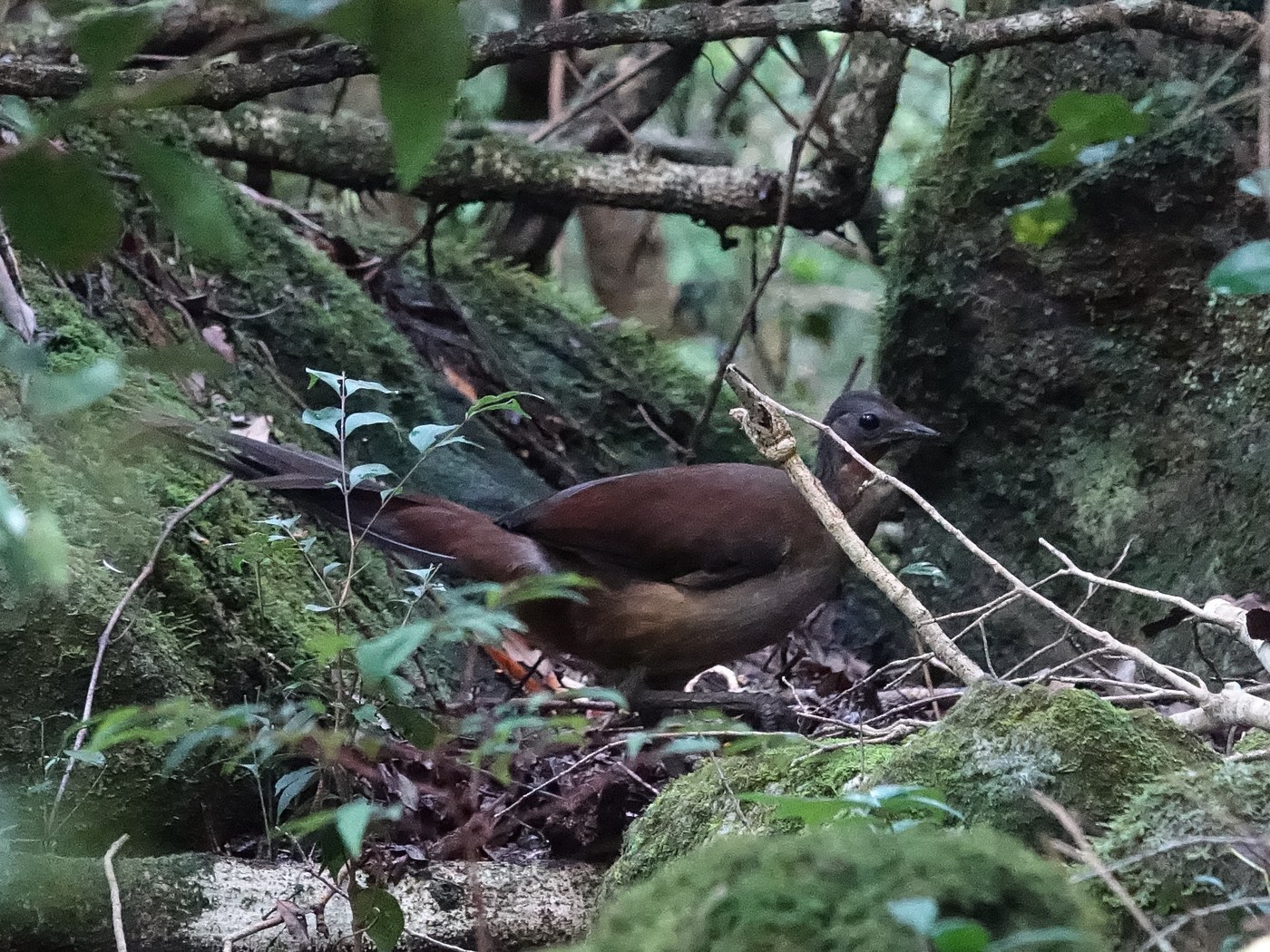
Key Field Marks
- Size: About 74–88 cm including the long tail; smaller and less showy overall than its relative, the Superb Lyrebird.
- Plumage: Reddish-brown body with a rufous throat and chest, and dark brownish wings.
- Tail: Long, but lacking the elaborate lace-like, lyre-shaped outer feathers of the Superb Lyrebird; Albert's tail feathers are more uniform, arch over the back in display, and show rufous coloring on the underside.
- Bill and legs: Sturdy dark bill and strong legs adapted for scratching through leaf litter.
Behavior
- Shy and ground-dwelling, spending most of its time scratching through leaf litter for invertebrates rather than flying.
- Males display and sing from cleared mounds or tangles of vines within the forest, with peak song activity typically in the cooler months.
- Renowned for extraordinarily accurate vocal mimicry, imitating the calls of other rainforest birds as well as ambient and mechanical sounds.
Separating It From Similar Species
- Superb Lyrebird is the main confusion species but is found further south with only limited range overlap; it has a much more elaborate tail with true lyre-shaped outer feathers and delicate filamentary plumes, features Albert's Lyrebird lacks.
- Within its restricted range, no other rainforest bird combines the large ground-dwelling shape, rufous throat, and distinctive arched tail, so range and habitat quickly narrow down the identification.
Where and When to See It
- Range: A narrow band of subtropical rainforest straddling the border of northeastern New South Wales and southeastern Queensland, Australia — a much smaller range than the Superb Lyrebird.
- Habitat: Dense, moist subtropical rainforest with a thick understory and leaf litter for foraging.
- Season: Resident year-round; males are most vocal and most likely to be heard displaying during the austral winter months.
Voice
- An extended, complex mix of its own song phrases and mimicked calls of other bird species, plus imitations of other ambient forest sounds.
- Often heard well before seen, as the bird sings persistently from within dense cover.
Frequently asked questions
How do I tell Albert's Lyrebird from a Superb Lyrebird?
Albert's Lyrebird has a plainer, arched tail without the elaborate lyre-shaped outer feathers of the Superb Lyrebird, and the two species have largely separate ranges, with Albert's restricted to a small area on the NSW–Queensland border.
Why is Albert's Lyrebird famous among birders?
Like other lyrebirds, it is an exceptional vocal mimic, capable of accurately reproducing the calls of many other bird species as well as non-bird sounds.
What is the best time to see or hear Albert's Lyrebird?
Males sing most persistently during the cooler winter months, making early mornings in that season the best opportunity to hear their elaborate song.
What habitat should I search for this species?
Dense subtropical rainforest with thick leaf litter and understory cover, within its narrow range on the New South Wales–Queensland border.