
African Spoonbill Identification Guide
An all-white wading bird with a bare red face and legs and a distinctive grey, spoon-shaped bill used to feed by touch in shallow water.
Read the full African Spoonbill encyclopedia entry →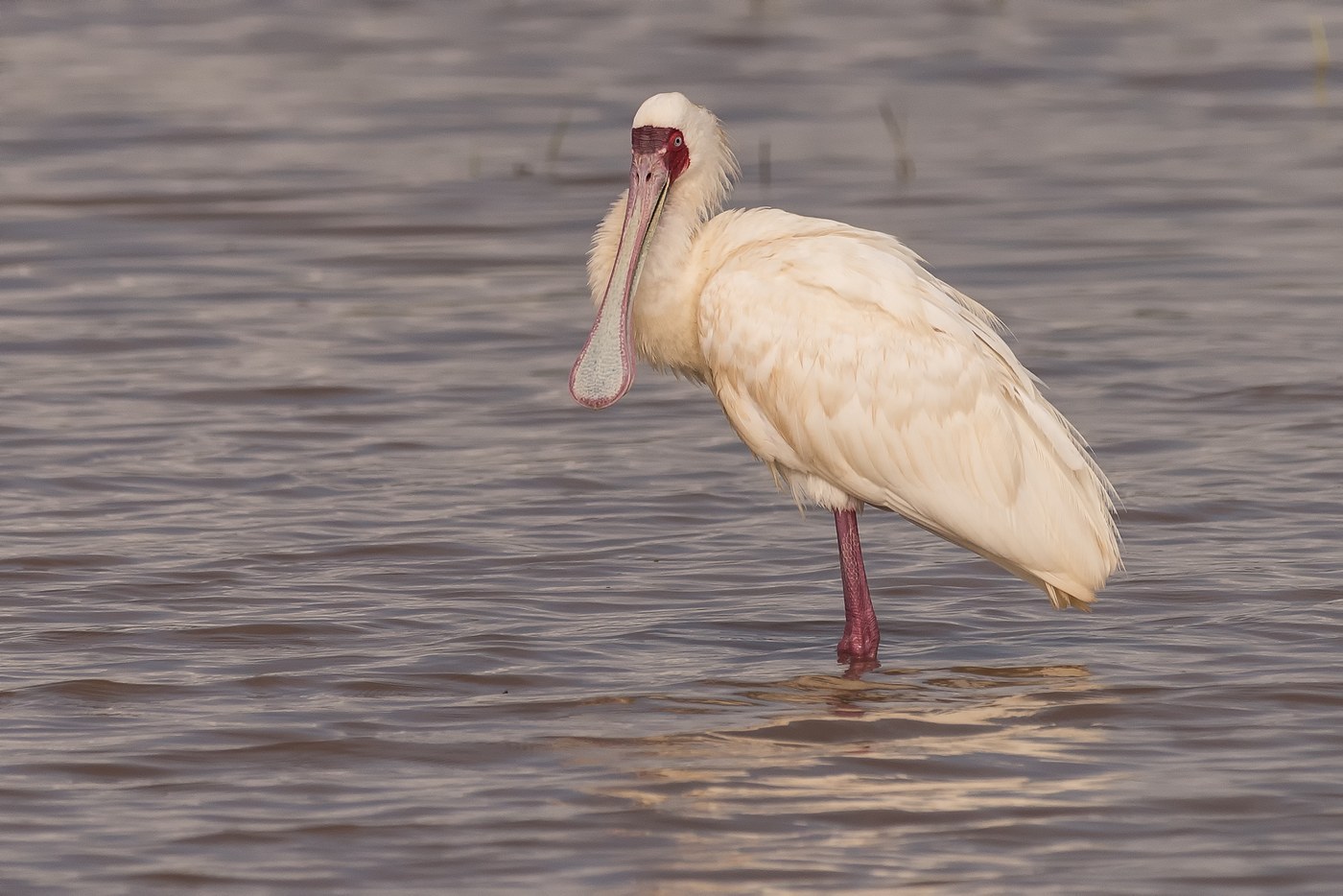
Key Field Marks
- Size: About 90 cm tall, a large, long-legged wading bird.
- Plumage: Entirely white body plumage.
- Bill: Long, flattened, grey bill that widens into a distinctive spoon or spatula shape at the tip.
- Bare skin: Red, unfeathered face and red legs — a key mark that separates it from other white spoonbills.
- Juveniles: Show a pinkish (not grey) bill, black tips to the primary wing feathers visible in flight, and duller, less extensive red facial skin than adults.
Behavior
- Feeds by wading through shallow water while swinging its partly opened bill side to side, detecting small fish, insects, and crustaceans by touch rather than sight.
- Often forages in small groups, sometimes alongside other waders.
- Generally quiet; most vocalizations are limited to grunting or hissing sounds exchanged at nesting colonies.
Separating It From Similar Species
- Eurasian Spoonbill (a similar all-white spoonbill that can occur in parts of Africa): has a black bill with a yellow tip, black facial skin, and develops a shaggy yellowish breeding crest — clearly different bare-part colors from the African Spoonbill's all-red face and legs and grey bill.
- No other African wading bird combines an all-white body with a spoon-shaped bill, making adult African Spoonbills straightforward to identify once the bill shape is seen.
Where and When to See It
- Range: Widespread across sub-Saharan Africa, largely absent only from the driest deserts and deep forest.
- Habitat: Shallow freshwater and brackish wetlands, including lakes, rivers, seasonal pans, and estuaries.
- Season: Mostly resident, with local and seasonal movements tracking water availability; may form larger flocks outside the breeding season.
Voice
- Largely silent away from the nest; produces occasional low grunts and bill-clattering displays at breeding colonies.
Frequently asked questions
How do I tell an African Spoonbill from a Eurasian Spoonbill?
Look at the bare skin and bill color: African Spoonbill has an all-red face and legs with a grey bill, while Eurasian Spoonbill has black facial skin and a black bill with a yellow tip.
Why does the African Spoonbill swing its bill from side to side?
It feeds by touch, sweeping its partly open, spoon-shaped bill through shallow water to detect and snap up small fish, insects, and crustaceans.
Do young African Spoonbills look like adults?
Not quite — juveniles have a pinkish rather than grey bill, less red facial skin, and show black tips on the primary flight feathers.
What habitat is best for finding African Spoonbills?
Shallow wetlands such as lake edges, slow rivers, seasonal pans, and estuaries across sub-Saharan Africa.