African Jacana Identification Guide
A chestnut wetland bird with a white face, blue frontal shield, and remarkably long toes that let it walk across floating lily pads, earning it the nickname "Jesus bird."
Read the full African Jacana encyclopedia entry →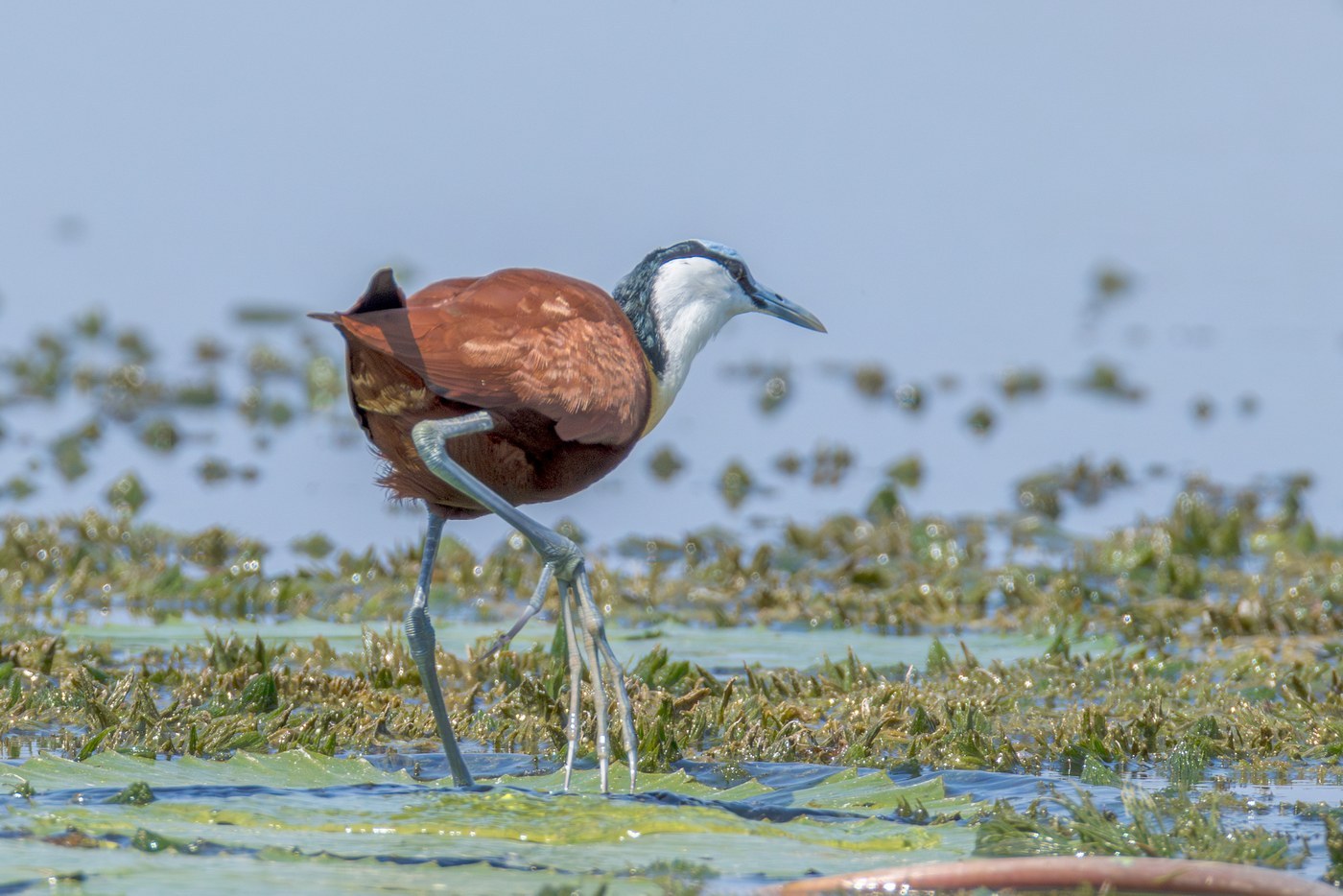
Key Field Marks
- Medium-sized wader, about 23-31 cm (9-12 in) long, with females noticeably larger than males
- Rich chestnut body plumage with a black hindneck and crown
- White face, throat, and foreneck contrasting sharply with the chestnut body
- Distinctive pale blue, fleshy frontal shield above a blue-grey bill
- Extraordinarily long toes and elongated claws that spread the bird's weight across floating vegetation
How to Separate It From Similar Species
- Lesser Jacana: much smaller, with a shorter bill, no blue frontal shield, and a whiter face pattern lacking the sharp chestnut-and-white contrast; also prefers smaller, more vegetated pools.
- No other African wetland bird combines chestnut body plumage, a white face and neck, and a blue frontal shield with such enormous feet and toes — the African Jacana is unmistakable within its range.
- Juveniles are duller, browner above with white underparts and lack the adult's blue shield, but the oversized feet and toes remain a strong clue.
Where & When to See It
- Resident across sub-Saharan Africa on lakes, ponds, marshes, and slow-moving rivers with abundant floating vegetation such as water lilies.
- Non-migratory in most areas, though local movements track water levels and vegetation availability.
- Best looked for walking directly on top of lily pads and floating mats of vegetation, often appearing to walk on water.
Voice & Behavior Cues
- Gives loud, harsh, grating calls, especially during territorial disputes or when alarmed, along with softer clucking notes.
- Famous for a polyandrous mating system: females mate with multiple males and defend a territory containing several nests, while each male alone incubates the eggs and raises the chicks.
- Walks with a high-stepping gait across floating vegetation, using its long toes to distribute weight and avoid sinking.
- Feeds on aquatic insects, invertebrates, and seeds picked from the surface of floating plants and shallow water.
Frequently asked questions
Why is the African Jacana called the "Jesus bird"?
Its extremely long toes and claws distribute its weight so effectively that it appears to walk on top of the water while actually stepping across floating lily pads and vegetation.
How do you identify an African Jacana?
Look for a chestnut-bodied wetland bird with a white face and neck, a black crown, a pale blue frontal shield above the bill, and unusually long toes.
Do male or female African Jacanas raise the young?
Males alone incubate the eggs and care for the chicks; females are larger, mate with multiple males, and defend a territory containing several nests.
Where does the African Jacana live?
On lakes, ponds, and marshes with floating vegetation such as water lilies, across sub-Saharan Africa.
African Jacana identified by the community
Recent African Jacana sightings identified with Bird Identifier.