
Western Grebe Identification Guide
The Western Grebe is a large, elegant, black-and-white waterbird with a long swan-like neck and a slender yellow-green bill, best known for its synchronized courtship 'rushing' display across open water.
Read the full Western Grebe encyclopedia entry →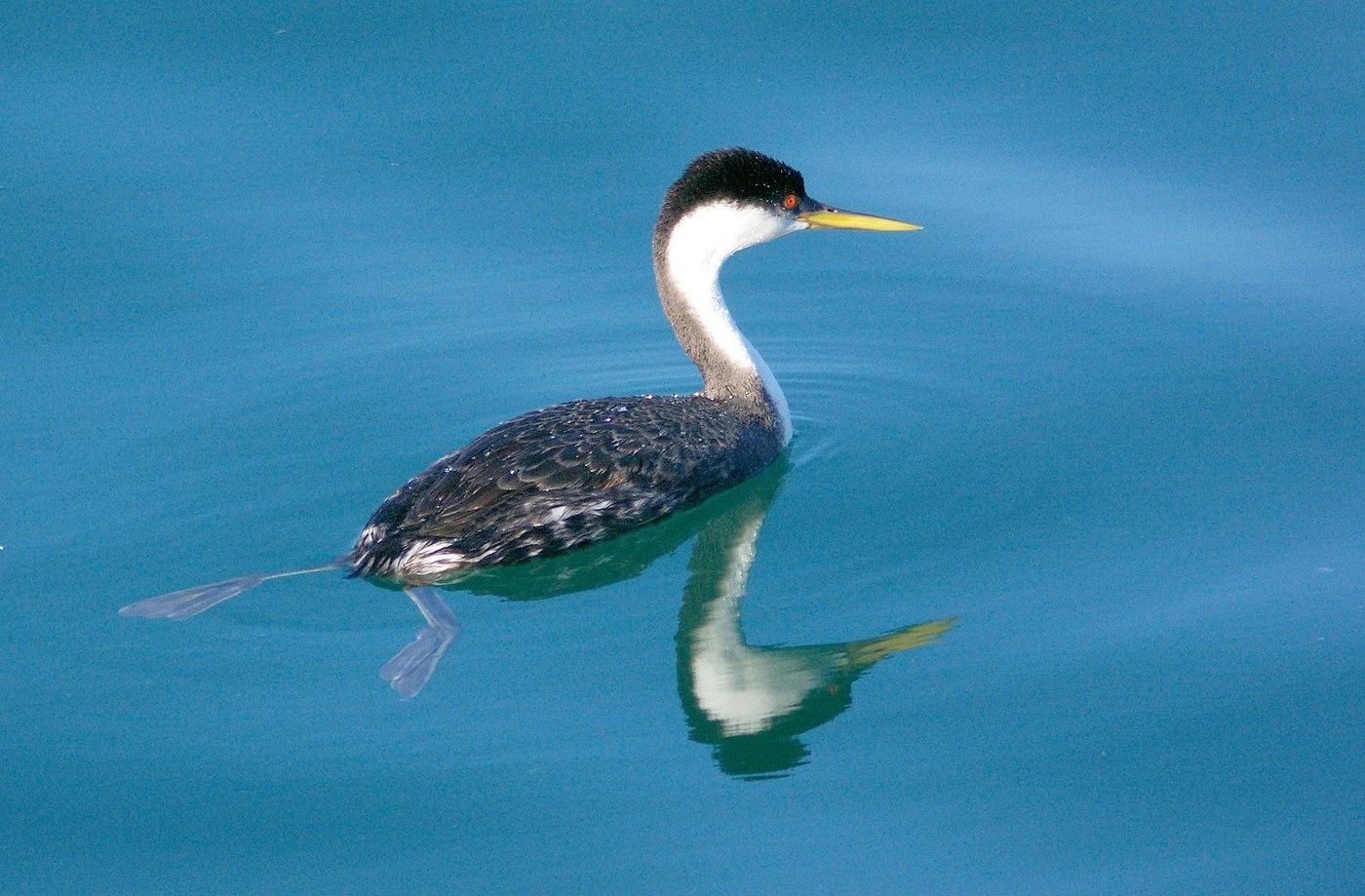
Key Field Marks
- Size and shape: A large grebe with a strikingly long, thin neck, a slim dagger-like bill, and a low-slung body that rides deep in the water. Overall silhouette recalls a small, slender swan crossed with a loon.
- Plumage: Crisp black cap that extends down the back of the neck, sharply demarcated from a clean white throat, foreneck, and underparts. Back and upperwings are blackish-grey. The white on the face stays below the eye, which is the key mark separating it from the nearly identical Clark's Grebe.
- Bill color: Dull greenish-yellow to olive, another critical mark versus Clark's Grebe's brighter orange-yellow bill.
- Eye: Bright red, set within the black cap (the black extends around and includes the eye).
- Behavior: Rides low in the water, dives frequently for fish, and is famous for its courtship "rushing" display, in which pairs rear up and patter across the water's surface side by side in perfect unison with necks arched.
Similar Species
- Clark's Grebe: Nearly identical but has brighter orange-yellow (not greenish) bill, and the white of the face extends up and around the eye rather than the black including it. Voice also differs (single vs. double note).
- Red-necked Grebe: Much shorter necked and stockier, with a shorter, thicker yellow-based bill and no clean black-and-white contrast.
- Common Loon (non-breeding): Bulkier, thicker-necked, with a heavier bill and a more horizontal posture; lacks the grebe's slender, sinuous neck.
Where and When to Look
Breeds on large, marsh-fringed lakes and reservoirs across the western interior of North America, from the Canadian prairies south through the western US, nesting colonially in emergent vegetation. Winters mainly along the Pacific Coast and on ice-free lakes and bays farther south, often in large rafts offshore. Best looked for on breeding lakes in late spring for the rushing display, or scanning coastal waters and large reservoirs in winter.
Voice
A loud, rolled, two-note "kree-KREEK" call (often transcribed as "crick-crick"), given year-round and especially during pair displays — the double-noted call is a useful distinction from the single-note call of Clark's Grebe.
Frequently asked questions
How do you tell a Western Grebe from a Clark's Grebe?
Check the bill color and face pattern: Western Grebe has a dull greenish-yellow bill and black cap that includes the eye, while Clark's Grebe has a brighter orange-yellow bill and white surrounding the eye.
What is the Western Grebe's famous courtship display?
The 'rushing display,' in which paired birds rear upright and run across the water's surface side by side in a synchronized sprint, necks arched, before diving in unison.
Where do Western Grebes nest?
On large freshwater lakes and marshes in the western interior of North America, building floating nests anchored in dense emergent reeds or bulrushes, often in colonies.
Where can I find Western Grebes in winter?
Along the Pacific coast in sheltered bays and estuaries, and on large ice-free lakes and reservoirs farther inland, often in sizable rafts.
What call does the Western Grebe make?
A loud, far-carrying two-note 'kreer-kreek' call, useful for locating birds on large lakes even before they're seen.