
Umbrella Cockatoo Identification Guide
A large, all-white Indonesian cockatoo named for its broad, forward-curling crest that fans open like an umbrella.
Read the full Umbrella Cockatoo encyclopedia entry →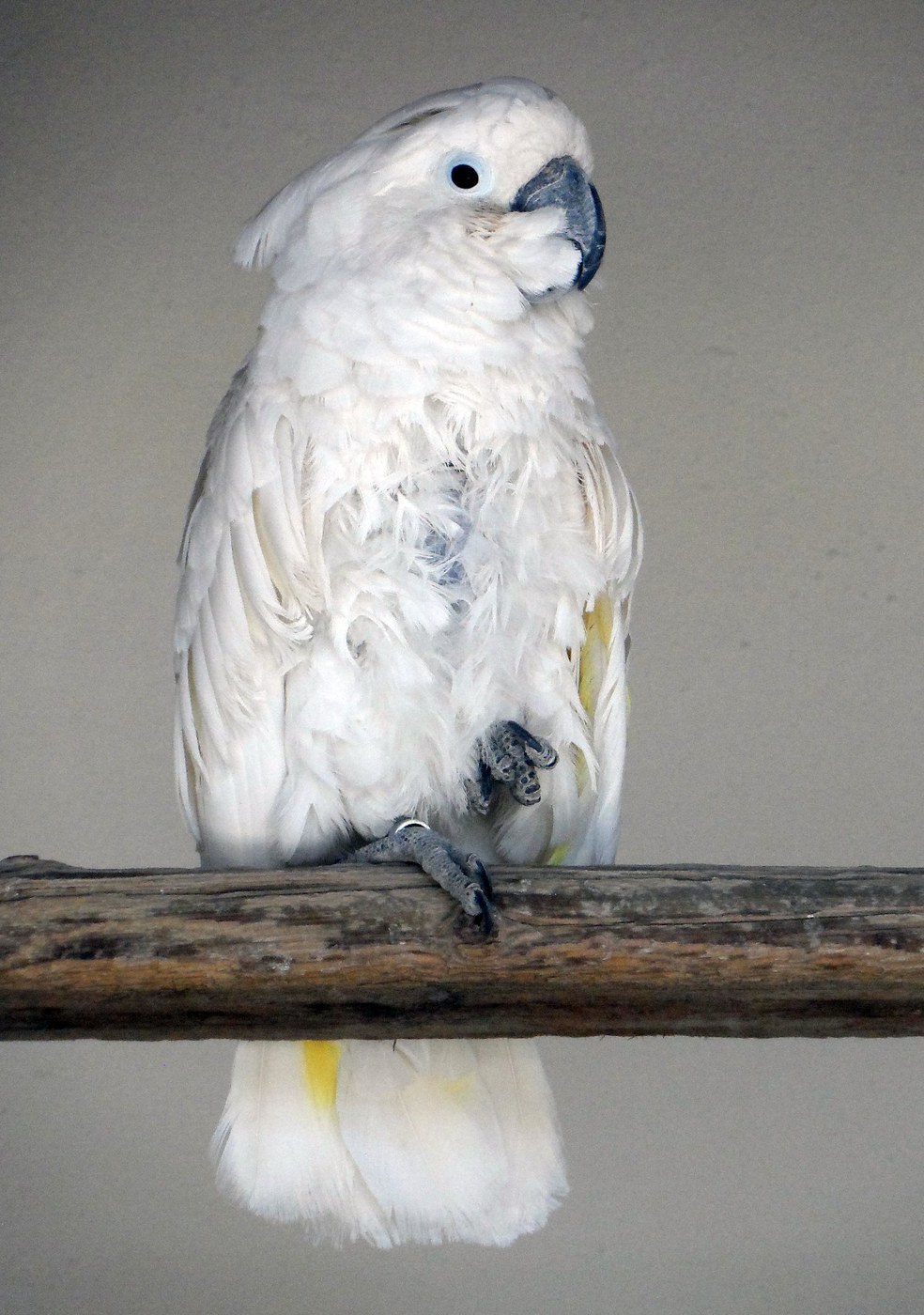
Key Field Marks
- Large parrot, roughly 45-50 cm long, entirely white plumage with a faint yellowish wash visible on the underwing and undertail in flight.
- Prominent recurved crest of long white feathers that fans forward into a rounded, umbrella-like shape when raised in display or alarm.
- Large, dark grayish-black bill and bare whitish-gray eyering.
- Eye color offers a rough age/sex clue: adult males typically show very dark brown to blackish eyes, while adult females often show a reddish-brown iris, though this takes time to develop and is not always reliable in the field.
- Broad, rounded wings and a relatively short, squared tail in flight; flight is heavy and flapping with occasional glides.
Similar Species
- Yellow-crested Cockatoo and Sulphur-crested Cockatoo: both show yellow or yellow-orange crest feathers, unlike the pure white crest of the Umbrella Cockatoo.
- Salmon-crested (Moluccan) Cockatoo: shows a pinkish-salmon wash on the crest and body, especially visible on the underparts and crest, distinguishing it from the whiter Umbrella Cockatoo; the two overlap geographically in the Moluccas.
- Overall, the combination of pure white body/crest with no yellow or pink tones is the best separator from other large white-ish cockatoos.
Habitat, Range & Season
- Endemic to the North Moluccas of Indonesia, including Halmahera, Bacan, Ternate, Tidore, Kasiruta, and Mandioli.
- Inhabits lowland and hill primary and secondary forest, forest edge, and cultivated areas with scattered large trees, generally below 900 m elevation.
- Non-migratory resident; found year-round within its restricted island range, though wild populations have been heavily reduced by trapping and habitat loss.
- Roosts and forages in flocks, often noted flying between roost sites and feeding areas at dawn and dusk.
Voice
- Very loud, harsh screeching and grating calls typical of large cockatoos, often given in flight or when a flock is disturbed.
- Screams can carry long distances through forest and are frequently the first clue to a flock's presence before it is seen.
Frequently asked questions
How can you tell an Umbrella Cockatoo from a Sulphur-crested Cockatoo?
The Umbrella Cockatoo's crest and body are pure white with no yellow, while the Sulphur-crested Cockatoo shows a distinct yellow crest and yellow wash on the ear coverts and underwing.
How do you sex an Umbrella Cockatoo by sight?
Eye color is the traditional clue: adult males tend to have very dark, almost black eyes, while adult females often develop a reddish-brown iris, though young birds of both sexes start with dark eyes, so this is not fully reliable until maturity.
Where does the Umbrella Cockatoo live in the wild?
It is endemic to a small group of islands in the North Moluccas of Indonesia, including Halmahera and Bacan, where it inhabits lowland and hill forest.
Is the Umbrella Cockatoo endangered?
Yes, wild populations have declined significantly due to habitat loss and historic trapping for the pet trade, and it is currently listed as threatened.