
Splendid Fairywren Identification Guide
A tiny Australian songbird in which breeding males turn a brilliant, almost electric cobalt-blue and violet, while females and non-breeding birds are soft blue-gray brown.
Read the full Splendid Fairywren encyclopedia entry →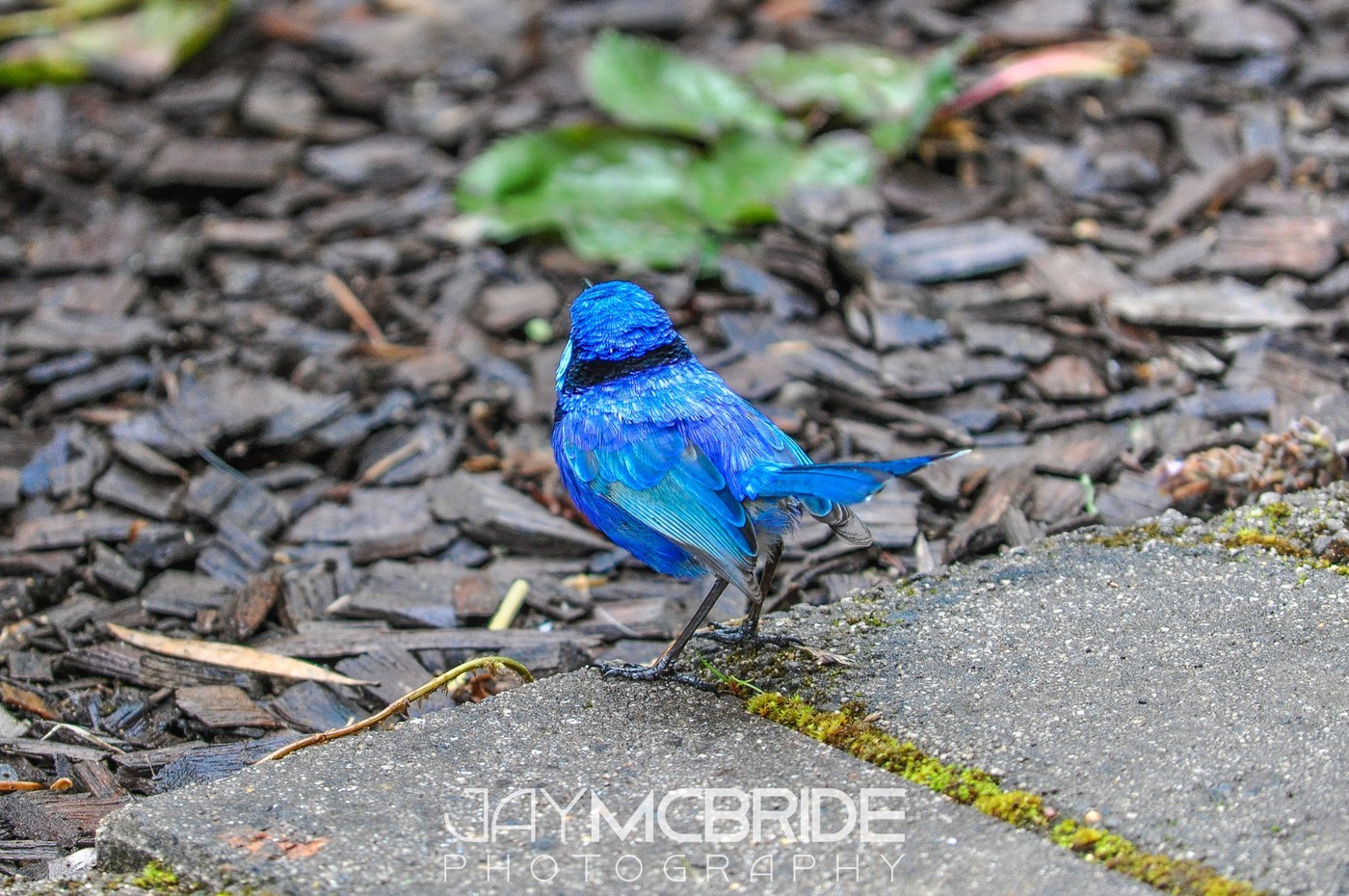
Key Field Marks
- Size & shape: Very small, about 5 inches (13 cm) including a long, often cocked tail; delicate build typical of fairywrens.
- Breeding male: Vivid, glossy cobalt-blue to violet-blue covering the crown, ear coverts, back, and tail, with a black mask, throat, and breast band contrasting sharply against the blue; the exact shade and pattern varies slightly among the four recognized subspecies.
- Female: Soft blue-gray brown above with a pale blue-gray tail, warm buffy underparts, and a distinctive chestnut/rufous patch around the eye and a rufous-orange bill/lores area in some populations, plus a whitish eye-ring.
- Eclipse/non-breeding male: Resembles the female but often retains some blue in the wings or tail.
- Behavior: Lives in small family groups, cocked tail held upright, hops and flits low through dense shrubby cover, rarely still for long.
Separating It From Similar Species
- Superb Fairywren — the male's blue is generally a deeper violet-blue versus the Superb's more sky-blue crown/cheek patches; ranges overlap only narrowly in southeastern Australia, and habitat (Splendid favors drier mallee/scrub) helps separate them.
- Variegated Fairywren — male shows chestnut shoulder patches lacking in the all-blue-and-black Splendid male.
- Purple-backed and Turquoise Fairywren forms (subspecies sometimes split) — differ subtly in the extent of blue vs. black on the crown and back; range is the most reliable guide.
- Females of all fairywren species are notoriously similar; the rufous eye/lore patch and range help identify female Splendid Fairywrens.
Habitat, Range & Season
Found across drier inland and western Australia — mallee, mulga, spinifex, and dense arid/semi-arid scrub — from central-western New South Wales and Victoria across South Australia to the west coast. Resident year-round, living in cooperative family groups that defend a territory.
Voice
A high, thin, reeling, insect-like trill, similar in structure to other fairywrens' songs but often given as a rapid, buzzy series; contact calls are sharp, high-pitched "tsit" notes kept up as the group moves through cover.
Frequently asked questions
How can I tell a breeding male Splendid Fairywren from a Superb Fairywren?
The Splendid male is a more uniform, deeper cobalt/violet-blue with less contrasting pale-blue patches than the Superb Fairywren, and it favors drier mallee and scrub habitat rather than the wetter woodlands Superb Fairywrens prefer.
How do I identify a female Splendid Fairywren?
Look for soft blue-gray brown plumage, a pale blue-gray tail, and a rufous-chestnut patch around the eye/lores, which helps separate her from similarly drab female fairywrens of other species.
What habitat is best for finding Splendid Fairywrens?
Dry inland scrub, mallee, and spinifex country across central and western Australia.
Do Splendid Fairywrens live in groups?
Yes, they live in small cooperative family groups that jointly defend a territory and help raise young.