
Ross's Goose Identification Guide
A diminutive white goose with a stubby triangular bill, best distinguished from the similar Snow Goose by its noticeably smaller size and lack of a black "grinning patch."
Read the full Ross's Goose encyclopedia entry →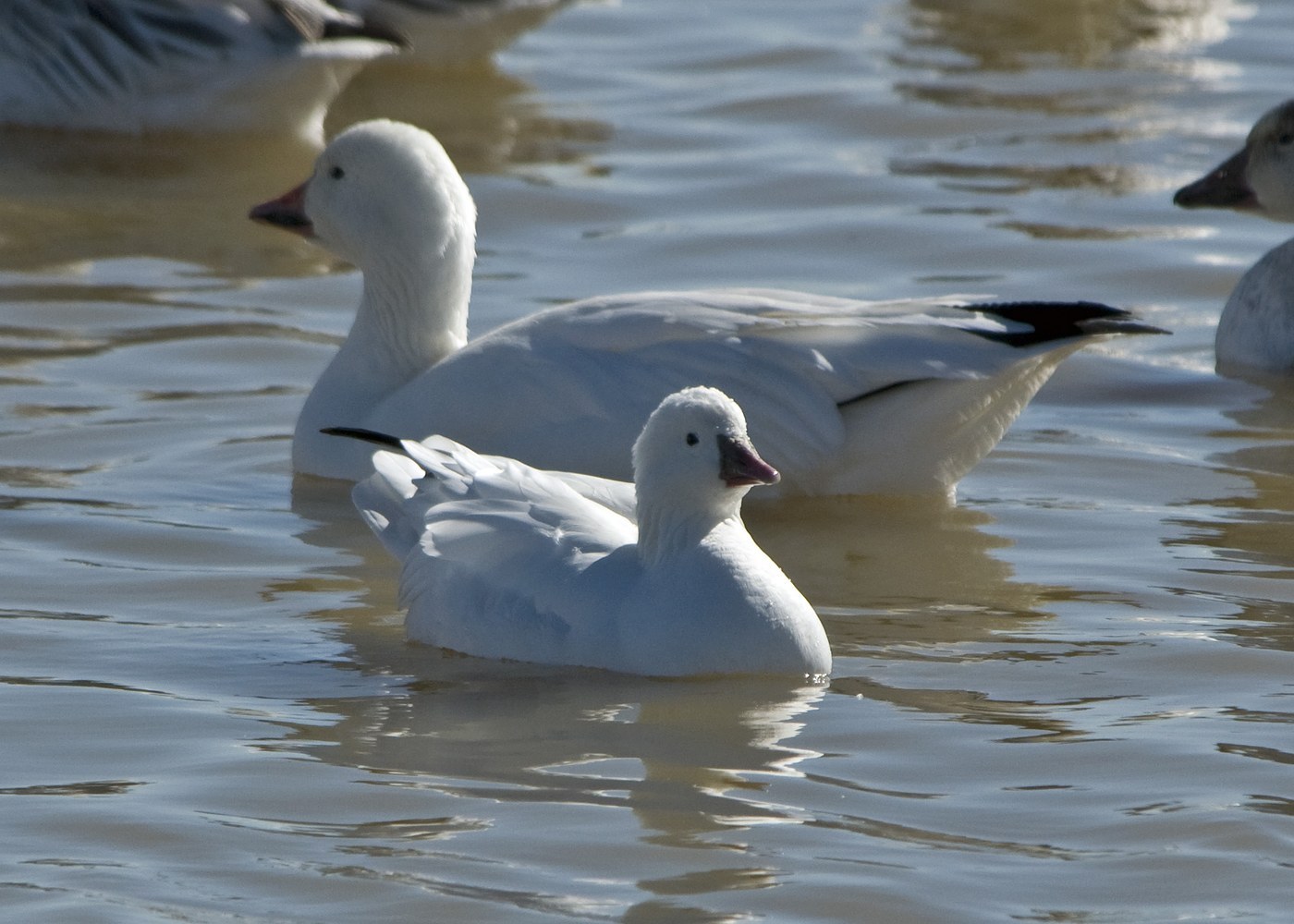
Key Field Marks
- Size & shape: A small goose, 53–66 cm long, distinctly smaller than Snow Goose, with a short neck and rounded head that give it a compact, almost dove-like profile in a mixed flock.
- Plumage: White body with black wingtips (primaries); a rare blue morph exists (dark body, white head) but is much less common than the blue morph of Snow Goose.
- Bill: Small, stubby, and roughly triangular; adults often show a warty blue-grey patch at the base. Crucially, it lacks the obvious black "grinning patch" (dark cutting edge, or tomium, along the mandible) that is conspicuous on Snow Goose.
- Neck and head: Shorter neck and more rounded head shape than Snow Goose, giving a "cuter," more compact look overall.
Separating It From Similar Species
- Snow Goose: Larger overall, with a longer neck, larger bill showing an obvious black grinning patch, and a less rounded head. Size is most useful when the two species are seen together for direct comparison.
- Hybrids: Ross's × Snow Goose hybrids are regular where the species mix on wintering grounds and can show intermediate bill size/shape and a partial grinning patch, making some individuals genuinely difficult to assign with confidence.
- Best practice: look for a distinctly small, short-necked, round-headed white goose with a stubby, unmarked bill within a larger flock of Snow Geese for the clearest identification.
Where and When to Find One
- Range: Breeds in the central Canadian Arctic; winters primarily in California's Central Valley, the Gulf Coast, and parts of the U.S. Southwest, often mixed into large flocks of Snow Geese.
- Habitat: Tundra on the breeding grounds; agricultural fields, wetlands, and flooded rice/grain fields in winter.
- Season: A long-distance migrant, present on wintering grounds roughly from late fall through early spring.
Voice
- A higher-pitched, softer, more grating call than the loud, resonant honking of Snow Goose — useful for picking out calling Ross's Geese within noisy mixed flocks.
Frequently asked questions
What is the easiest way to tell Ross's Goose from Snow Goose?
Ross's Goose is noticeably smaller with a shorter neck, rounder head, and a small stubby bill lacking the black "grinning patch" that Snow Goose shows along its mandible.
Do Ross's Geese and Snow Geese interbreed?
Yes, hybrids occur regularly where the two species winter together, and hybrids can show intermediate bill shape and a partial grinning patch, making some birds hard to identify definitively.
Is there a dark morph of Ross's Goose?
A blue (dark) morph exists but is considerably rarer than the blue morph found in Snow Goose.
Where do Ross's Geese spend the winter?
Mainly California's Central Valley, the Gulf Coast, and the U.S. Southwest, typically foraging in agricultural fields and wetlands alongside Snow Geese.