
Ringed Kingfisher Identification Guide
The largest kingfisher in the Americas, a crow-sized, shaggy-crested giant with a rufous belly in males and a blue breast band in females.
Read the full Ringed Kingfisher encyclopedia entry →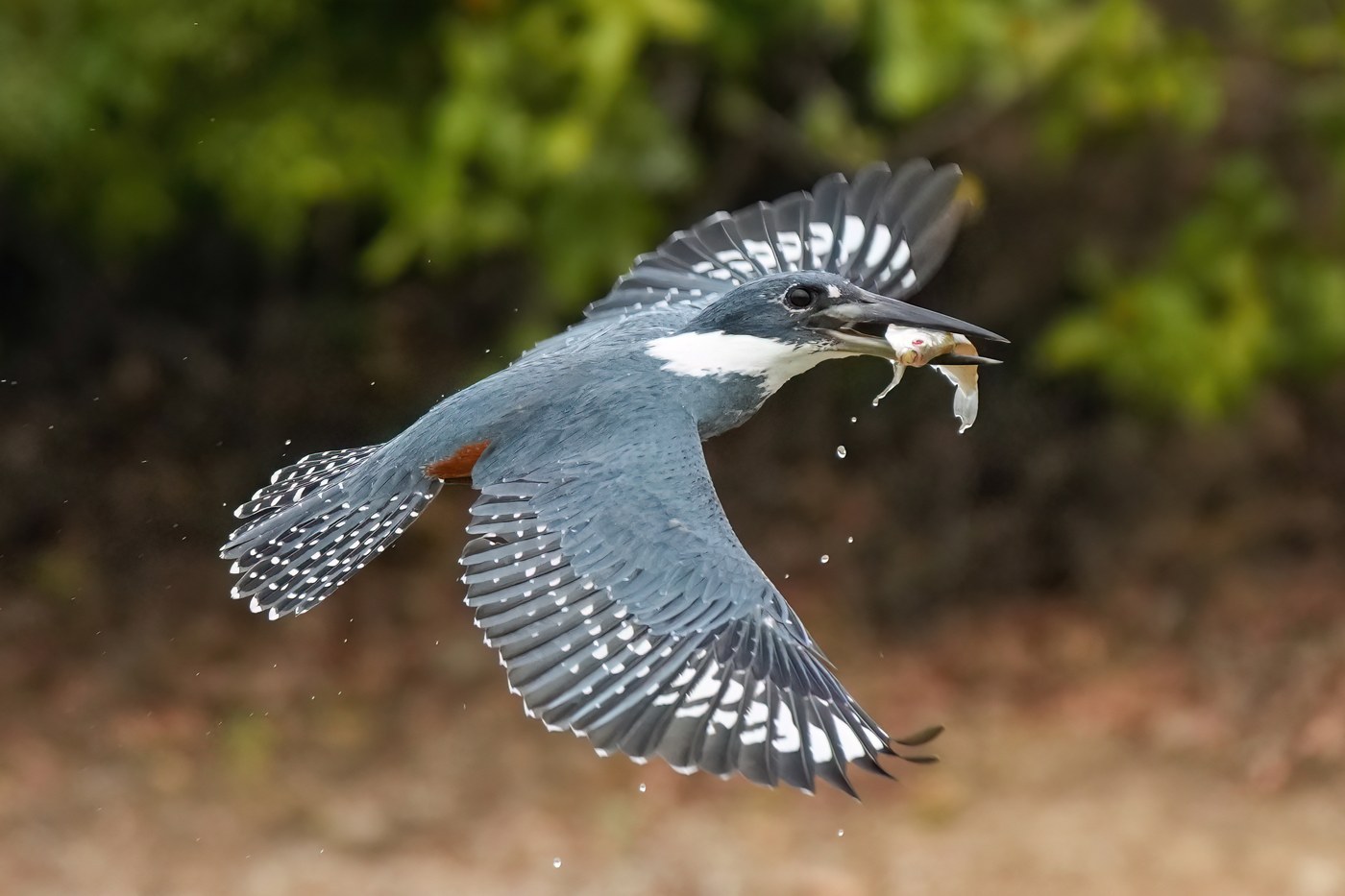
Key Field Marks
- Size & shape: The largest kingfisher in the Western Hemisphere, about 40 cm long — noticeably bigger and bulkier than the familiar Belted Kingfisher, with a heavy, dagger-like bill and a shaggy, double-pointed crest.
- Plumage (male): Slate-blue upperparts, a white collar around the neck, and a chestnut-rufous breast and belly extending nearly to the throat.
- Plumage (female): Slate-blue upperparts and a blue-gray breast band across the upper chest, with the lower breast, belly, and flanks rich rufous — essentially the reverse pattern of the male.
- Behavior: Perches conspicuously and often high — on wires, dead snags, or high branches overlooking water — before plunge-diving for fish. Flight is heavy and direct with deep wingbeats.
Separating It From Similar Species
- Belted Kingfisher: Considerably smaller (about 33 cm), with a proportionately smaller bill; male Belted is plain white below with a single blue breast band and no rufous, while female Belted has both a blue band and a rufous band below it (Ringed females lack the blue-and-rufous double band, showing blue above solid rufous only).
- Amazon Kingfisher / Green Kingfisher (South America): Both are green-backed, not blue-gray, and much smaller — easily excluded by size and color alone.
Habitat, Range & Season
Ringed Kingfishers are permanent residents along large rivers, lakes, reservoirs, and coastal lagoons from the Rio Grande Valley of southern Texas south through Mexico, Central America, and much of South America to Tierra del Fuego. They favor wide, slow-moving or still water with clear sightlines and prominent perches, and are non-migratory across most of their range, though northern birds may wander somewhat in winter.
Voice
A loud, harsh, rattling call, deeper and slower-paced than the rattle of a Belted Kingfisher. Also gives a loud, single "clack" or "cla-ack" in flight, often the first clue to its presence before it is seen.
Frequently asked questions
How do I tell a Ringed Kingfisher from a Belted Kingfisher?
Ringed is noticeably larger and bulkier with a bigger bill; males show rufous underparts nearly to the throat instead of a plain white belly, and females lack the second (rufous) band below the blue chest band that female Belted Kingfishers show.
Where in the United States can I see a Ringed Kingfisher?
Essentially only along the lower Rio Grande in southern Texas, where it is a local resident on larger rivers and resacas.
What kind of water does a Ringed Kingfisher prefer?
Large, open bodies of water — wide rivers, lakes, reservoirs, and coastal lagoons — rather than small streams or ponds.
Are male and female Ringed Kingfishers different colors?
Yes — males have a rufous breast and belly, while females show a blue-gray breast band above a rufous lower belly and flanks.