
Palm Tanager Identification Guide
A plain olive-gray Neotropical tanager, closely associated with palm trees, often seen alongside the more colorful Blue-gray Tanager.
Read the full Palm Tanager encyclopedia entry →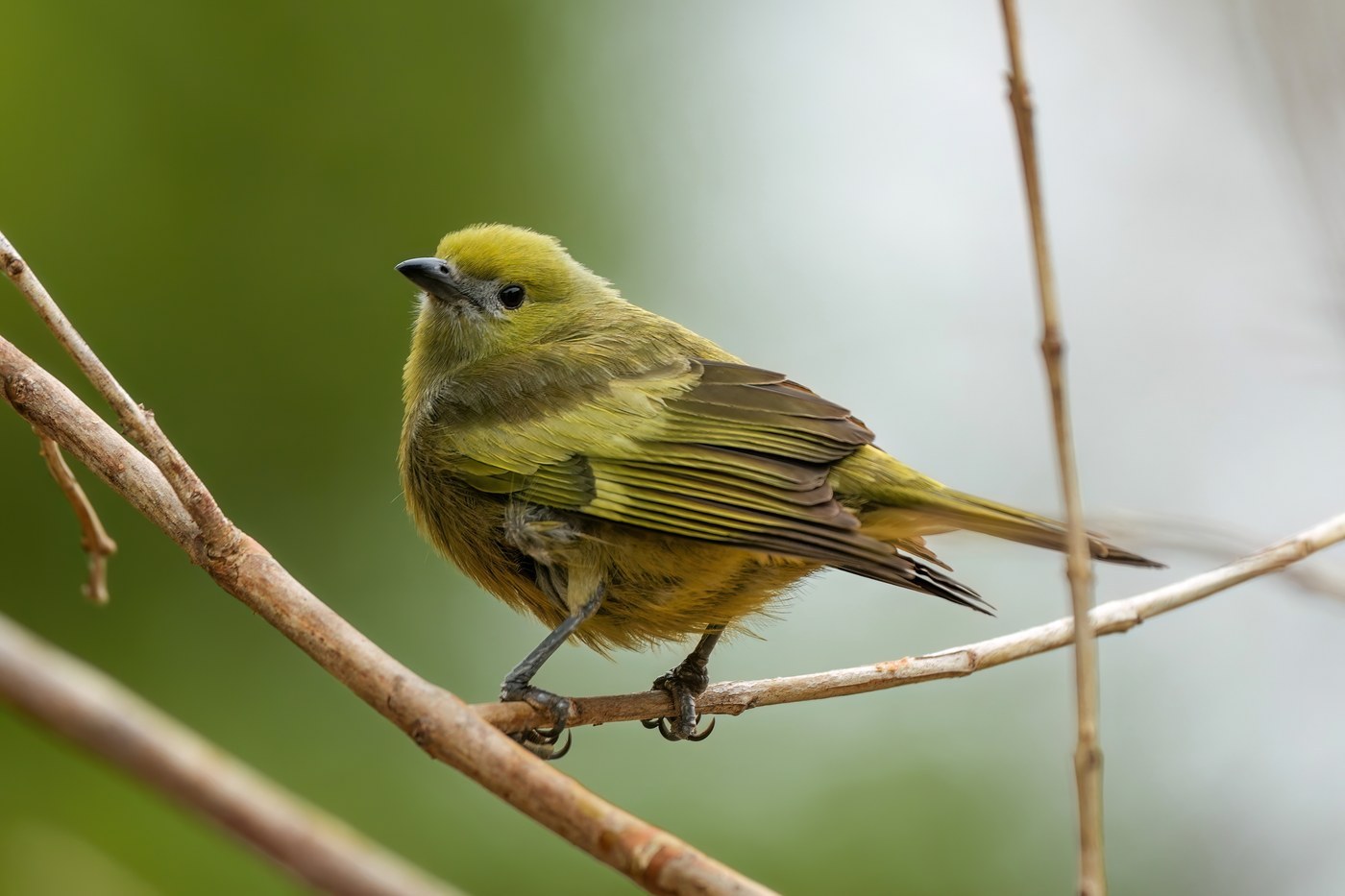
Key Field Marks
- Size & shape: A medium-sized tanager, about 18 cm long, with a fairly slim body and moderately long tail typical of Thraupis tanagers.
- Plumage: Overall dull olive-gray to grayish-green, darkest on the back and wings, paler and grayer on the underparts. A subtly darker greenish-black panel is visible on the folded wing.
- Bare parts: Dark grayish bill and legs, without bright colors.
- Behavior: Often forages in pairs or small groups in the crowns of palm trees, gardens, and forest edge, eating fruit, nectar, and some insects. Frequently associates with Blue-gray Tanagers in mixed foraging groups.
Separating It from Similar Species
- Blue-gray Tanager: Clearly blue overall (especially on the wings and rump), whereas Palm Tanager is much drabber olive-gray with no blue tones; the two species often occur together, making direct comparison easy.
- Female/immature euphonias or other tanagers: Generally show some yellow or more contrast; Palm Tanager's uniform drab olive-gray tone with a darker wing panel is distinctive once learned.
Where & When to See It
- Range: Widespread from southern Mexico and Central America through much of tropical South America, including the Amazon basin and parts of the Atlantic Forest.
- Habitat: Strongly tied to palm trees — found in palm groves, gardens, city parks, forest edges, and semi-open country with scattered palms.
- Season: Resident year-round throughout its range; no long-distance migration.
Voice
A thin, squeaky, buzzy song and simple chip calls, less musical than many other tanagers.
Frequently asked questions
How do I tell a Palm Tanager from a Blue-gray Tanager?
Palm Tanager is dull olive-gray with no blue tones, while Blue-gray Tanager is clearly blue, especially on the wings; the two species often forage together for easy side-by-side comparison.
Why is it called a Palm Tanager?
It has a strong habitat preference for palm trees, frequently feeding and perching in palm crowns in gardens, parks, and groves.
What does a Palm Tanager eat?
Mainly fruit and nectar, supplemented with insects, typical of the genus Thraupis.
Is the Palm Tanager migratory?
No, it is a non-migratory resident across its Central and South American range.