
Little Blue Penguin Identification Guide
The world's smallest penguin species, a diminutive slate-blue seabird found around New Zealand and southern Australia, most often observed coming ashore to burrow colonies at dusk.
Read the full Little Blue Penguin encyclopedia entry →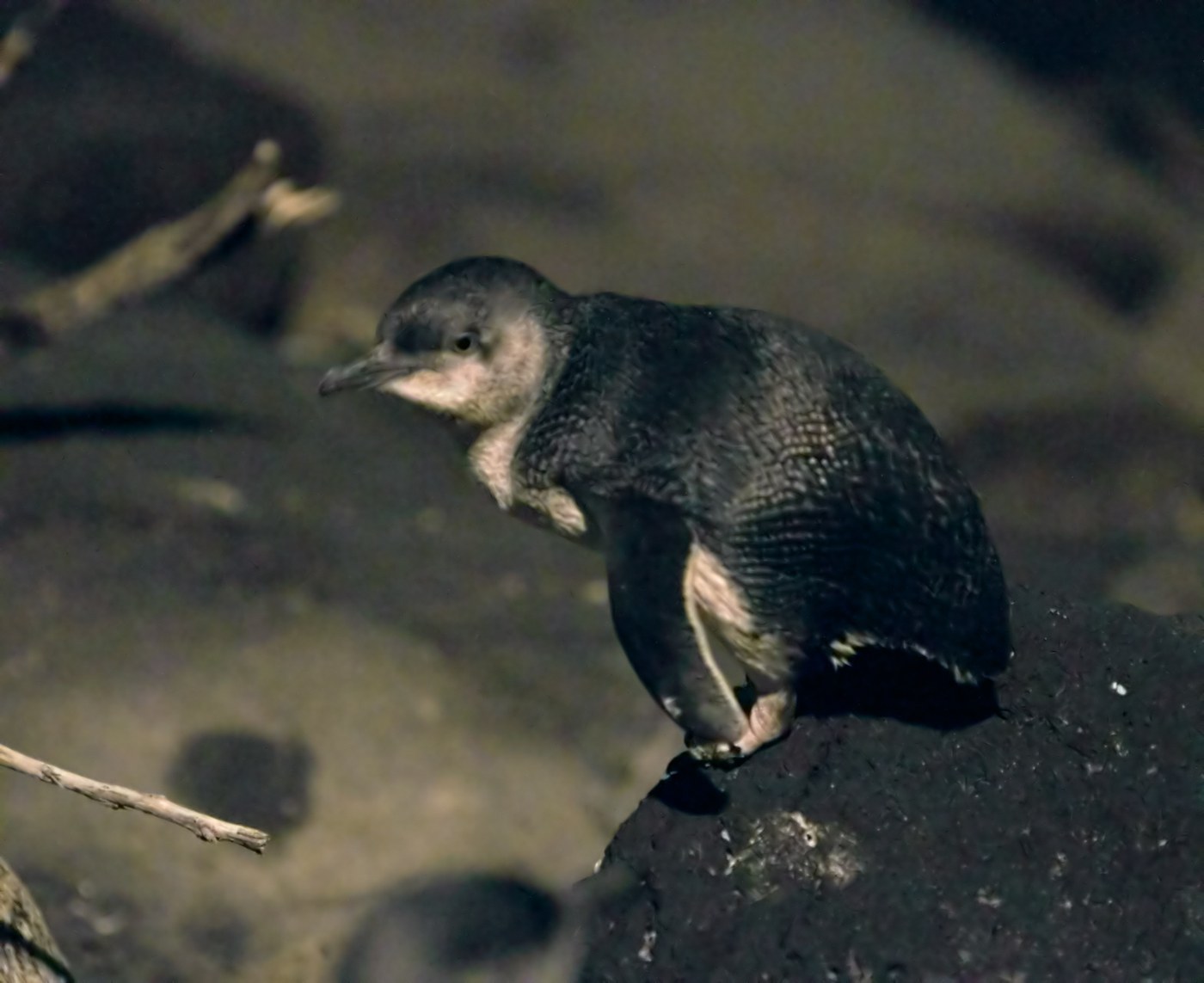
Key Field Marks
- Size and shape: The smallest penguin in the world, standing only about 30–33 cm (12–13 in) tall and weighing roughly 1–1.5 kg, with the classic upright, torpedo-shaped penguin body plan in miniature.
- Plumage: Slate-blue to indigo-blue upperparts (giving rise to the name "blue penguin" or "fairy penguin"), with a white underside and white edging visible on the flippers.
- Bill: Slender, dark grayish bill, proportionally small.
- Eyes: Pale silvery-gray to bluish-white eyes, distinctive at close range.
Separating from Similar Species
- Little Blue Penguin is unmistakable within its range simply by virtue of size — no other penguin species approaches its tiny stature, and no other seabird combines an upright penguin posture with slate-blue plumage.
- Where ranges might cause confusion with vagrant or other small seabirds seen only in water, the diagnostic penguin body shape, short flippers used for underwater "flying," and blue-gray (not black) upperparts rule out confusion with auks or other unrelated seabirds, none of which occur in the Southern Hemisphere.
Habitat and Range
Breeds along the coasts of New Zealand (including many offshore islands) and southern Australia, from South Australia through Victoria and Tasmania. Nests in burrows, rock crevices, or artificial nest boxes near the shoreline, often in colonies close to towns and harbors, including well-known urban colonies such as Oamaru and Phillip Island.
Season
Generally resident year-round near breeding colonies, foraging at sea by day and returning to burrows at dusk. Breeding season varies by location but generally spans winter to spring (roughly June–December in the Southern Hemisphere), with birds attending colonies and performing evening "parades" ashore most reliably during the breeding season.
Behavior
Spends the day foraging at sea, diving for small fish, squid, and krill, then returns to its burrow after dark in loose groups for safety from predators — a spectacle known as the "penguin parade" at popular viewing sites. Mates for multiple seasons and often reuses the same burrow. On land, moves with a characteristic upright waddling gait.
Voice
Surprisingly loud and varied for such a small bird: braying, growling, and trumpeting calls at the colony, especially after dark, used for mate contact and territorial defense around burrows.
Frequently asked questions
How big is a Little Blue Penguin?
It is the smallest penguin species in the world, standing only about 30–33 cm (12–13 inches) tall and weighing around 1–1.5 kg.
Why is it called the Little Blue Penguin?
Its slate-blue to indigo upperparts, contrasting with white underparts, give it its common name; it is also known as the fairy penguin, especially in Australia.
Where can I see Little Blue Penguins?
Along coastal New Zealand and southern Australia (South Australia, Victoria, Tasmania), with well-known viewing colonies such as Phillip Island and Oamaru where birds can be seen coming ashore at dusk.
What is a 'penguin parade'?
It refers to the nightly return of Little Blue Penguins from the sea to their burrows after dark, often in loose groups, a popular wildlife-viewing event at several colonies.
What do Little Blue Penguins eat?
Small schooling fish, squid, and krill, caught during daytime foraging dives at sea before the birds return to land in the evening.