
Guianan Cock-of-the-rock Identification Guide
A dazzling orange, disc-crested bird of the Guiana Shield rainforest, best known for the males' spectacular communal lek displays.
Read the full Guianan Cock-of-the-rock encyclopedia entry →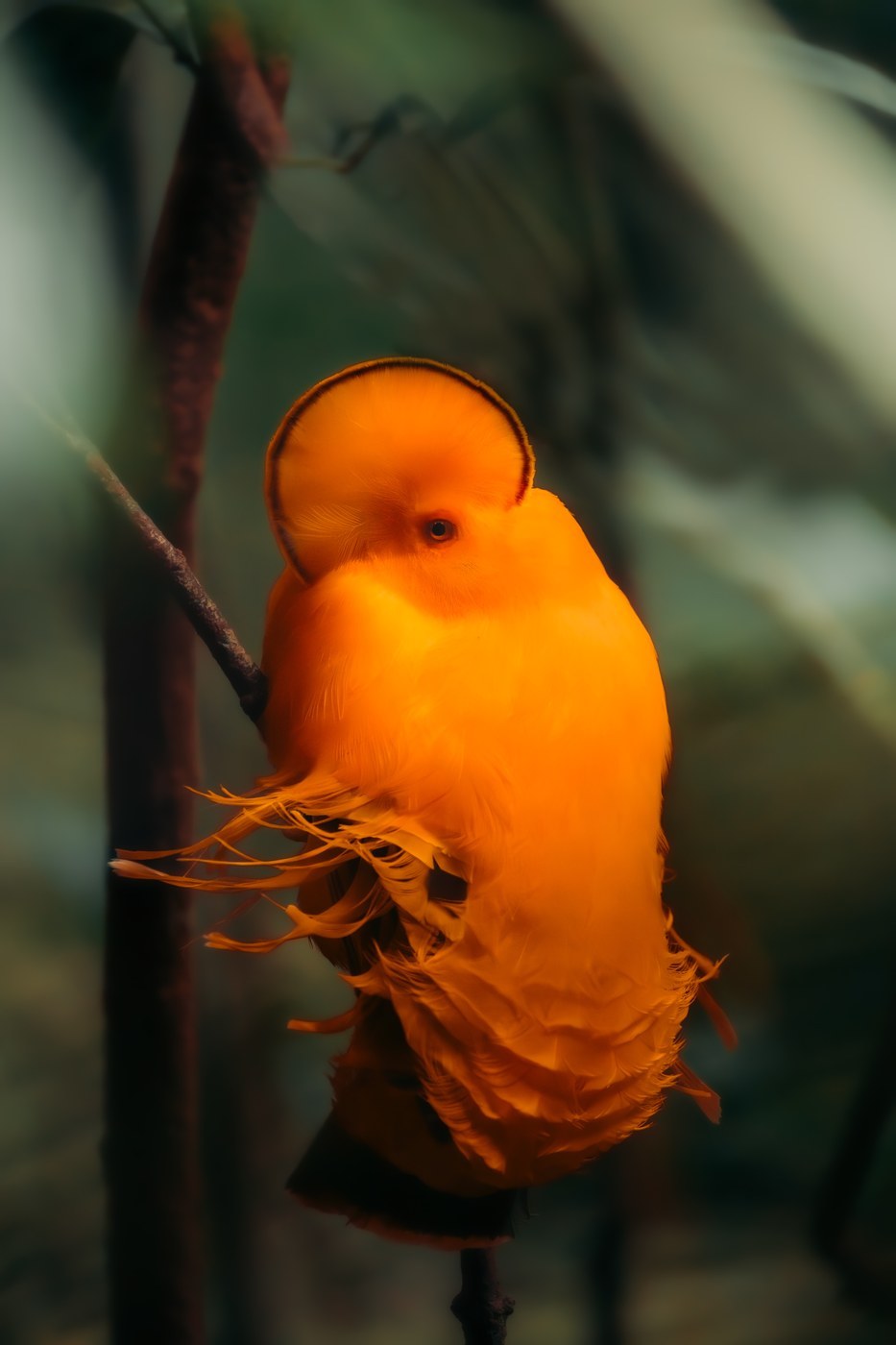
Overview
The Guianan Cock-of-the-rock (Rupicola rupicola) is one of the most spectacular birds of the northern South American rainforest, renowned for the male's flamboyant orange plumage and its participation in traditional lek courtship displays. It inhabits the forested hills and rocky outcrops of the Guiana Shield.
Key Field Marks
- Size and shape: A plump, medium-sized bird about 30-32 cm (12-13 in) long with a short tail and a distinctive half-moon crest that gives the head a flattened, disc-like profile.
- Male plumage: Brilliant flame-orange overall, with the erect fan-shaped crest largely concealing the bill; wings show contrasting black flight feathers and elongated, delicate silvery-gray secondary plumes that drape over the back.
- Female plumage: Drab dark brown overall with a smaller crest, providing camouflage at the nest — dramatically different from the male and easily mistaken for an unrelated species.
- Behavior: Males gather at traditional lek sites (often near rocky outcrops or streams) to perform bowing, wing-snapping, and bill-clacking displays to attract females; otherwise generally quiet and inconspicuous, staying in the forest mid-story to canopy.
Separating It from Similar Species
- Andean Cock-of-the-rock: The only real look-alike, but occurs far to the west in Andean cloud forest, not the lowland Guiana Shield; male Andean birds show a more rounded, taller crest and a different overall shape.
- Female/immature birds: Can be confused with large brown cotingas or female manakins, but the shape of the crest and the association with lek sites/male groups usually clinches the identification.
- No other bird in its range shows the male's saturated orange coloration combined with the disc-shaped crest.
Habitat, Range, and Season
Resident in humid lowland and foothill forest of the Guiana Shield — Guyana, Suriname, French Guiana, southern Venezuela, and adjacent northern Brazil — typically near rocky terrain, ravines, and streams where males establish leks, often on or near boulder piles. It does not migrate; sightings are year-round, though display activity and visibility at leks can peak seasonally with fruiting cycles.
Voice
Both sexes give harsh, far-carrying nasal squawks and croaking notes, but males are most vocal at lek sites, combining calls with wing-snap sounds during display. Away from leks the species is often detected first by its loud, crow-like calls echoing through the forest before it is seen.
Frequently asked questions
Why do male Guianan Cocks-of-the-rock look so different from females?
Males are brilliant orange with an elaborate crest to attract mates at communal leks, while females are camouflaged dull brown for safe incubation and nesting — a classic case of extreme sexual dimorphism driven by lek breeding.
How can I tell Guianan Cock-of-the-rock from Andean Cock-of-the-rock?
Range is the easiest clue: Guianan occurs in the lowland Guiana Shield forests, while Andean is restricted to Andean cloud forest far to the west; the crest shapes also differ subtly.
Where should I look for a lek?
Search near rocky outcrops, boulder fields, and ravines in humid forest, often close to streams, where males gather and display, sometimes at traditional sites used for many years.
Is the Guianan Cock-of-the-rock easy to hear before seeing?
Yes, its loud, harsh croaking and squawking calls, especially near leks, often reveal its presence before the bird itself is spotted in the canopy.