
Gray Jay Identification Guide
A fluffy, silent-winged gray-and-white jay of northern and montane forests, best told by its soft plumage, dark nape, and tame, camp-robbing habits.
Read the full Gray Jay encyclopedia entry →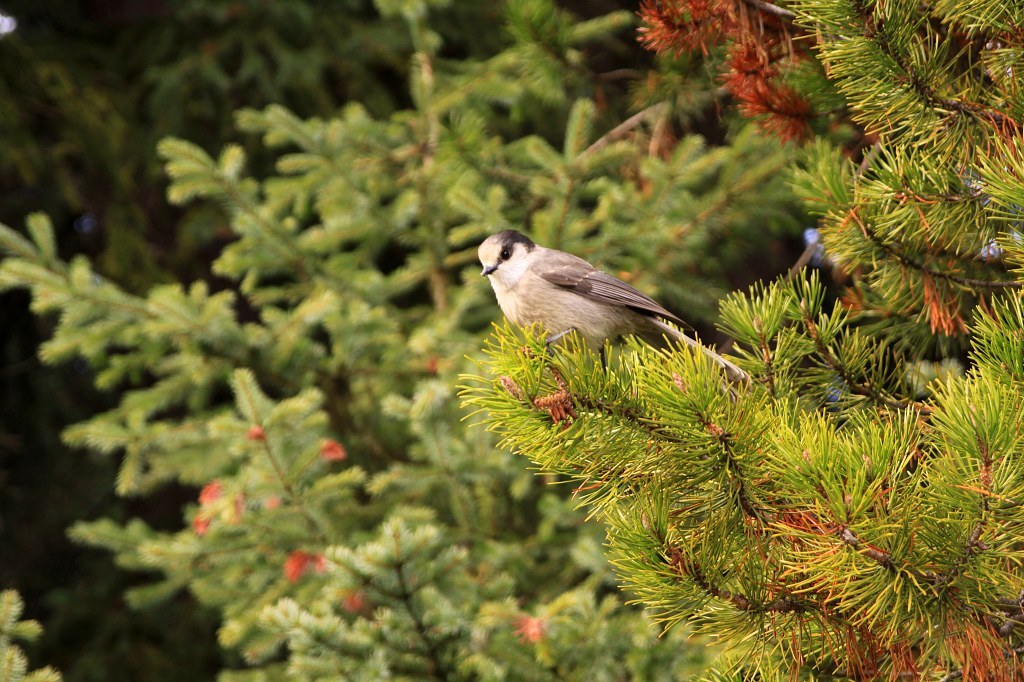
Key Field Marks
- Size & shape: A medium-sized songbird, noticeably smaller and rounder-headed than a Blue Jay, about 11-13 inches (28-33 cm) long with a small black bill and long tail.
- Plumage: Overall soft gray above, paler gray-white below, with a whitish forehead, crown, and throat contrasting against a dark gray-black nape and hindneck cap. No crest, no bold patterning — the whole bird looks fluffy and "unfinished," like a giant chickadee.
- Bill & legs: Short, stout black bill; black legs and feet.
- Behavior: Famously tame and curious, often approaching campsites, hikers, and picnic tables to snatch food. Flight is buoyant and silent on soft, fluffy wings, typically low through the trees rather than in open sky. Often travels in small family groups.
Similar Species
- Blue Jay: Much bolder blue-and-white with a crest and black necklace; Gray Jay has no blue and no crest.
- Clark's Nutcracker: Larger, pale gray body with bold black-and-white wings and tail, longer dagger-like bill; found in higher, more open subalpine terrain.
- Northern Shrike: Superficially gray-and-white but has a black mask through the eye and a hooked bill; Gray Jay lacks a mask.
Habitat & Range
Resident of boreal and subalpine coniferous forest across Canada, Alaska, and the northern/mountainous United States (northern New England, Great Lakes, Rockies, Cascades, Sierra Nevada). Non-migratory — pairs hold permanent territories year-round, caching food in bark crevices to survive harsh winters.
Season
Present all year on territory; there is no separate winter or summer range, though birds may wander short distances from high-elevation breeding areas in the harshest weather.
Voice
A varied vocalist: soft whistled quee-oo or wheeoo calls, harsh chattering scolds, and an array of mimicked hawk and other bird calls. Generally quieter and less harsh-voiced than other jays, with a musical, almost thrush-like quality to some calls.
Frequently asked questions
How do I tell a Gray Jay from a Clark's Nutcracker?
Gray Jay is smaller, plain gray overall with a dark cap and no black-and-white wing/tail pattern; Clark's Nutcracker is larger, paler, and shows bold black wings with white secondaries and a white-edged black tail.
Why are Gray Jays so tame around people?
They have historically relied on caching stored food and scavenging to survive boreal winters, which has made them bold around campsites and quick to investigate potential food sources, including human hands.
Do Gray Jays migrate?
No, they are non-migratory and hold the same territory throughout the year, relying on cached food supplies rather than moving south for winter.
What's the easiest way to separate Gray Jay from a chickadee at a glance?
Size and shape: Gray Jay is much larger (about jay-sized, 11-13 inches) with a longer tail and heavier bill, while chickadees are tiny with a black cap and bib rather than an all-dark nape.