
Gray-crowned Rosy-Finch Identification Guide
A chunky alpine finch with warm brown body plumage, pink-tinged wings and belly, and a gray patch on the back of an otherwise black-fronted head.
Read the full Gray-crowned Rosy-Finch encyclopedia entry →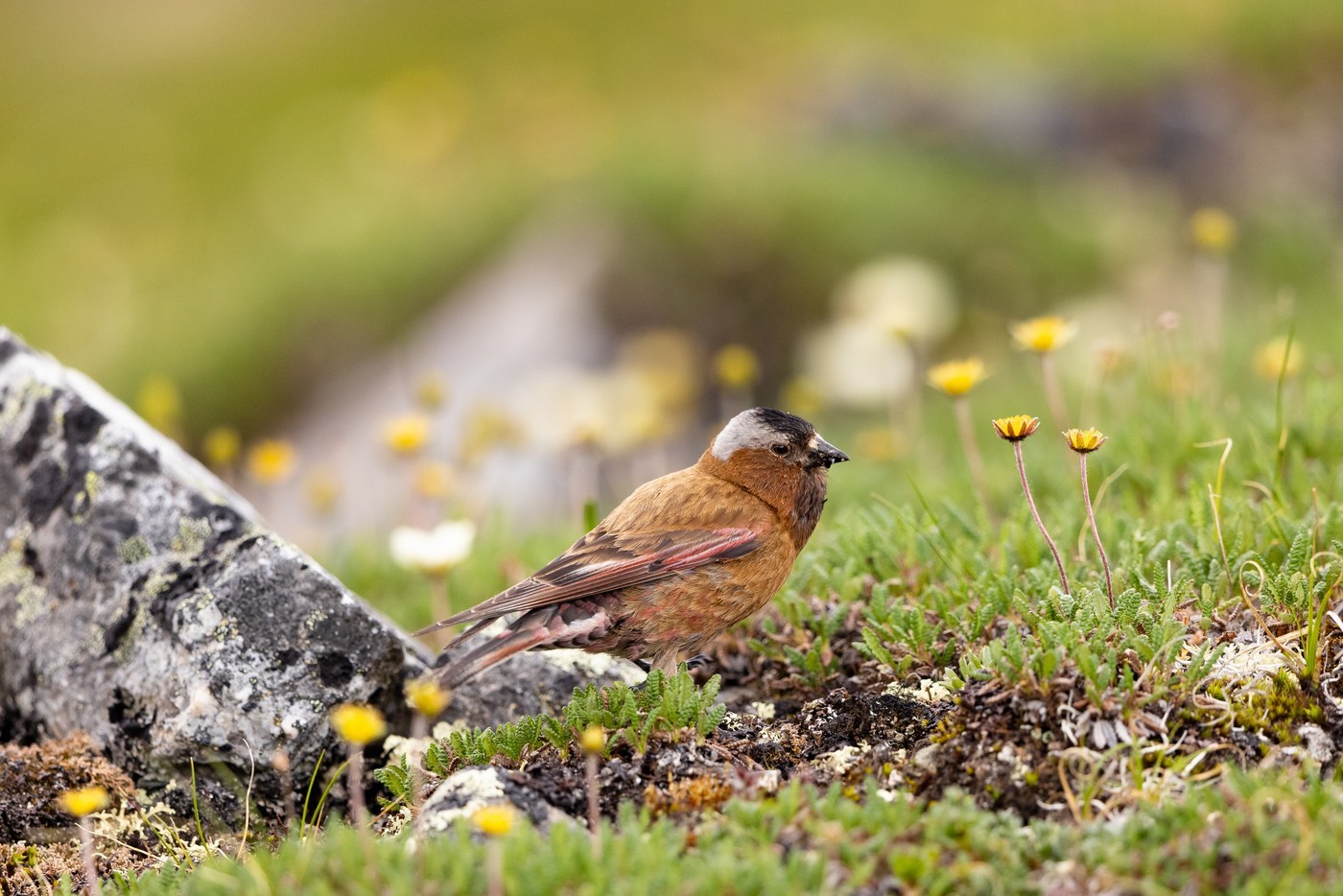
Key Field Marks
- Stocky, sparrow-sized finch with an overall dark chocolate-brown body.
- Extensive pink to rosy wash on the wings, rump, and belly, most vivid in breeding males and often visible in flight as pink flashes.
- Black forehead and forecrown contrasting with a pale gray patch covering the rear crown and nape — the feature that gives the species its name.
- Small, conical, dark bill in breeding season that turns yellowish in winter.
- Sexes are similar though females are slightly duller than males; some populations show a grayer or paler face than others across their range.
Separating It From Similar Species
- Black Rosy-Finch: overall blacker body plumage with less brown, and generally less extensive gray on the head, restricted to interior mountain ranges of the Great Basin.
- Brown-capped Rosy-Finch: lacks any gray on the head entirely, showing a uniformly brown crown, and is limited to the southern Rocky Mountains.
- Gray-crowned Rosy-Finch is the only one of the three rosy-finch species with a distinct pale gray patch on the back of the head; range also helps narrow down which species to expect.
Habitat, Range & Season
- Breeds above treeline in alpine tundra, talus slopes, cliffs, and near permanent snowfields and glaciers in mountain ranges of the western United States, western Canada, and Alaska, including some Aleutian and Bering Sea islands.
- In winter, descends to lower elevations, foraging on open ground, cliffs, and sometimes visiting mountain feeders, often in large mixed flocks with other rosy-finch species.
- Some far northern and island populations are largely resident, while interior mountain breeders shift altitudinally rather than migrating great distances.
Behavior & Voice
- Forages on the ground for seeds and insects, often walking rather than hopping, and is frequently found near snowfields where insects become chilled and immobile.
- Highly social outside the breeding season, forming large flocks that move together across open terrain.
- Voice includes high chirping notes and a distinctive "chew" flight call; flocks in flight produce a constant twittering chatter.
Frequently asked questions
What makes the Gray-crowned Rosy-Finch different from other rosy-finches?
It is the only rosy-finch with a distinct pale gray patch on the back of the head, contrasting with a black forecrown; Black and Brown-capped Rosy-Finches lack this gray nape patch.
Where can I find Gray-crowned Rosy-Finches?
Look above treeline on alpine tundra, cliffs, and near permanent snowfields in western mountain ranges and parts of Alaska during the breeding season, and at lower elevations or feeders in winter.
Why are Gray-crowned Rosy-Finches often seen near snow?
They forage for insects that become chilled and stranded on the surface of snowfields, making snow edges a reliable feeding spot.
Do Gray-crowned Rosy-Finches migrate?
Most populations make only short altitudinal movements to lower elevations in winter rather than long-distance migration, though some flocking and mixing with other rosy-finch species occurs.
What does a Gray-crowned Rosy-Finch sound like?
High chirping calls and a distinctive "chew" flight note, with flocks producing a steady twittering chatter in flight.