
Chestnut-eared Bunting Identification Guide
An East Asian bunting of wet grassland and marsh edges, identified by its chestnut ear patch, gray head with dark malar stripes, and a necklace of dark streaks across the breast.
Read the full Chestnut-eared Bunting encyclopedia entry →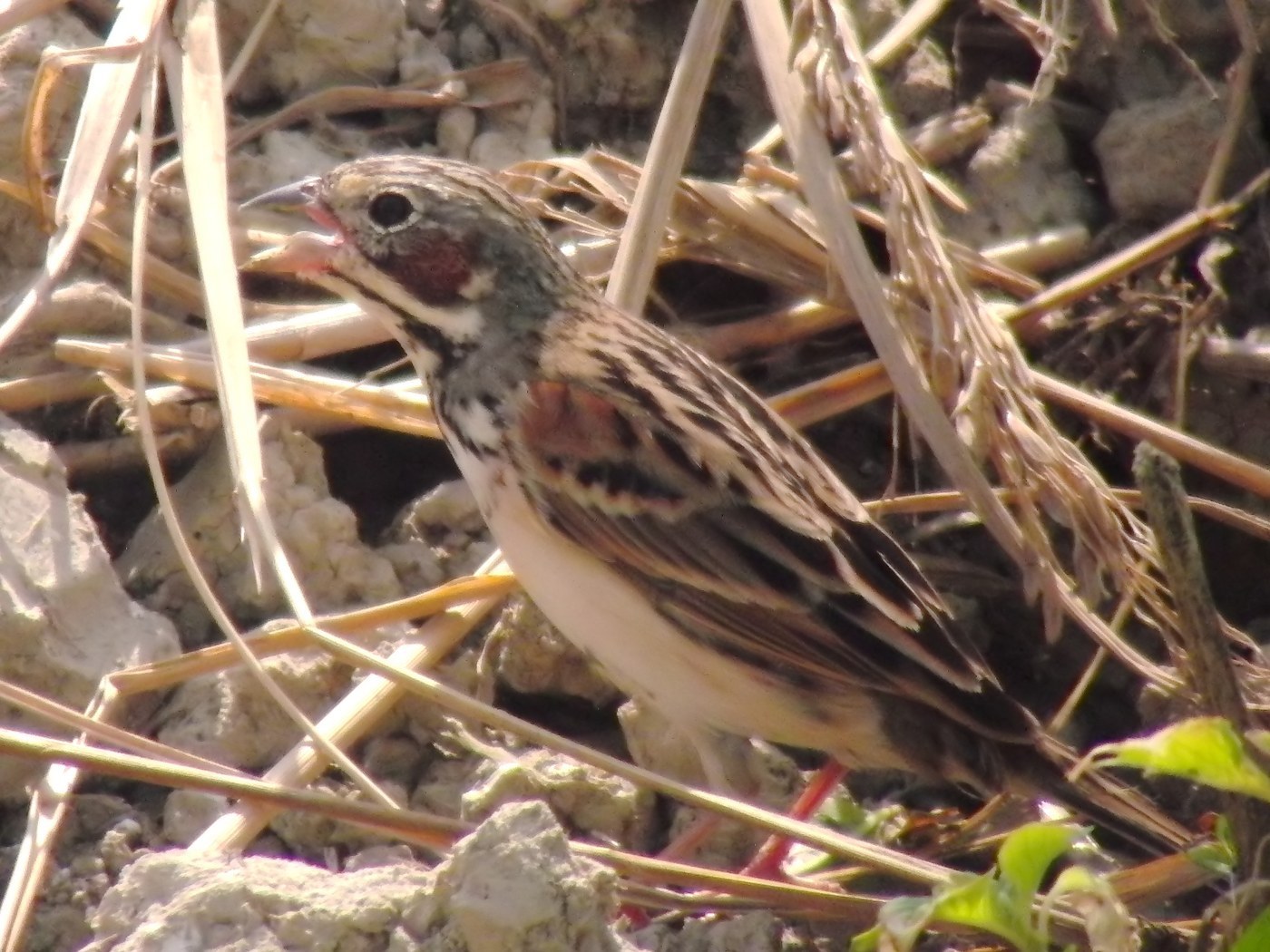
Key Field Marks
- Medium-sized bunting with streaked brown upperparts and a stout, conical bill typical of the family.
- Gray head with a bold chestnut (rufous) patch on the ear coverts/cheek — the standout feature that gives the species its name.
- Black or dark malar (mustache) stripes framing a pale throat.
- Necklace of dark streaks or spots across the upper breast, sometimes coalescing into a band.
- Rufous wash on the rump/uppertail coverts and white outer tail feathers, visible in flight.
Similar Species
- Meadow Bunting: Shows a different head pattern with a broader white supercilium and lacks the concentrated chestnut ear patch and necklace of streaks.
- Yellow-throated Bunting and other Emberiza buntings: Separated by combinations of throat color, head pattern, and breast markings; the chestnut ear patch plus streaked breast necklace is the most efficient combination for Chestnut-eared Bunting.
Habitat & Range
- Breeds across parts of Siberia, Japan, Korea, and China, favoring wet, grassy habitats.
- Typical habitat includes grassy marshes, wet meadows, rice paddy edges, and scrubby vegetation along rivers and streams.
- Winters farther south, into southern China, Southeast Asia, and parts of South Asia.
Behavior
- Often perches low in grass or scrub, dropping down to forage on the ground for seeds and insects.
- Can be somewhat skulking outside the breeding season, staying low in dense grass.
Voice
- Song is a thin, varied warbling series, delivered from an exposed low perch during the breeding season.
- Call is a sharp, short "tsip" or similar clipped note.
Frequently asked questions
What is the best field mark for Chestnut-eared Bunting?
The chestnut patch on the ear coverts (cheek) combined with a gray head and a necklace of dark streaks across the breast is the most reliable combination for identification.
Where does the Chestnut-eared Bunting live?
It breeds in wet grassy habitats — marshes, wet meadows, and paddy edges — across Siberia, Japan, Korea, and China, wintering farther south in southern China and parts of Southeast and South Asia.
How is it different from Meadow Bunting?
Meadow Bunting has a broader white eyebrow stripe and lacks the concentrated chestnut ear patch and streaked breast necklace that define Chestnut-eared Bunting.
What habitat should I look for Chestnut-eared Bunting in?
Focus on grassy wetlands, wet meadows, rice paddy margins, and scrubby streamside vegetation rather than dry open country.