
Black-necked Stilt Identification Guide
A striking black-and-white wader with extraordinarily long pink-red legs and a thin, straight black bill, common in shallow wetlands across the Americas.
Read the full Black-necked Stilt encyclopedia entry →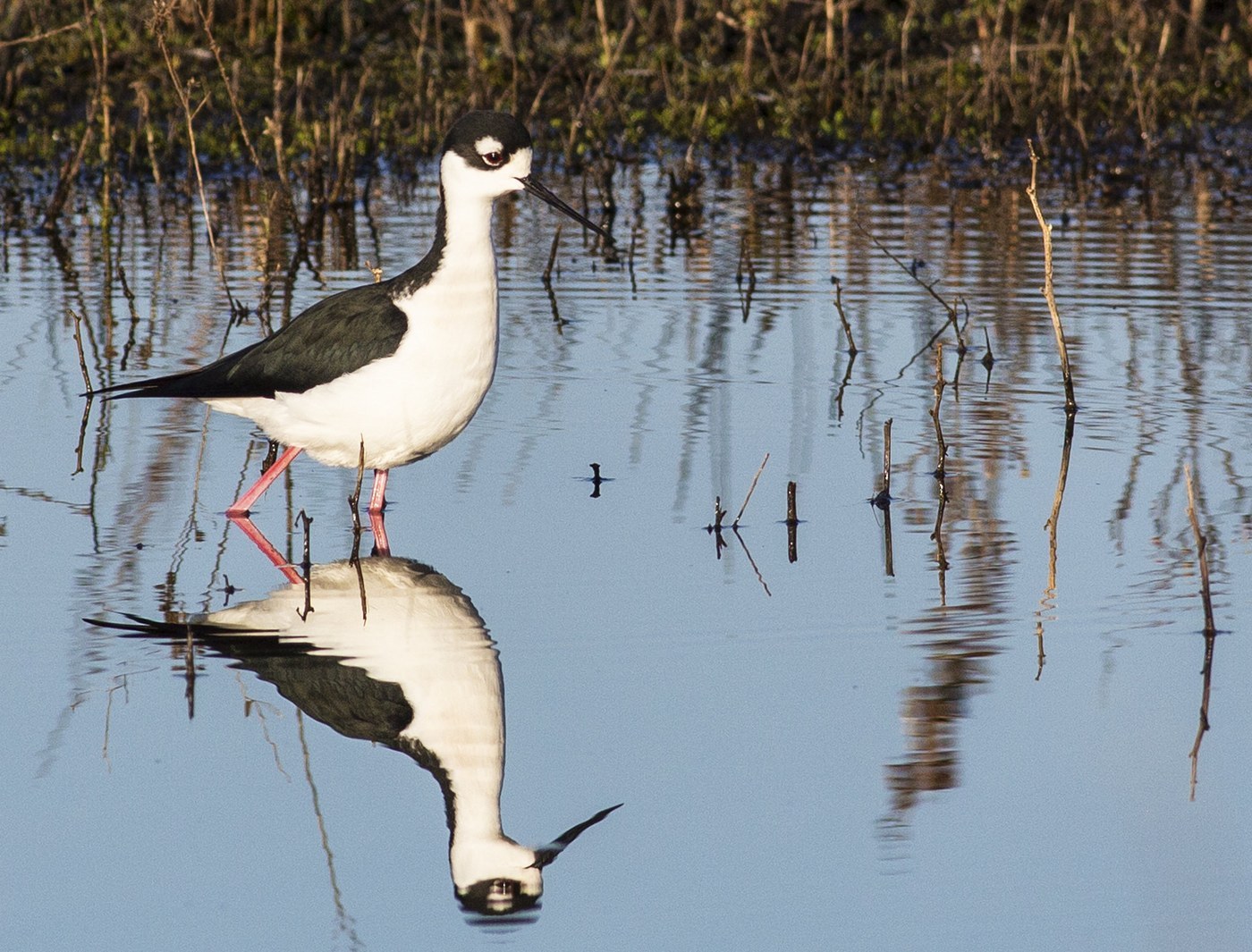
Key Field Marks
- Tall, slender shorebird with black upperparts, a black cap and hindneck, and clean white underparts and face — a crisp, high-contrast pattern.
- Legs are extremely long and bright pink to red, proportionally among the longest legs relative to body size of any bird.
- Bill is thin, straight, and black, used for picking prey from the water surface and mud rather than probing deeply.
- Sexes are similar, though females often show a slightly browner tinge to the black upperparts compared to the glossier black of males.
Behavior
- Wades in shallow water, walking deliberately on its long legs while picking aquatic insects, small crustaceans, and other invertebrates from the surface.
- Nests on the ground near water, often in loose colonies; adults are noisy and aggressive in defense of nests, mobbing intruders while giving sharp alarm calls.
- Frequently associates with American Avocets in shared wetland habitat.
Separating from Similar Species
- American Avocet: bill is distinctly upturned (not straight), legs are blue-gray rather than pink-red, and the head/neck show cinnamon (breeding) or gray (nonbreeding) tones rather than solid black.
- Black-winged Stilt (Old World): very similar overall, but Black-necked Stilt shows more extensive black on the head and hindneck extending down onto the neck, while Black-winged Stilt often shows more white on the head and a paler nape.
- No other regularly encountered American shorebird combines such long pink legs with a thin, straight black bill and bold black-and-white body pattern.
Habitat & Range
- Found across much of the Americas, from the western and southern United States through Mexico, Central America, the Caribbean, and into South America.
- Inhabits shallow wetlands, salt ponds, mudflats, flooded fields, marshes, and coastal lagoons; often abundant at managed wetlands and salt evaporation ponds.
- Northern populations are migratory, moving south for winter, while southern populations are largely resident.
Voice
- Gives a sharp, repeated, yipping "kek-kek-kek-kek" alarm call, especially noisy and persistent when a nest or chicks are nearby.
Frequently asked questions
How do I tell a Black-necked Stilt from an American Avocet?
Stilt has a thin, straight black bill and pink-red legs, while Avocet has a distinctly upturned bill and blue-gray legs, plus cinnamon or gray head tones rather than solid black.
Why does the Black-necked Stilt have such long legs?
Its unusually long legs let it wade into deeper water than most shorebirds to reach food, and it has proportionally among the longest legs relative to body size of any bird.
Where do Black-necked Stilts live?
In shallow wetlands, salt ponds, mudflats, and marshes across much of the Americas, from the western and southern United States south through Mexico, Central America, and South America.
Are Black-necked Stilts aggressive near their nests?
Yes, they are noisy and aggressive nest defenders, mobbing intruders and giving persistent sharp 'kek-kek-kek' alarm calls when a nest or chicks are threatened.