
American Avocet Identification Guide
A tall, elegant shorebird with a thin, sharply upturned bill and cinnamon (breeding) or gray (winter) head and neck, usually seen sweeping shallow alkaline waters for food.
Read the full American Avocet encyclopedia entry →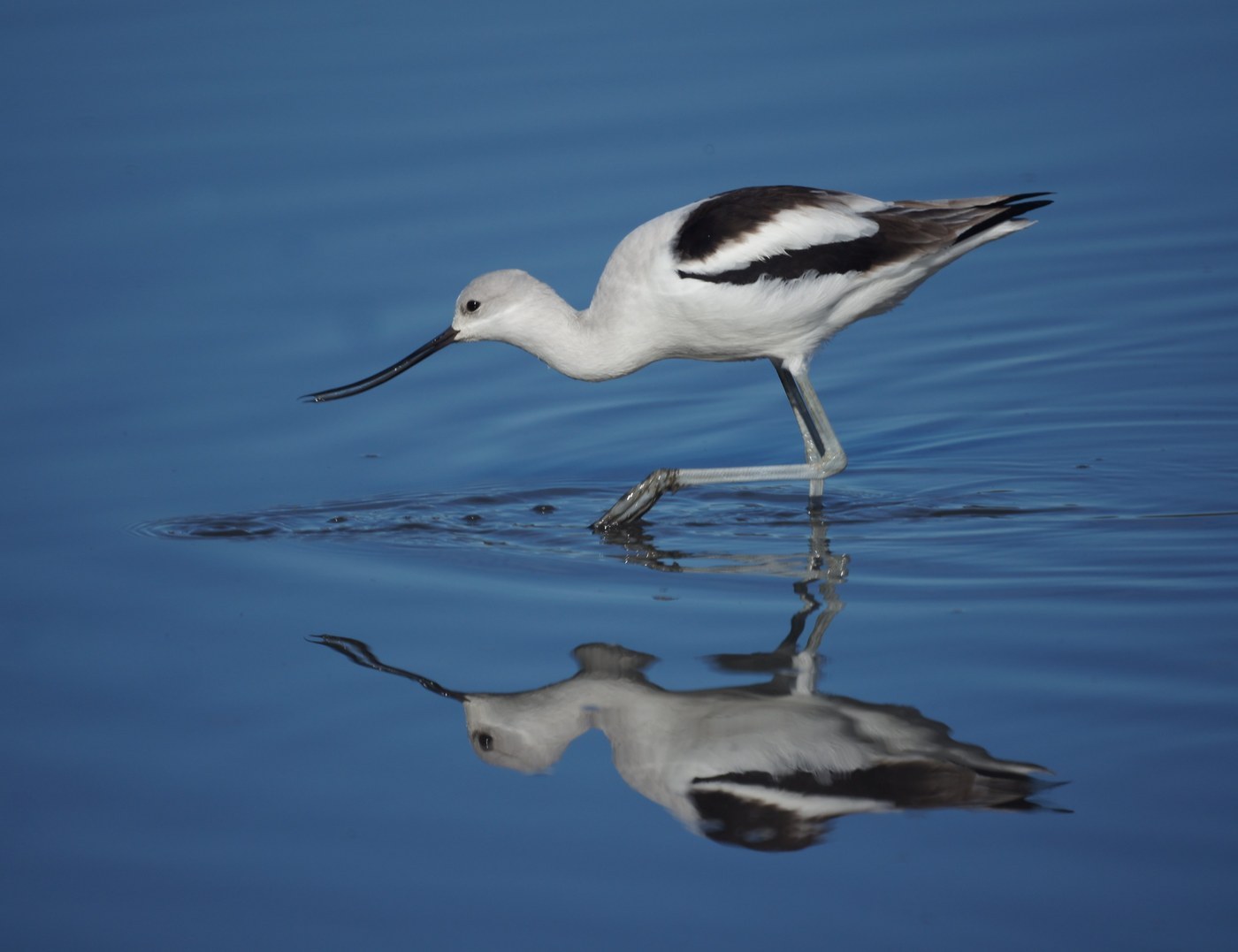
Key Field Marks
- Size: Large shorebird, about 43–47 cm (17–18.5 in) long, with a long neck and long legs.
- Bill: Thin, needle-like, and distinctly recurved (upturned) — unique among regularly occurring North American shorebirds along with its close relative the stilt.
- Breeding plumage: Head, neck, and upper breast washed rich cinnamon-orange; body otherwise bold black-and-white patterned above, white below.
- Non-breeding/winter plumage: Head and neck become pale gray-white instead of cinnamon; black-and-white body pattern remains.
- Legs: Long, blue-gray — noticeably long even for a shorebird, giving a leggy, elegant silhouette.
- Sexes: Similar, though female's bill tends to be shorter and more strongly upturned than the male's slightly straighter, longer bill.
Separating Similar Species
- Black-necked Stilt: Often forages alongside avocets in the same habitats but has a straight, thin black bill, solid black-and-white body without cinnamon, and bright red-pink legs (much longer relative to body than avocet's).
- Other avocets: No other avocet species occurs regularly in the Americas, so within its range the recurved bill alone is usually diagnostic.
Habitat, Range & Season
Breeds on shallow, often alkaline or saline lakes, playas, and wetlands across the interior western United States and southwestern Canada, spring through summer. In winter, American Avocets move to coastal estuaries, salt ponds, and mudflats along the Pacific, Gulf, and southern Atlantic coasts, as well as into Mexico and Central America. Look for them wading in shallow water, often in loose flocks.
Behavior & Voice
Feeds by wading and sweeping its upturned bill side to side through the water and soft mud, a scything motion that helps it locate small crustaceans, insects, and other invertebrates by touch. Also picks food from the surface. Gregarious, often feeding and roosting in flocks, sometimes alongside stilts and other shorebirds.
- Call: A sharp, repeated "wheep" or "kleep," often given in alarm when a nest or chicks are approached.
Frequently asked questions
How can I tell a breeding from a non-breeding American Avocet?
Breeding adults have a cinnamon-orange wash on the head and neck, while non-breeding (winter) birds have a pale gray-white head and neck; the black-and-white body pattern stays the same year-round.
What is the easiest way to separate American Avocet from Black-necked Stilt?
Bill shape is the giveaway: avocets have a thin, upturned bill, while stilts have a straight bill. Stilts also have much longer, brighter red-pink legs and lack any cinnamon coloring.
Do male and female American Avocets look different?
They look similar overall, but the female's bill is typically shorter and more sharply upturned than the male's slightly longer, straighter bill — a subtle difference best judged when a pair is seen together.
Where do American Avocets go in winter?
They largely vacate interior breeding lakes and move to coastal estuaries, salt ponds, and mudflats along the Pacific, Gulf, and southern Atlantic coasts, as well as parts of Mexico.