Order: Passeriformes; Family: Leiothrichidae
Jungle Babbler
Turdoides striata
A medium-sized, dull-colored bird known for its gregarious nature, often found in groups of seven to ten, earning them the nickname 'Seven Sisters'. They are noisy and active foragers.
Explore Jungle Babbler in the encyclopedia →Identify your own birds.
Get a report just like this from any photo or call, free.
Plumage & appearance
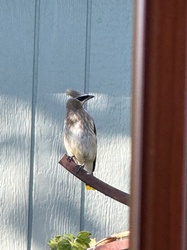
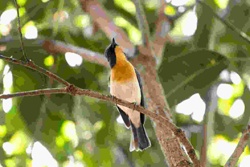
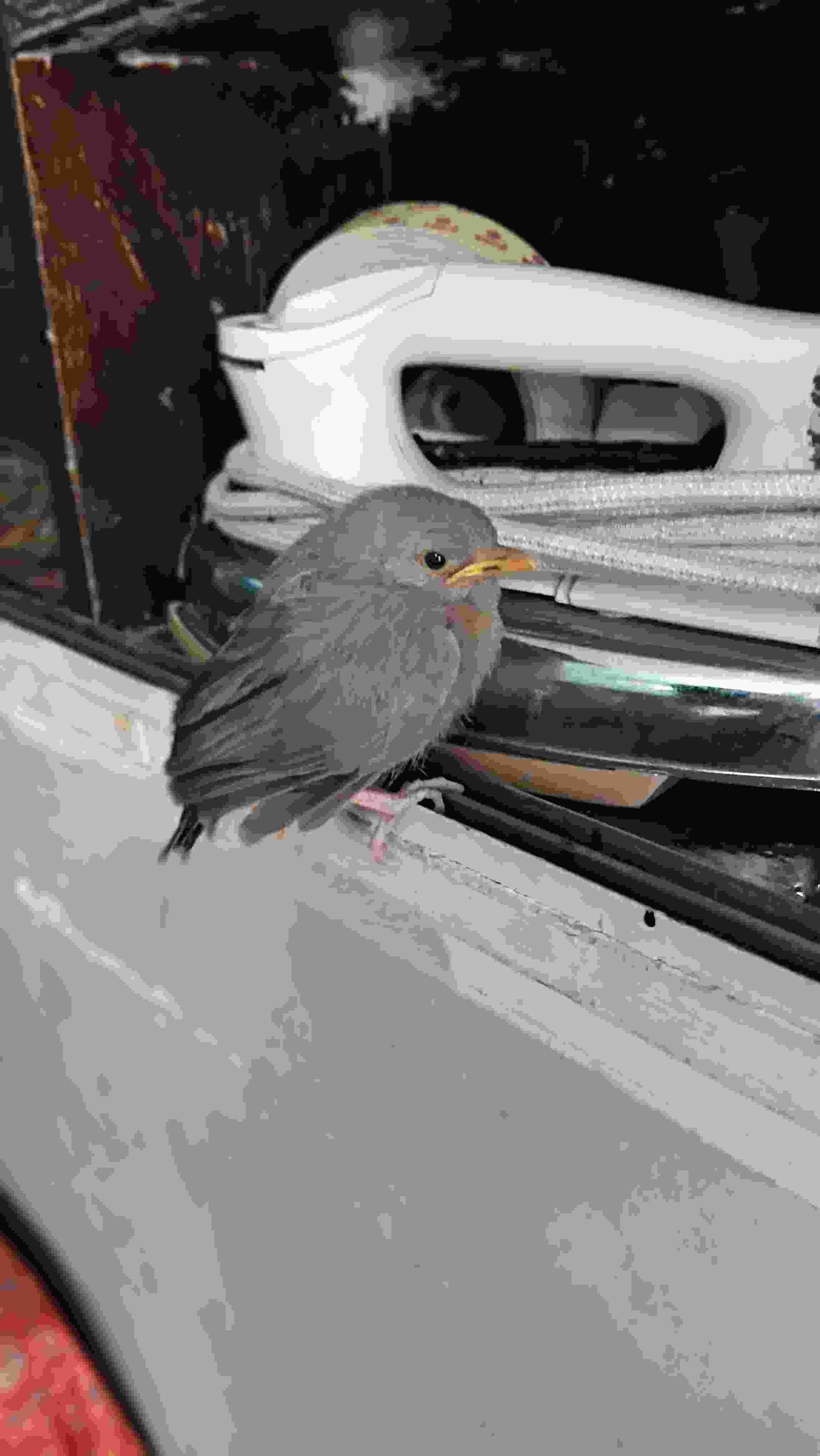
Uniformly greyish-brown or earthy-brown with a slightly lighter throat and belly. Juveniles (like the one pictured) have a dark iris which turns pale creamy-yellow as they mature. The bill is yellow, becoming paler with age.
Key field marks
Yellowish bill and legs, dull earthy-grey plumage, pale creamy eyes (in adults), and their habit of moving in noisy groups.
Size & weight
Length: 25 cm (9.8 in); Wingspan: approx 30-35 cm; Weight: 65-80 grams.
Voice — call & song
A series of harsh, nasal 'ke-ke-ke' or 'chack-chack' sounds; they are known for their constant chattering when in a group.
Diet & foraging
Omnivorous; primarily feeds on insects, spiders, and larvae, but also consumes nectar, berries, and grain.
Habitat
Open forest, scrubland, gardens, and urban parks with plenty of vegetation.
Migration & movement
Resident; they do not migrate and occupy stable home ranges.
Nesting & breeding
Builds a shallow cup nest in trees or bushes; breeding season is primarily March to July. Cooperative breeders where group members help feed the young.
Similar species
Yellow-billed Babbler (found in southern India/Sri Lanka): Distinguished by a paler head and more contrasting yellow bill/eye ring. Common Babbler: Smaller with a longer tail and streaks on the back.
Ecological significance
Act as important insect controllers and seed dispersers in their environment; they also serve as hosts for the Jacobin Cuckoo, which is a brood parasite.
Conservation status
Least Concern (IUCN); Population trend is stable.
Observation tips
Look for them hopping on the ground in leaf litter or in low bushes. They are very vocal and easy to find by following their harsh, chattering calls.
Interesting facts
They are famously called 'Seven Sisters' or 'Saath Bhai' because they are almost always observed in a group of about seven individuals.
More like this