Order: Columbiformes; Family: Columbidae
Laughing Dove
Spilopelia senegalensis
A small, long-tailed dove frequently found in urban and scrubland environments. It is known for its gentle nature and its peculiar call that resembles human laughter.
Explore Laughing Dove in the encyclopedia →Identify your own birds.
Get a report just like this from any photo or call, free.
Plumage & appearance
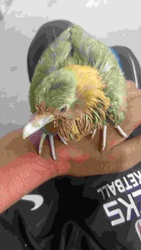
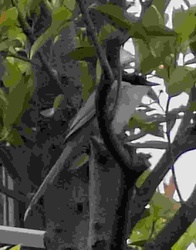
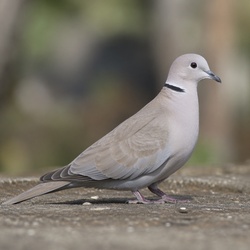
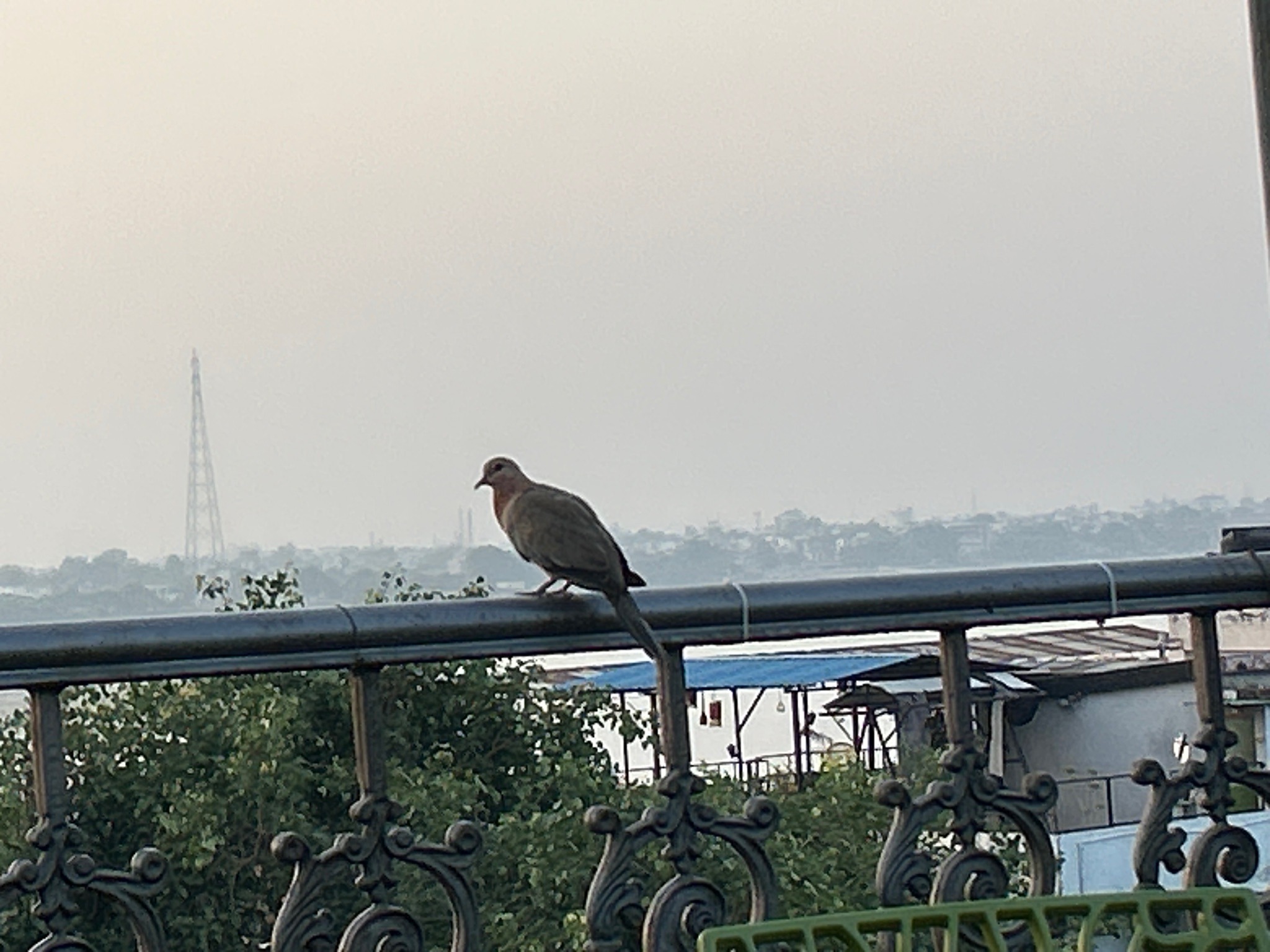
Pinkish-brown head and underparts with a greyish-blue wash on the wings. It has a distinctive black-spotted rufous patch on the sides of the neck (often called a 'necklace'). The tail is long with white outer feathers.
Key field marks
Small size, pinkish-brown hue, long tail with white edges, and the speckled rufous 'necklace' on the side of the neck.
Size & weight
Length: 23–26 cm; Wingspan: 40–45 cm; Weight: 70–120 g
Voice — call & song
A characteristic low, rhythmic, bubbling 'coo-coo-coo-oo-oo' that sounds like a soft laugh.
Diet & foraging
Primarily granivorous, eating seeds, grains, and fallen fruits; occasionally consumes small insects.
Habitat
Dry scrub, farmland, urban parks, and gardens; highly adaptable to human-altered landscapes.
Migration & movement
Mainly resident; however, some populations may show nomadic movements in response to food or water availability.
Nesting & breeding
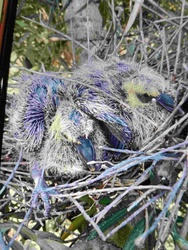
Builds a flimsy platform nest of twigs, usually in a tree, bush, or on ledges of buildings. Typically lays two white eggs.
Similar species
Spotted Dove (larger, with a black-and-white checkered nape) and Eurasian Collared-Dove (larger, paler, with a black half-collar).
Ecological significance
Acts as an important seed disperser in its native habitats and serves as a prey species for various urban and rural raptors.
Conservation status
Least Concern (IUCN); Population is stable and expanding in some regions.
Observation tips
Look for them on the ground in gardens, parks, and city streets. They are quite approachable and often perch on wires or fences in early morning.
Interesting facts
This species was introduced to Western Australia in the late 19th century and has since become well-established there. Its name comes from its vocalization which sounds like a chuckle.
More like this