Order: Psittaciformes; Family: Psittaculidae
Peach-faced Lovebird (Rosy-faced Lovebird)
Agapornis roseicollis
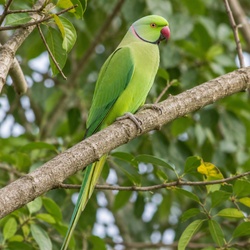
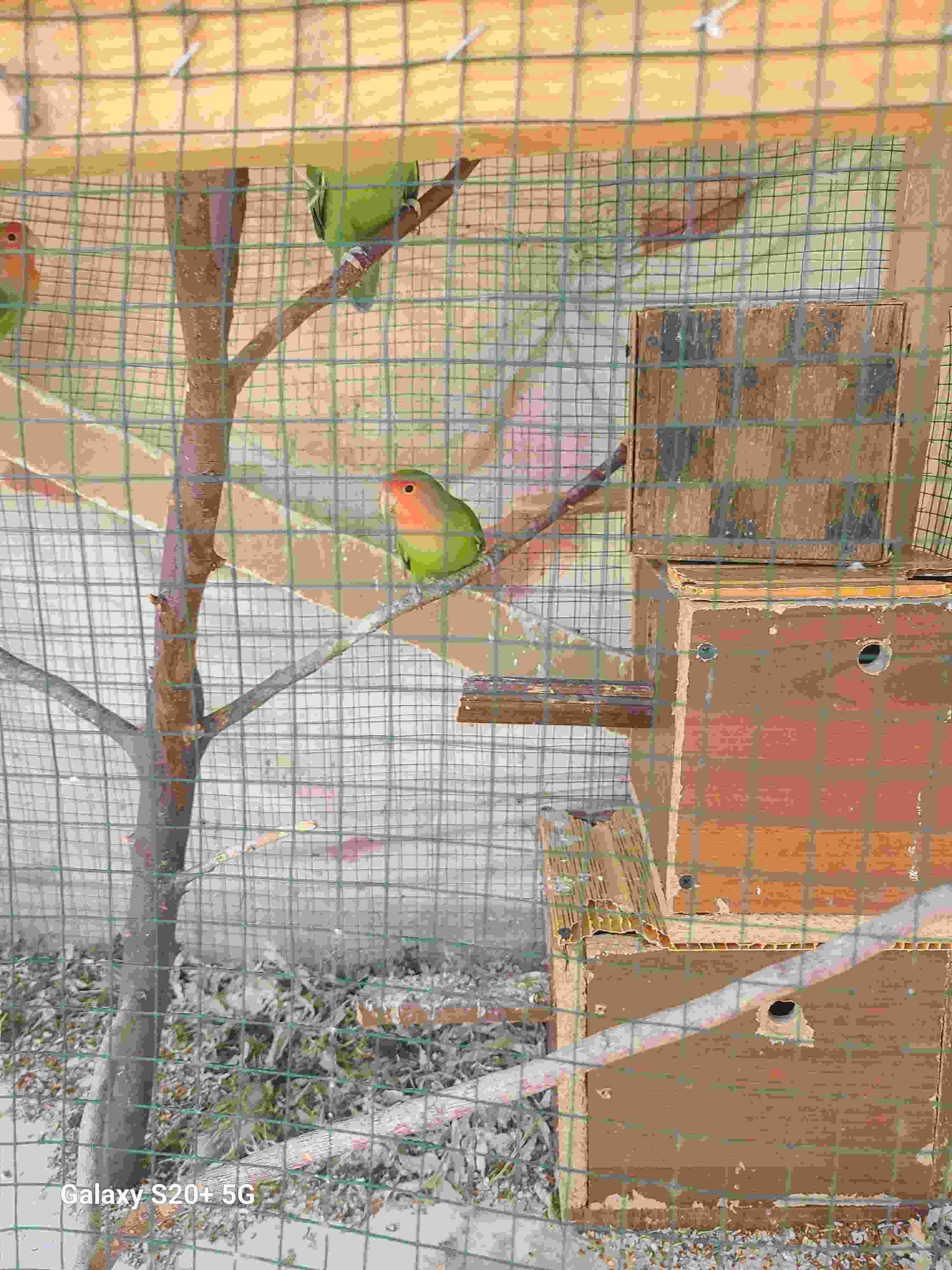
A small, social, and stocky parrot known for its vibrant green feathers and distinctive peach-colored face. They are highly gregarious and often seen in colonies.
Explore Peach-faced Lovebird (Rosy-faced Lovebird) in the encyclopedia →Identify your own birds.
Get a report just like this from any photo or call, free.
Plumage & appearance
Adults have a bright green body with a blue rump. The face and throat are a peach-rose pink, darker on the forehead. Juveniles have duller faces and a blackish base to the upper mandible.
Key field marks
Peach/rose-pink face and throat, bright green plumage, blue rump visible in flight, and lack of a naked white eye-ring.
Size & weight
Length: 15 cm; Wingspan: approx 100 mm; Weight: 45-63 grams.
Voice — call & song
Noisy with high-pitched shrieks and metallic chirps. They do not have a musical song but are very vocal when in groups.
Diet & foraging
Primarily granivorous, feeding on seeds and berries. They frequently visit water holes and agricultural fields for grain.
Habitat
Dry wooded country, sub-desert steppes, and savanna regions near water. Often found in urban parks and gardens in introduced ranges.
Migration & movement
Non-migratory resident; however, they may move locally based on the availability of water and food sources.
Nesting & breeding
Cavity nesters that use rock crevices or palm fronds. They are famous for carrying nesting material (strips of bark/leaves) tucked into their rump feathers.
Similar species
Fischer's Lovebird (has white eye-ring) and Lilian's Lovebird (smaller with a different reddish facial pattern). The lack of a white eye-ring distinguishes the Peach-faced.
Ecological significance
Acts as a seed disperser and is a prey species for local raptors. In some introduced areas, they compete with native birds for nesting cavities.
Conservation status
Least Concern (IUCN), though local populations may face pressure from the pet trade.
Observation tips
In the wild, look for them near water sources in arid environments. In urban areas like Phoenix, Arizona, they are often found visiting bird feeders and nesting in palm trees.
Interesting facts
They are called 'lovebirds' because of the strong long-term pair bonds they form and the constant grooming and affection shown between mates.
More like this