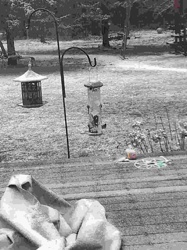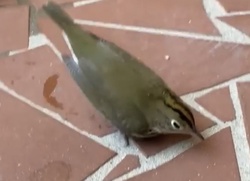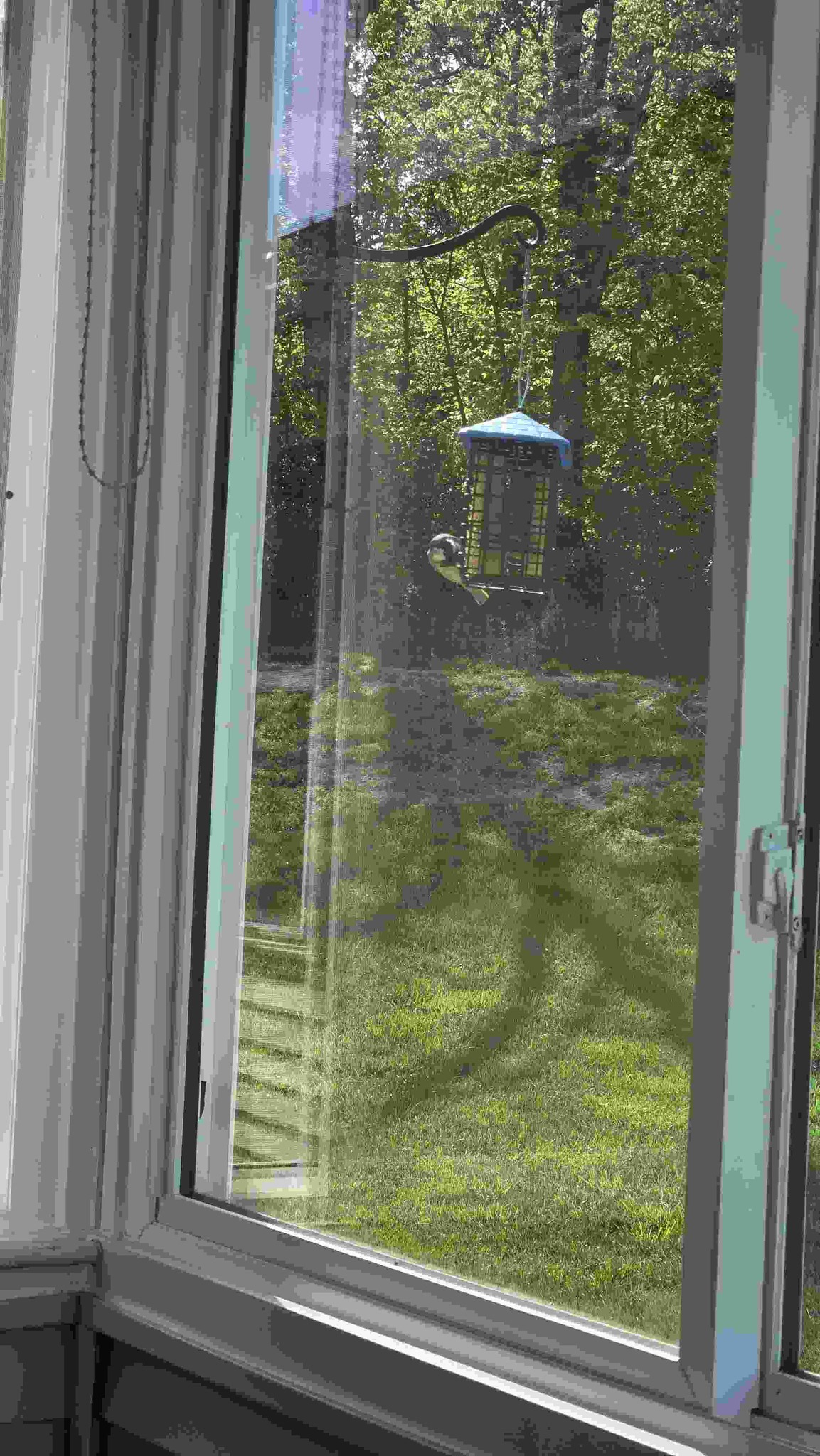
Order: Passeriformes; Family: Paridae
Tufted Titmouse
Baeolophus bicolor
A small, active songbird with a distinctive grey crest, large black eyes, and a stocky build. They are social birds often found in mixed-species flocks with nuthatches and chickadees.
Explore Tufted Titmouse in the encyclopedia →Identify your own birds.
Get a report just like this from any photo or call, free.
Plumage & appearance
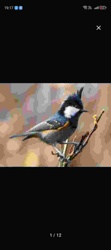
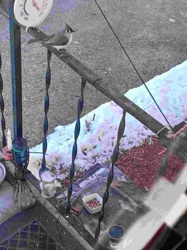
Silvery grey upperparts with a white breast and belly. Distinctive peach-colored wash on the flanks. They have a dark grey to black forehead patch just above the bill.
Key field marks
Pointed grey crest, black forehead patch, large dark eye, peach-colored flanks, and small black bill.
Size & weight
Length: 5.5-6.3 in (14-16 cm); Wingspan: 7.9-10.2 in (20-26 cm); Weight: 0.6-0.9 oz (18-26 g)
Voice — call & song
Most famous for a clear, whistled 'peter-peter-peter' song. Also makes various scratchy, chickadee-like nasal scolding notes.
Diet & foraging
Mainly insects (caterpillars, beetles, ants) in summer; seeds, nuts, and berries in winter. Known for caching (hiding) seeds for later use.
Habitat
Deciduous and mixed forests, orchards, suburban parks, and backyards with mature trees.
Migration & movement
Non-migratory resident; most individuals stay in the same general area throughout their lives.
Nesting & breeding
Cavity nesters that use natural holes or abandoned woodpecker holes. They line nests with soft materials, sometimes plucking hair from living mammals like dogs or squirrels.
Similar species
Black-crested Titmouse (found in Texas/Mexico, has a black crest and reddish forehead); Oak Titmouse (plain brown/grey, no peach flanks).
Ecological significance
Helps control insect populations through predation and aids in seed dispersal. They are also an important prey species for small hawks and owls.
Conservation status
Least Concern (IUCN); Population is stable and expanding northward.
Observation tips
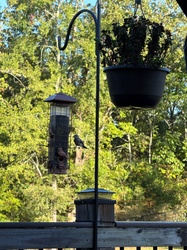
Easily attracted to backyard feeders using sunflower seeds, suet, or peanuts. They are inquisitive and often among the first birds to investigate a new food source.
Interesting facts
Tufted Titmice are known for being extremely bold; they have been documented landing on humans to pull out hairs for nesting material. They also usually shell seeds before caching them.
More like this