
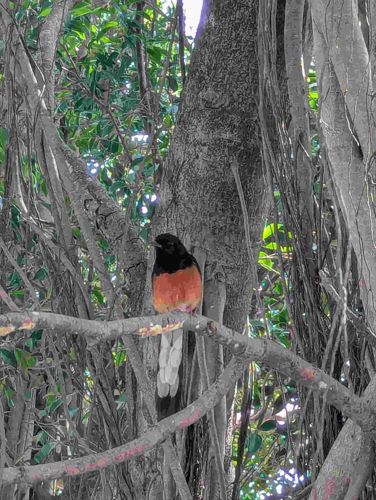
Kingdom: Animalia, Phylum: Chordata, Class: Aves, Order: Passeriformes, Family: Muscicapidae, Genus: Copsychus, Species: C. malabaricus
White-shama (White-rumped Shama)
A medium-sized songbird known for its remarkably long tail and melodious, complex song. It is often found in dense undergrowth and forested areas.
Explore White-shama (White-rumped Shama) in the encyclopedia →Identify your own birds.
Get a report just like this from any photo or call, free.
Plumage & appearance
Glossy black head, back, and wings with a chestnut-colored belly and underparts. It features a distinctive white patch on the rump and long, graduated black outer tail feathers with white tips.
Ecological significance
Acts as an insectivore, helping to regulate populations of beetles, caterpillars, and other insects within its forest habitat.
Conservation status
Least Concern (IUCN 3.1), although specific subspecies or local populations may face threats from the pet trade and habitat loss.
Observation tips
Listen for its loud, varied flute-like whistles. They are shy birds that prefer staying low in deep shade or thickets, so move slowly and look through the lower canopy.