Order: Passeriformes; Family: Cardinalidae
Identified from audio
Northern Cardinal
Cardinalis cardinalis
A medium-sized songbird with a prominent crest and a stout, cone-shaped bill. Known for its territorial behavior and frequent singing by both sexes.
Explore Northern Cardinal in the encyclopedia →Identify your own birds.
Get a report just like this from any photo or call, free.
Plumage & appearance
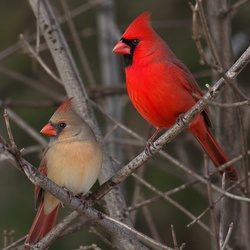
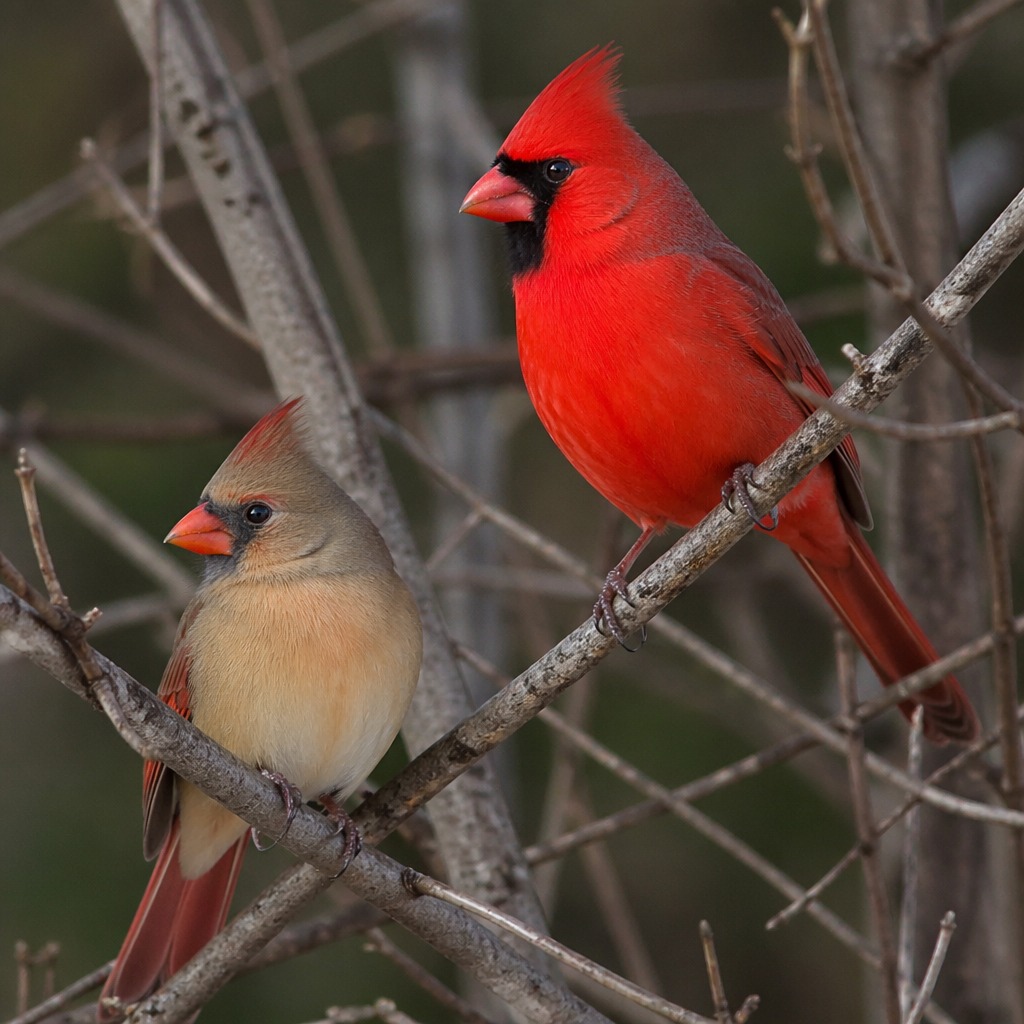
Males are brilliant red with a black mask and coral-colored beak. Females are pale brown/olive with reddish tinges in the wings and tail, and a similar black mask and crest.
Key field marks
Prominent crest, black face mask, heavy conical orange-red bill, and vibrant red (male) or tan/red (female) coloration.
Size & weight
Length: 8.3-9.1 in; Wingspan: 9.8-12.2 in; Weight: 1.2-1.7 oz
Voice — call & song
The recording features a series of loud, clear, whistled phrases 'cheer-cheer-cheer' or 'birdie-birdie-birdie', ending in a rapid trill.
Diet & foraging
Mainly seeds, grains, and fruits; also consumes insects during the breeding season.
Habitat
Woodland edges, shrubby areas, suburban gardens, and parks.
Migration & movement
Non-migratory resident
Nesting & breeding
Open cup nests built by the female in dense shrubs or trees; usually produces 2-4 broods per year.
Similar species
Pyrrhuloxia (found in Southwest US; greyer with a yellow curved beak and red accents).
Ecological significance
Acts as a predator for several agricultural pests and serves as a significant seed disperser for various native plant species.
Conservation status
Least Concern (IUCN)
Observation tips
Look for them in thickets, backyard feeders, or overgrown fields. They are often the first birds to visit feeders in the morning and the last at night.
Interesting facts
Unlike many songbirds, both the male and female Northern Cardinal sing, often during pair bonding or territory defense.
More like this