Kingdom: Animalia, Phylum: Chordata, Class: Aves, Order: Anseriformes, Family: Anatidae, Genus: Cygnus, Species: C. olor.
Mute Swan
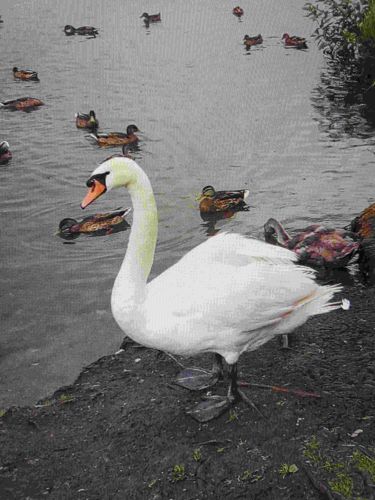
A very large waterfowl with a long, S-shaped neck and a heavy body. It is often seen swimming gracefully on ponds, lakes, and slow-moving rivers.
Explore Mute Swan in the encyclopedia →Identify your own birds.
Get a report just like this from any photo or call, free.
Plumage & appearance
Adults possess entirely white feathers. They are distinguished by an orange bill bordered with black, and a pronounced black fleshy knob at the base of the upper mandible. Cygnets (juveniles) are usually dull grey or brownish-white.
Ecological significance
As large grazers, they help control aquatic vegetation. However, in non-native regions, they can be invasive, outcompeting local waterfowl and overgrazing underwater plants.
Conservation status
Least Concern (Population increasing globally).
Observation tips
Look for them in city parks, estuaries, and freshwater lakes. While they appear serene, be cautious and maintain distance during nesting season as they can become highly territorial and aggressive.
More like this