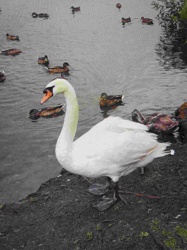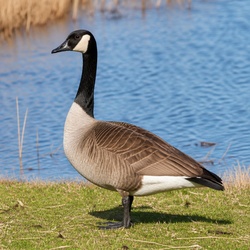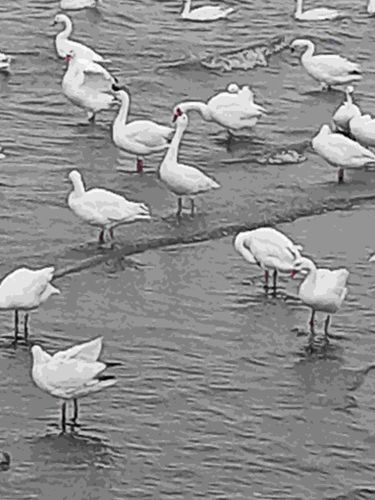
Kingdom: Animalia, Class: Aves, Order: Anseriformes, Family: Anatidae, Genus: Cygnus
Tundra Swan
Large, elegant waterfowl with long necks and sleek bodies. They are often seen in large, vocal flocks during migration and winter.
Explore Tundra Swan in the encyclopedia →Identify your own birds.
Get a report just like this from any photo or call, free.
Plumage & appearance
Adults have entirely white plumage, black bills often with a small yellow spot at the base, and black feet and legs.
Ecological significance
They consume aquatic vegetation, helping to manage plant populations in wetlands, and serve as an indicator species for the health of freshwater and coastal environments.
Conservation status
Least Concern (Population stable)
Observation tips
Look for them in shallow lakes, flooded fields, or estuaries. Listen for their distinctive high-pitched, barking call, and use binoculars to check for the small yellow teardrop on the loral area of the bill.
More like this