Order: Passeriformes; Family: Cardinalidae
Rose-breasted Grosbeak
Pheucticus ludovicianus
A medium-sized seed-eating bird known for its striking coloration and beautiful song. They are robust birds with very thick, pale conical bills used for cracking seeds.
Explore Rose-breasted Grosbeak in the encyclopedia →Identify your own birds.
Get a report just like this from any photo or call, free.
Plumage & appearance
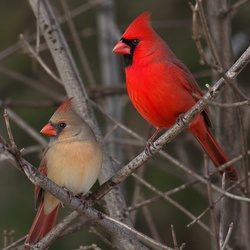
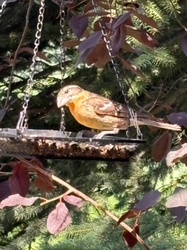
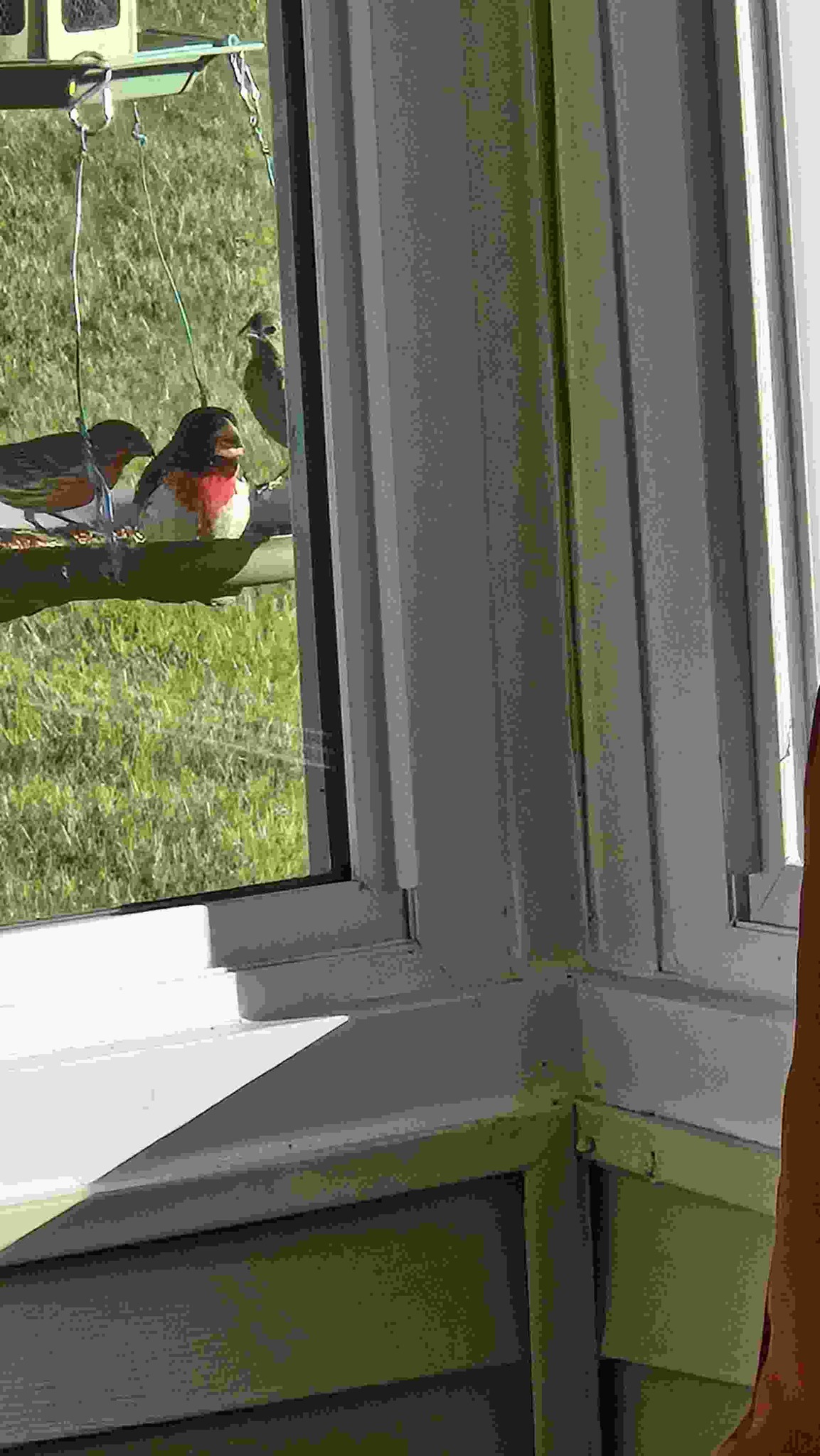
Adult males (visible in image) have a black head and back, white underparts, and a brilliant V-shaped rose-red patch on the chest. Females and juveniles are brownish and heavily streaked, resembling large sparrows with a bold white eyebrow.
Key field marks
Large pale bill, black head/back, white belly, and the iconic rose-red triangular breast patch on the male.
Size & weight
Length: 7-8 in (18-21 cm); Wingspan: 11-13 in (29-33 cm); Weight: 1.4-1.7 oz (39-49 g).
Voice — call & song
A rich, melodious warbling song similar to an American Robin but more refined and 'sweeter.' The call is a sharp, metallic 'ink' or 'peek.'
Diet & foraging
Omnivorous; feeds on insects, seeds, berries, and buds. They often glean insects from foliage high in the canopy.
Habitat
Deciduous and mixed woodlands, forest edges, and suburban areas with mature trees.
Migration & movement
Long-distance migrant; travels between North American breeding grounds and tropical wintering grounds in Central and South America.
Nesting & breeding
Builds a flimsy, cup-shaped nest in trees or shrubs. Usually lays 3-5 eggs. Both the male and female share incubation duties.
Similar species
Black-headed Grosbeak (western counterpart, orange breast), Painted Bunting (much smaller, different color pattern).
Ecological significance
Acts as both a seed disperser and a natural pest controller, consuming significant amounts of beetles, caterpillars, and other insects during the breeding season.
Conservation status
Least Concern (IUCN); however, populations are experiencing a slow long-term decline due to habitat loss and fragmentation.
Observation tips
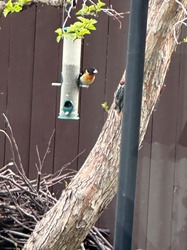
Look for them in deciduous forests or at backyard bird feeders where they are fond of black oil sunflower seeds during spring migration.
Interesting facts
Unlike many birds where only the female sits on the nest, male Rose-breasted Grosbeaks are known to sing while they are incubating eggs.
More like this