Order: Columbiformes; Family: Columbidae
Rock Pigeon
Columba livia
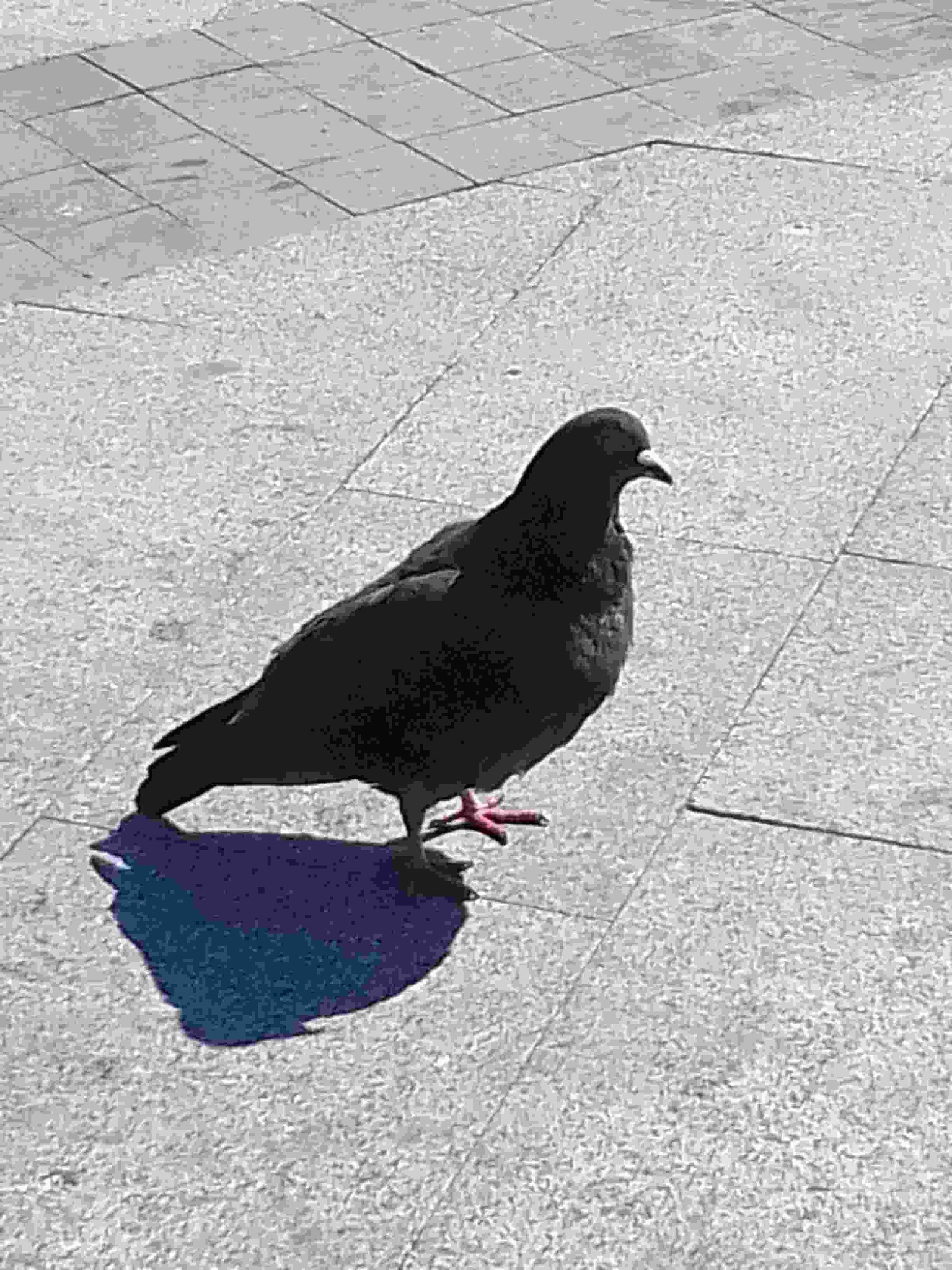
A stout-bodied bird often seen in cities. They are known for their bobbing head movement while walking and their strong, direct flight.
Explore Rock Pigeon in the encyclopedia →Identify your own birds.
Get a report just like this from any photo or call, free.
Plumage & appearance
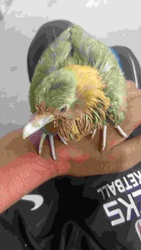
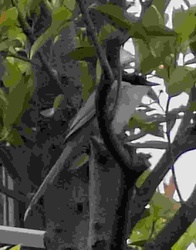
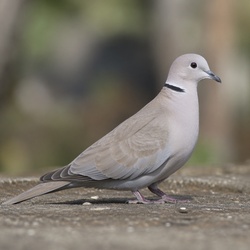
Highly variable due to domestication. Typical wild type is bluish-gray with two black wing bars and a white rump. They often show iridescent green and purple patches on the neck. Domesticated 'feral' varieties can be white, reddish, or mottled.
Key field marks
Small head, short legs, broad wings, white rump (wild type), and two black bars on the secondary feathers.
Size & weight
Length: 29-37 cm; Wingspan: 62-72 cm; Weight: 238-380 g.
Voice — call & song
A soft, repetitive 'coo-roo-ctoo-coo'.
Diet & foraging
Primarily granivorous, eating seeds and grain. Urban pigeons frequently scavenge human food scraps.
Habitat
Found in rocky cliffs (wild), but most common in urban environments, city centers, and farmland.
Migration & movement
Permanent resident; non-migratory.
Nesting & breeding
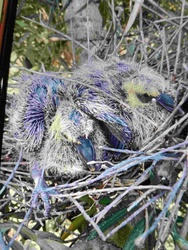
Builds a flimsy platform of sticks on ledges of buildings or cliffs. Lays 1-2 white eggs. Both parents produce 'crop milk' to feed young.
Similar species
Stock Dove (lacks white rump and has dark eyes), Wood Pigeon (larger with white neck patch and wing white bar).
Ecological significance
Acts as a prey species for urban raptors like Peregrine Falcons; helps in seed dispersal, though often considered a pest in cities.
Conservation status
Least Concern (IUCN); population is stable and extremely large.
Observation tips
Very easy to find in urban parks, plazas, and near train stations. They are generally unafraid of humans and easy to photograph at close range.
Interesting facts
They were the first bird species to be domesticated. They have an incredible homing ability, allowing them to find their way home from over 1,000 miles away using magnetic fields and landmarks.
More like this